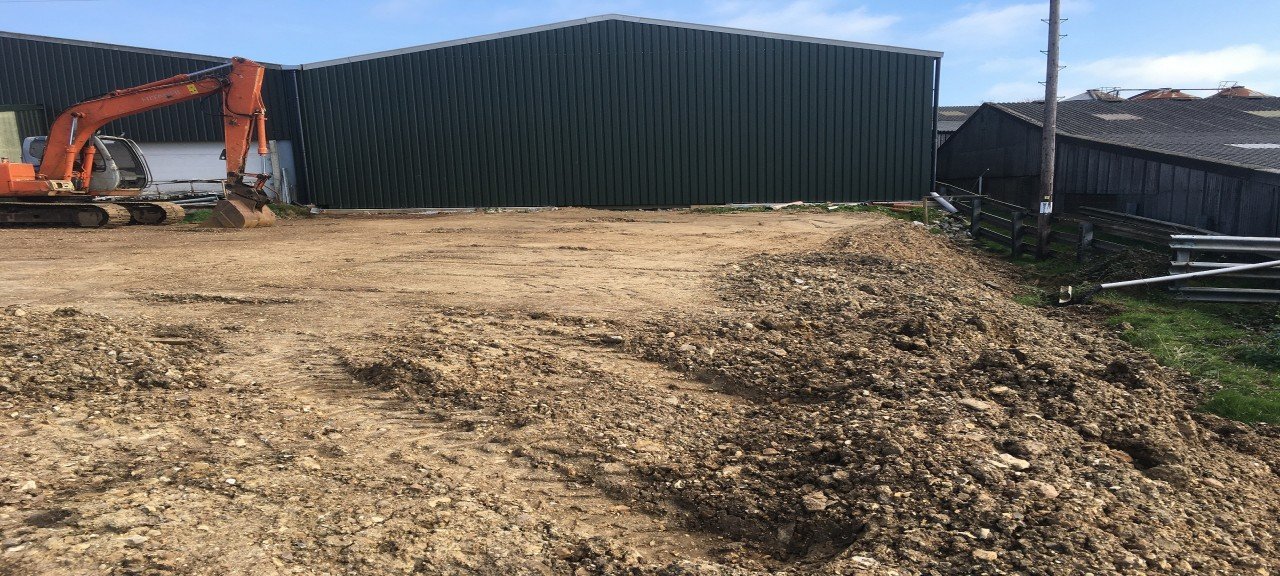
Topsoil Stripping and Stockpiling in Las Cruces
Topsoil in this dry country is a limited resource, and once it is mixed into fill or hauled away, nothing an owner pays for later will fully replace it. Stripping and stockpiling is the careful removal of the upper, organic layer ahead of grading, its storage where it will not blow or wash away, and its return to the surface at the end for landscaping, seeding or farm restoration. It is a small line in the budget that makes a large difference in how the finished site looks and grows.
The Mesilla Valley still farms. NM 28 follows the Rio Grande past farmland, dairy farms, vineyards and pecan orchards, and Hatch is known worldwide for raising chiles, so many of the parcels that convert to commercial or residential use started as cropland, and some will return to it. For agriculture and dairy owners and for landowners selling to developers, the organic layer can have real value, and we plan its handling accordingly. The communities strung along NM 28, such as Chamberino, sit in exactly that kind of farmland.
We strip and stockpile as the first step of site clearing and grubbing or just ahead of mass grading, and we coordinate with the landscape architect on depth, location and respread.
Sites where topsoil matters most
Not every building cares about topsoil, but every site has landscape and drainage areas that do. Campuses and schools lean on it heavily: an education school project typically has fields, planting beds and drainage swales that depend on a good growing layer. Apartment communities and mixed-use developments use topsoil for courtyards, parkways and landscape islands.
Industrial and warehouse sites need less, but even they have landscape strips, detention basins and perimeter slopes that must be revegetated to satisfy permits and to stabilize the soil. Planning for it at the start avoids buying topsoil later. We give the project team a stripped quantity and a respread quantity, because the two are rarely equal, and we explain why.
Depth, quality and what to keep
How deep to strip depends on the soil profile, which varies across a parcel. We probe or trench a few locations, mark the visible change from dark, organic soil to subsoil and strip to that depth, taking care not to mix the layers. Where cemented layers or rock sit near the surface, clean stripping is harder and the quantity is smaller. Where topsoil is mixed with debris, weeds or contamination, we separate it before storage.
Quality matters too. Some topsoil is too sandy or too salty to grow anything, and respreading it makes no sense. We take samples when the landscape plan calls for specific properties and tell the owner if the stripped material will not meet them. Weed seed is another concern, since a stockpile left alone grows weeds that then spread. Agricultural owners may want the material kept for reuse on farmland, and we settle ownership and destination early.
Strip, stockpile, respread
The job has three parts. First, strip the topsoil to the marked depth and move it to the stockpile location without compacting it more than necessary. Second, protect and maintain the stockpile until it is needed. Third, respread it over finished slopes and landscape areas to the depth shown, after the subgrade has been loosened so roots and water can move across the boundary.
Between those steps are small jobs that matter. We mark the strip limits so topsoil is not removed from areas that will stay undisturbed, place stockpiles outside drainage paths and haul roads, and keep volume records so the owner can reconcile what came off with what went back. Excess topsoil is exported or offered to others, and shortages are brought in and tested.
Timing around planting season and wind
Stripping is the first earth moved and respreading is among the last, so a stockpile may sit for months. Seeding in this climate works best when temperature and moisture cooperate, and that may not be when the contractor is ready, so we plan the respread date with the landscaper and the irrigation installer. A rushed respread in midsummer can mean dead seed and a second pass.
Wind decides whether a stockpile survives. Spring afternoons in Las Cruces are often windy with blowing dust, and a loose pile of fine topsoil can lose a surprising amount in a season. We shape piles low with stable side slopes, keep them off the windward edge of the site where possible and stabilize them with water, mulch or seed. In the storm season, run-on and run-off controls from our erosion control and SWPPP work keep the pile from washing away.
Keeping the soil alive and in place
We use equipment that does not pulverize or bury the soil: scrapers or loaders with careful operators, and trucks that stay off the stockpile once it is built. Piles are shaped for stability, with gentle side slopes and a flat or slightly dished top that catches water instead of shedding it, and we keep them apart from subsoil, rock or debris.
We avoid working topsoil when it is saturated, which destroys structure, or bone dry, which makes dust. At respread we place a single pass to the specified depth with low-ground-pressure equipment, then lightly rake or harrow and leave a surface ready for the landscaper. If the surface needs finishing to design grade first, that falls under fine grading.
Piles, equipment and dust
Stockpiles are hazards. Unstable piles can slump onto people or equipment, and operators must stay clear of the toe and the crest. We limit pile height, keep side slopes within safe angles and use spotters when loading near a pile. Equipment stays off saturated topsoil that could bog or roll.
Dust control and stormwater get attention here as well. Dry topsoil is the dustiest material on a site, so water trucks, covers and speed limits are part of the plan. In the rainy season, perimeter controls around the pile keep silt out of drains and streets, and we inspect them after every significant storm.
Need the top layer saved?
Send the grading plan and the landscape plan. We will mark strip limits, set a stockpile location and give you a stripped and respread quantity with a price.
Questions Owners Ask
How deep do you strip topsoil?
To the depth where the organic layer ends, which we find by probing or trenching a few spots. The landscape plan or specification may also set a depth. Where the layer is thin, we strip only what is there rather than dig into subsoil.
Can stripped topsoil be sold or reused off site?
Often yes, if it is clean and the owner agrees. Farmers and landscapers use it, and some owners trade it for fill. We confirm ownership and destination before moving it and keep load records.
How long can a stockpile sit?
Months, if it is shaped, stabilized and kept free of weeds. Long storage in a pile too deep can starve the soil of oxygen, so we limit height and keep the shape low.
Does topsoil need compacting when respread?
No, it should stay loose enough for roots and water. The subgrade below it is compacted, but the topsoil is spread and lightly finished. Heavy traffic on respread topsoil defeats its purpose.