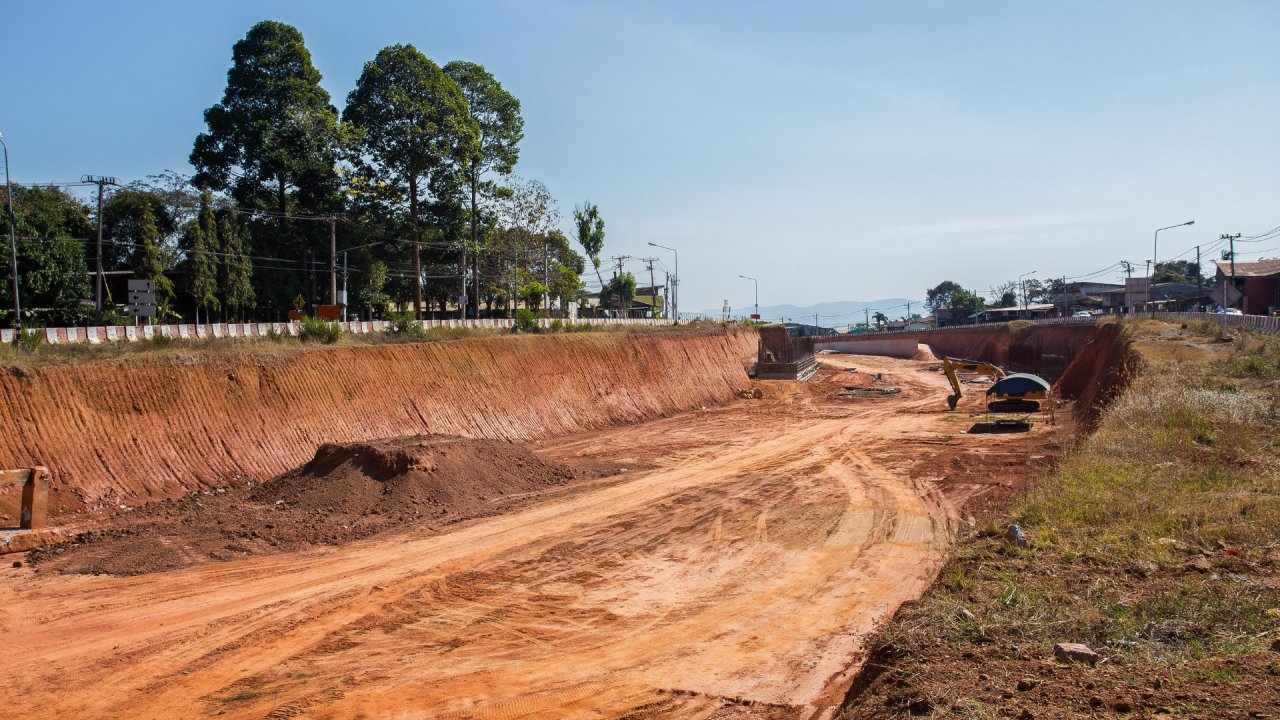
Fine Grading for Pads, Lots and Pavements in Las Cruces
Finish grade is where an earthwork package gets judged, because every trade that follows reads the surface you leave behind. A slab, a parking lot or a drainage swale carries any error in the subgrade straight through to the finished product, and a quarter inch of dip in the wrong place turns into a puddle by the first monsoon storm. Fine grading is the last pass of cutting, filling, trimming and compacting to the elevations on the plans, and we run it as a measured job rather than a visual one.
In the Mesilla Valley the precision has to survive the weather. Las Cruces averages about 9 inches of precipitation a year, yet the arroyos around the city are dry streams that often carry water after heavy thunderstorms, and a pad graded flat by eye can hold that water against a foundation or a dock door. We shape every surface to drain, check the falls against the civil drawings before the next crew arrives, and leave a surface that stays true until the concrete or asphalt goes down.
Most of this work is for builders who need a pad handed over ready for stone and steel and for developers who want a lot that sheds water before the paving crew shows up. It sits between mass grading and slab-on-grade concrete in the sequence, and a general contractor or construction manager running that schedule cares less about equipment selection than about whether the survey check passes the first time.
What the plans, the code and the soils report decide
Fine grading does not invent its own standards. The elevations come from the civil drawings, the compaction requirement comes from the geotechnical report, and the tolerance comes from the project specifications. Where the specification gives a tolerance for finished subgrade under a slab or pavement, we hold to it, and where it is silent we ask the engineer before work starts instead of guessing. An independent testing lab checks density on the final lift and on any area we disturb afterward.
On commercial jobs the building falls under the 2021 New Mexico Commercial Building Code, which adopts the 2021 International Building Code as amended and took effect July 14, 2023. That code governs the structure. The grading plan, the drainage report and any stormwater permit govern the dirt around it. We keep the permit set in hand, confirm the inspection order with the general contractor, and make sure a pad has been accepted before forms, vapor barrier or base stone touch it.
How we trim a pad to grade
Fine grading starts with control. The survey crew or the engineer sets stakes with cut and fill marks, and we put a string line, laser or machine-guided grade system on the dozer or motor grader so the blade follows the design rather than an operator's eye. We bring the surface to tolerance with a rough pass, then move to light passes. Moisture is the other half of the job. Dry desert soil will not compact and wet soil pumps under the roller, so we condition the surface, usually with a water truck, to the range the soils report allows.
Once the surface is at grade we proof-roll it with a loaded water truck or a heavy roller and watch for soft spots, pumping or rutting. Anything that moves is cut out and replaced, and anything dusty is watered and rolled again. We shoot a final grid, compare it to the plan and give the engineer a surface that can be accepted on the first visit. Where a dock apron or drive aisle needs a specific slope, we check the slope itself and not only the elevations at the corners.
Where fine grading matters most on commercial sites
A warehouse building floor is the most demanding case, because slab flatness and thickness depend on a stable, even subgrade and the dock aprons need falls that carry water away from the doors. The city lists more than 400 acres shovel ready at its Innovation and Industrial Park, at the junction of Interstates 10 and 25, and that is where a good share of the metro's new pad work is positioned to land.
Retail and restaurant pads are tighter. Parking lots on those sites are graded to move water to inlets and curb openings at slopes that still meet accessibility limits, so there is little room for error along accessible routes. We grade shopping center sites with the paving section in mind, leaving the right allowance for base course and asphalt thickness so the finished surface lands at design grade and not an inch high at the curb.
What moves the price of a grading package
Area and tolerance set most of the cost. A flat, open pad with a generous tolerance goes quickly, while a pad with several slopes, swales and tight elevations takes more passes and more survey. Machine guidance cuts rework but adds setup time, and we weigh it job by job. Moisture conditioning is a real line item in a dry climate because water has to be hauled and applied, and with June highs in Las Cruces averaging about 96 degrees, a good share of it evaporates between the truck and the roller.
Access and sequence matter as well. If the pad is ready early and then sits through weeks of steel erection, it gets rutted and has to be re-trimmed, and that rework lands on someone's budget. We prefer to schedule the final pass as close to the slab or paving date as the job allows. We also price material needs separately: if a pad is short a few hundred yards of fill, that changes the number and the haul route, and we cover how we handle it under import, export and haul-off.
Timing the final pass
Fine grading is a short job that has to land on the right day. Too early and the surface gets damaged or dries out, too late and the concrete crew stands around waiting. We coordinate with the general contractor, the testing lab and the forming crew, and we confirm the date only after the underground utilities have been inspected and backfilled, because trench settlement is the quickest way to ruin a freshly trimmed pad.
Weather can move the plan. Spring afternoons in the valley are often windy with blowing dust, and a dry pad loses moisture fast, so in those conditions we water down and roll within hours of the final trim. A thunderstorm that sends water across a lot can cut into a fresh surface, so we shape temporary swales and slope lines to keep runoff off the pad until the slab is placed. After a heavy rain we re-shoot the grade instead of assuming it held.
Work that comes before and after the final pass
The crews that touch your site before we do decide how much trimming is left. Good cut and fill earthwork leaves a surface close enough that fine grading is a true trim, while poor rough work leaves us moving material we should not be moving. After us, the paving crew depends on a consistent base, which is why we also handle asphalt paving base preparation and coordinate directly with the people placing the pavement.
We often combine these scopes into one package so the same team that sets the lines also finishes the surface. That keeps accountability simple and removes the argument over who owns a low spot. If your project also needs concrete, we sequence the pour and the grade together, so the last pass of the blade and the first truck of concrete are planned as a single move.
Have a pad or lot to finish?
Send the civil drawings and the geotechnical report. We will tell you what survey control, moisture work and compaction testing the surface needs and when the final pass should happen.
Questions Owners Ask
How tight is the tolerance on a building pad?
The specification sets it, and it varies with what goes on top. A slab under heavy floor loads or a floor that must meet a flatness number gets a tighter subgrade tolerance than a landscaped area. We read the spec before we bid, grade to it and document the final survey so the engineer has the numbers.
Can you fine grade in summer heat?
Yes, with a different routine. We start early, water the surface just ahead of the roller and finish compaction before the soil dries. Midday heat and wind pull moisture out quickly, so we often split the work into morning passes and a short afternoon check.
Who tests compaction after you finish?
An independent lab hired by the owner or general contractor, using the method in the geotechnical report. We coordinate the timing, correct any failing area and retest before the pad is released. We do not mark the work ourselves.
What happens if it rains between fine grading and the pour?
We look at the surface again. If water has ponded or cut a channel, we re-trim and re-compact that area and confirm moisture before forms or vapor barrier go in. Temporary slope lines and a crowned pad reduce the damage, but in this climate a short, hard storm can still undo a day of finishing.