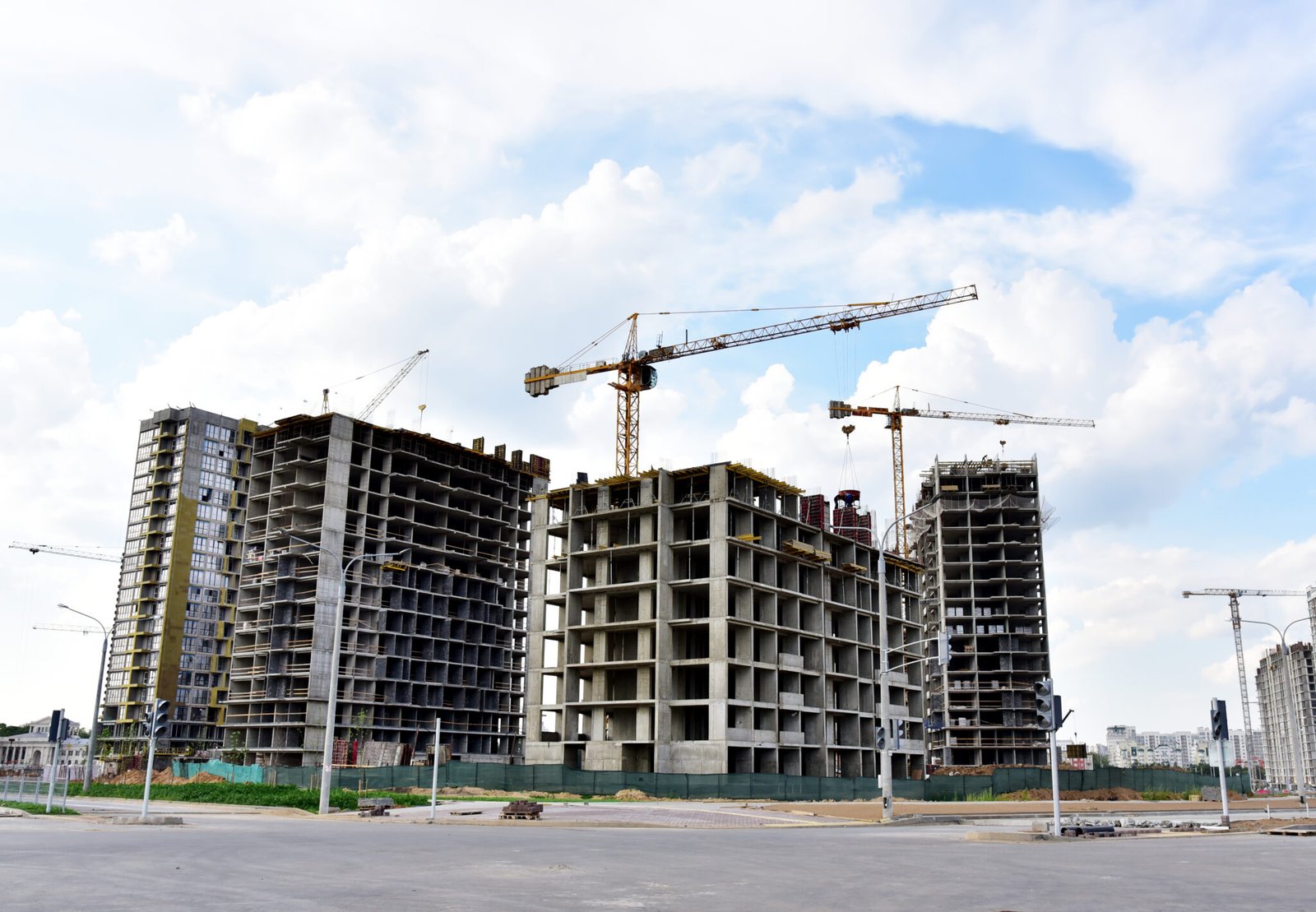
Concrete and Site Work for Commercial Developers in Las Cruces
Pad-ready ground is what a commercial developer is really buying from a concrete and dirt contractor. The building, the tenant and the signage come later. What you need first is a graded pad with utilities stubbed to it, a parking field that drains, and a schedule the lender and the first tenant can believe. Mesilla Valley Mall is a handy yardstick: it opened as an indoor center with 602,150 square feet on 77.4 acres and 4,500 parking spaces, which tells you how much of a retail site is paving and drainage rather than building.
We work for developers assembling retail, office, hospitality and mixed-use sites in Las Cruces and across Dona Ana County. We coordinate the foundations and flatwork, and also the clearing, mass grading, storm drain and water and sewer laterals, so the pad, the pipe and the pavement share one sequence and one set of surveyed grades. In a desert city where June highs average 96.2 degrees F and a dry arroyo can run after a thunderstorm, that single sequence keeps a lot of surprises off your schedule.
Here is how we approach developer work in this market: where the ground is moving, what moves a price, how a pour calendar should be built, and what the approvals look like on the concrete side. If you have a site plan, a geotechnical report or just a parcel number, we can talk yardage, haul route and pour window from there.
Where developers are finding ground in the Mesilla Valley
Downtown Las Cruces is a different kind of development site from a greenfield pad. Historic Main Street became a six-block pedestrian mall in 1973 and hosts a farmers' market on Wednesday and Saturday mornings, and the model portion of Main Street reopened to vehicle traffic in 2012. Work in a district like that means demolition of old slabs, cut-and-patch around live utilities, and pour windows that avoid market mornings. We plan those jobs around people on foot as much as around concrete trucks.
On the highway side, the I-10 exit list in Dona Ana County gives developers three useful frontage points near town: exit 140 at NM 28 (Avenida de Mesilla), exit 142 at NM 478 (Main Street), and exit 144 where I-25 begins. Pads near those interchanges are visible to the traffic you are building for, and they tend to need new turn lanes, signal bases and storm connections. We price those off-site items alongside the building pad so the pro forma carries the real cost of access.
What actually moves a developer's concrete and site budget
Early budgets for retail and mixed-use ground usually undercount three things. The first is parking-lot yardage: a field sized like a regional mall's takes thousands of square feet of pavement before the first storefront is framed, and whether it is poured concrete or asphalt over prepared base changes both first cost and long-term upkeep. The second is storm drainage. With about 9.14 inches of annual precipitation arriving in short, hard storms, detention volume and outfall grade are not optional, and they often dictate where the pad can sit.
The third is the quantity nobody sees until the report arrives, which is subgrade correction. If the geotechnical engineer calls for over-excavation and engineered fill under the slab, that can be a very large swing on a big site. We would rather put a unit price on it at bid time than argue about it later, so we carry allowances for over-excavation and recompaction and tell you how many cubic yards each foot of correction represents.
The scope we manage for retail, office and mixed-use pads
For a typical shopping center or office pad we take the work in order. We clear and grub, strip topsoil to a stockpile, and rough-grade to the pad elevation. Then we proof-roll the exposed subgrade with a loaded truck so the engineer can see soft spots before anything gets built on them. Utilities follow: site utilities for water, sewer and fire service go in before the base course, because trenching through finished flatwork is expensive for everybody.
Concrete comes next in whatever form the project calls for. Footings and slabs for the shell, sidewalks, curb and gutter, ADA ramps, dumpster pads and drive aisles all get formed, reinforced, poured and cured by the same company that graded the dirt. For mixed-use or hospitality buildings with elevated floors, we handle the cast-in-place structure too, and we coordinate with the shell contractor on embeds, sleeves and edge forms so the decks do not wait on us.
Building a pour calendar a lender can read
Developers ask us for a schedule they can hand to a lender, so we give them one built from quantities. A pad with 3,000 cubic yards of slab is not one pour but a series of placements, sized to what a finishing crew can close out before the afternoon heat. In summer we start early and watch wind and humidity, since windy spring afternoons with blowing dust and 90 degree days both pull water out of a fresh surface faster than a finisher can keep up with it. Our hot and windy weather practices are written into the schedule, not added after the first cracked panel.
We also tell you what the schedule cannot do. Ready-mix deliveries, inspector availability and a tenant's late door-schedule change can each cost days. We ask for pour notice, hold inspection slots ahead of time, and publish a three-week look-ahead so your construction manager and ours are reading the same page every Monday.
Codes, permits and inspections on the concrete side
New Mexico's 2021 Commercial Building Code, issued under the Construction Industries Division, adopts the 2021 International Building Code as amended and took effect July 14, 2023. That edition governs the structural concrete provisions your engineer details, including reinforcement, cover and special inspection of placement. Energy provisions follow the 2021 Commercial Energy Conservation Code, which took effect January 30, 2024 and matters for slab edge insulation on conditioned buildings.
The General Building classification under the state's licensing rule requires four years of foreman level experience, at least two of them commercial, and it covers erecting and altering residential and commercial buildings. We mention it because developers should check that whoever holds the contract fits the scope. On our side, we pull the grading and utility permits we are responsible for, schedule special inspections ahead of each placement, and keep cylinder and slump records organized for your closeout binder.
Services developers usually bundle with us
Most developer packages combine a handful of line items. Building pad preparation and parking lot concrete sit at the top because they are the largest quantities. Behind them come curb and gutter, accessible routes and drainage structures that decide whether the center passes a final inspection.
If your site sits next to other types of owners, our pages for general contractors and construction managers and homebuilders and multifamily developers show how we work with the teams you will share a fence line with. Mixed-use projects often call for both.
Send us the parcel and we will send back yardage
Tell us the address, the building footprint and your target start. We will come back with quantities, a pour calendar and the permit items that sit on your side, so your next lender meeting has real numbers in it.
Questions Owners Ask
How early should a developer bring in a concrete contractor before the site plan is final?
As soon as the parcel is under contract and a geotechnical report exists. We can review the report for subgrade correction, tell you what the pad and parking field will cost in yardage, and flag utility conflicts while there is still room to move a building. Changes on paper are free, and changes after grading starts rarely are.
Is concrete or asphalt better for a retail parking field in this climate?
Both work in the Mesilla Valley. Concrete costs more up front but handles summer heat, heavy trucks at dumpster pads and drive-through lanes with less rutting. Asphalt is cheaper at first and easier to patch. We usually suggest concrete at entries, dumpster areas and dock aprons, with the rest of the field decided by your budget and your tenants.
What happens if the geotechnical report calls for more subgrade work than we budgeted?
We price correction by the cubic yard, not as a lump sum, so you know exactly what each extra foot of over-excavation costs. We also look at alternatives with your engineer, such as moisture conditioning or a thicker base section. If the report arrives after bidding, we hold the unit rates we quoted and document quantities as we go.
Can you work inside an active downtown block without shutting it down?
Usually yes, with planning. In a district with weekly markets and foot traffic, we phase the work in short zones, pour on mornings that do not conflict with events, and keep temporary walkways in place. The schedule depends on the block, so we walk it with you before we commit to dates.