Concrete, Utility and Earthwork Contractor in Las Cruces, New Mexico
Before a single yard of concrete is ordered for a Las Cruces job, we want three answers: what the subgrade will carry, where the underground utilities already run, and which weeks of the year the pour has to land in. Those answers decide the mix, the pump, the crew size and the price, and we would rather settle them before the bid goes out than in the first week of mobilization.
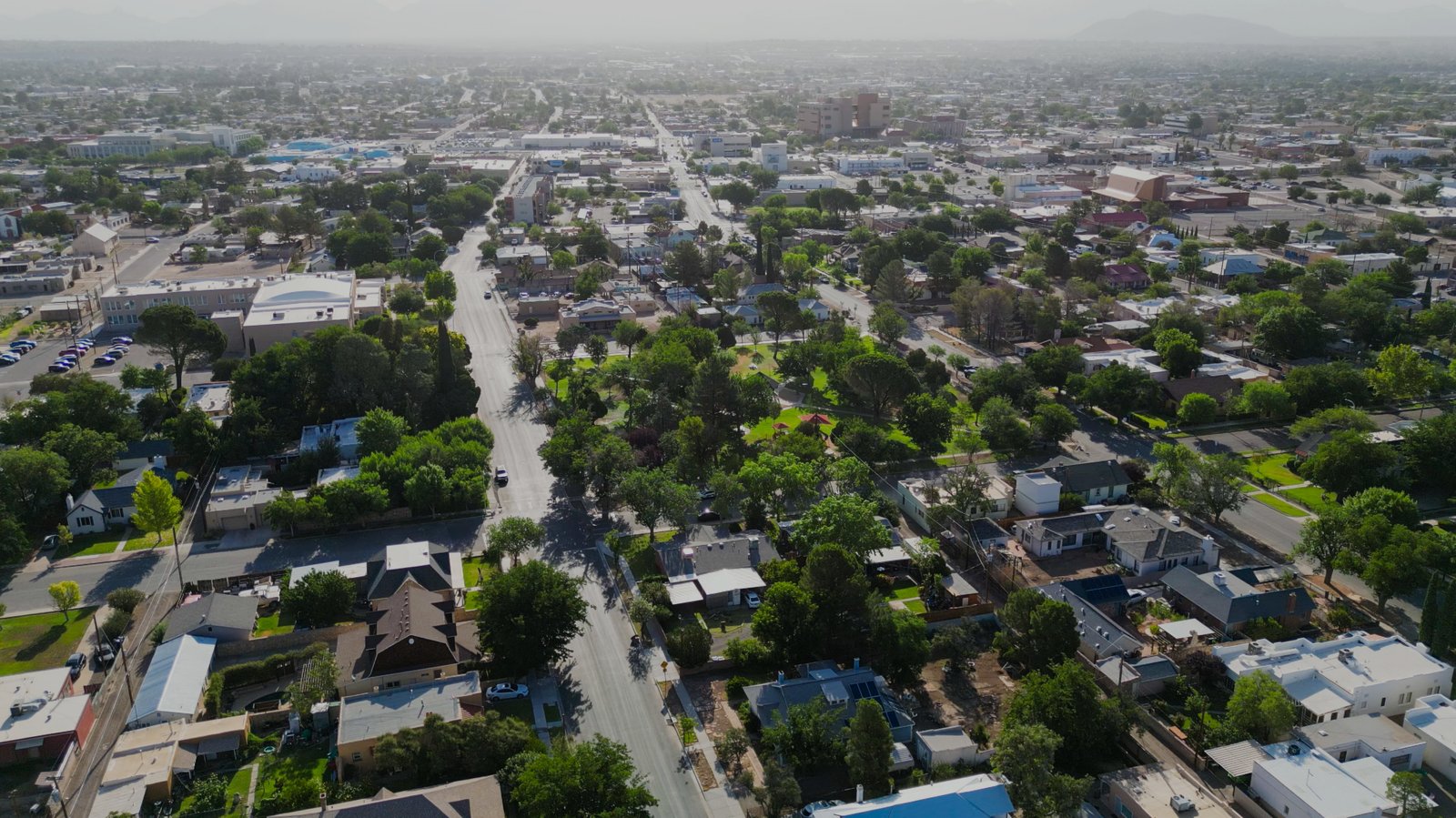
Las Cruces is where Interstate 25 ends at Interstate 10, and the City of Las Cruces Innovation and Industrial Park sits at that same junction beside Las Cruces International Airport. The city lists 400+ acres shovel ready with another 500 acres available for lease or purchase, and the park is covered by Foreign Trade Zone 197. For a developer or owner, that reads as big open pads where grading, building-pad preparation, utility stubs and floor slabs can run as one connected sequence, with the haul route to both interstates short and obvious.
Not every job here is a greenfield pad. In January 2026 the state Economic Development Department announced that a manufacturer will renovate an existing 45,050 square foot building on 15 acres at the park. Renovation work like that is concrete we saw, core, remove and replace inside a building that stays standing: new equipment pads, trench drains, slab infill and a floor that has to tie into the old one. We price that kind of work as its own scope, because it behaves nothing like a clean new slab.
Who buys concrete and dirt work in Las Cruces
The employer list tells you who keeps the local pipeline moving. New Mexico State University, Las Cruces Public Schools and the City of Las Cruces head it, followed by Memorial Medical Center, Walmart, MountainView Regional Medical Center, Dona Ana County and Dona Ana Community College. Institutions like those buy sidewalks, accessible routes, drive aisles, parking, building pads and utility tie-ins on a steady basis, and they tend to bid in phases, so we plan our sidewalk and flatwork scheduling around their calendars instead of fighting them.
The federal presence at White Sands Test Facility and White Sands Missile Range is described as the city's major employer, and that pulls a second kind of buyer into town: contractors and suppliers who need yard pads, shop floors and truck courts close to the interstates, much like the demand we see at Santa Teresa. The airport is a city-owned public field nine miles west of the central business district, so a haul route from the east side of town to the airport side is a real planning item. We run the truck count and the route before we commit to a pour date.
The scope we price for Las Cruces owners
Most of our Las Cruces estimates start with the site: clearing, stripping, mass grading to the civil plan, and a proof-roll on the finished subgrade before any form goes up. Then come footings and stem walls, slab-on-grade, curb and gutter, sidewalks, drive aisles and the utilities that have to be in the ground before the paving crew arrives. Putting one schedule on the whole run keeps the subgrade from sitting open to a monsoon storm while someone else gets scheduled.
On the floor side we plan slab-on-grade pours around the loading the owner actually has: racking, forklifts, tire traffic or light retail. That drives thickness, joint layout, reinforcement and how much curing time the floor gets before it sees equipment. We write those choices into the proposal in plain terms, so a general contractor or owner can see what the yardage and the finishing hours are buying. Projects in neighboring Mesilla get the same treatment, with extra care around the plaza district.
The buildings that set the concrete scope here
Interchange-adjacent land near the airport favors flex and light industrial buildings, where a clean slab, a truck apron and a utility package matter more than architecture. The same land also suits warehouse and distribution users, and the foreign trade zone designation is part of why those users look at Las Cruces. Our pour sequence for those jobs is usually slab first, then aprons and drive aisles, with the dock-height details checked against the building plans before the forms are set.
Closer in, the work shifts toward medical, school and civic projects, where accessible routes, sidewalks and parking carry as much weight as the building. A hospital district or a campus edge means working around open traffic, which changes our staging and our pour hours. We talk through those access rules with the general contractor early so concrete deliveries do not block an ambulance route or a bus loop.
Permits, inspections and testing on Las Cruces pours
Commercial buildings in New Mexico are permitted under the 2021 New Mexico Commercial Building Code (14.7.2 NMAC), which adopts the 2021 International Building Code as amended and took effect July 14, 2023. For concrete, that means we pour to the structural drawings and the special-inspection schedule the plans call for, with rebar placement checked before the pour and cylinders cast and tested afterward. We confirm what the design team has called out for testing before we price it.
Utility work has its own approvals. Water and sewer tie-ins go through the owner of the line, so we ask early who that is and what their inspection steps are. A utility conflict found with a potholing crew in week one costs far less than one found with an excavator in week six, which is why we pothole and locate before we commit to a trench alignment.
Heat, wind and thunderstorms in the pour window
Las Cruces sits at about 3,908 feet above mean sea level with the Rio Grande passing west of the city through the Mesilla Valley, and the climate averages 9.14 inches of precipitation a year. June highs average 96.2 degrees F, and spring afternoons can be windy with blowing dust. For us that means hot and windy weather concrete practice most of the year: early starts, mix adjustments with the supplier, windbreaks, evaporation control and fast curing compound.
The surrounding arroyos are described as dry streams that often carry water after heavy thunderstorms, so we watch drainage paths on the site as closely as we watch the forecast. We keep subgrade graded to shed water, protect fresh edges, and hold a plan for covering a slab if a storm builds during finishing. If the schedule is tight, we would rather move a pour by a day than finish a slab in wind we do not trust.
Send us the plans for your Las Cruces site
Send the civil set, the structural drawings or just a site address and a target start date. We will come back with a scope, a pour sequence and a number you can compare line by line.
Questions Owners Ask
How early should a general contractor bring us in on a Las Cruces site?
Before the civil plans are final if possible. We can flag subgrade, haul route and utility conflicts while changes are still cheap, and we can tell you whether the grading and the slab should be one package or two. Many general contractors and construction managers bring us in at the budget stage and again at bid.
What affects yardage more, thickness or joint layout?
Thickness drives yardage directly, since every inch across a large floor adds up quickly. Joint layout affects labor and finish quality, not volume, but it also decides how many saw cuts the crew runs and when. We quote both so the owner sees where the money goes.
Can you work in the summer without losing quality?
Yes, with planning. We schedule pours for early morning, coordinate mix temperature and set times with the batch plant, and use evaporation retarder and curing compound as the day requires. If conditions go past what the finish can tolerate, we stop and reschedule.
Do you handle both the dirt and the concrete on a Las Cruces project?
We do grading, excavation, trenching, utility installation, forming and placing. Keeping them under one contract means the subgrade is finished, proof-rolled and poured on a continuous schedule, with one party accountable for the interface.