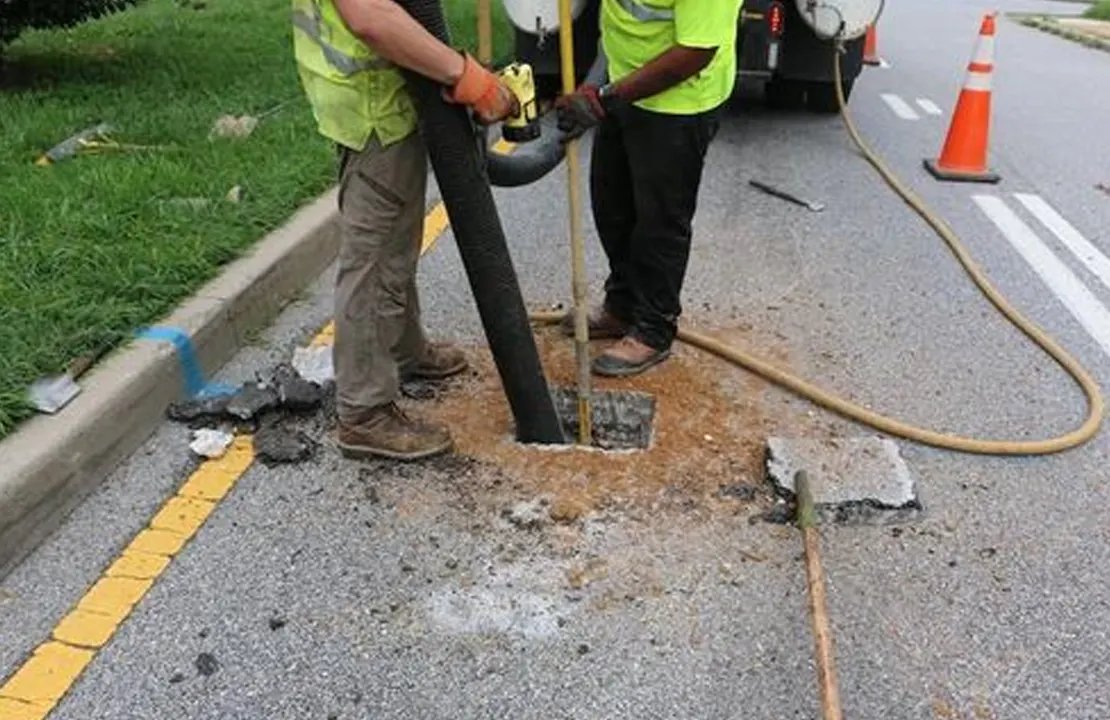
Utility Potholing and Locating in Las Cruces
The paint on the ground tells you where somebody thinks a line is. A pothole tells you where it is. That difference is the whole reason we do this work, and it is why a morning of vacuum excavation can save a project from a week of repair and a very uncomfortable phone call.
The places where it matters most are the places with the most buried infrastructure. The main campus of New Mexico State University occupies a core of 900 acres next to Interstate 25 and bordered by Interstate 10, with a Las Cruces enrollment of 16,076 in fall 2025. Campus ground of that size typically holds water, sewer, power, fiber, gas and irrigation lines, often laid at different times by different crews. And the hospital district in town, with Memorial Medical Center at 286 beds, MountainView Regional at 168 beds and Three Crosses Regional at 46 beds, adds medical gas, emergency power and communication lines that cannot be interrupted.
We expose, measure and record what is underground so the people who design and build can work with real data.
Vacuum excavation, not guesswork
Potholing begins with the locate. We call the one-call center, review the markings and compare them with any available as-builts. Then we use a vacuum excavation truck to open a small hole, usually a foot or two across, at the point where the line is expected. The vacuum removes soil with air or water pressure and leaves the line undisturbed, so there is little risk of striking it. We measure the depth to the top of the line, its diameter, material and direction and photograph it.
The next step is survey. We record the horizontal position and the elevation of each pothole with the project survey control, and we hand the engineer a table and a drawing. The hole is backfilled and compacted, the surface is patched, and the point is marked. We can also set a small monument so the same spot can be found again later.
Locating, verifying and recording
Our scope covers private utility locating, test holes at crossings, depth checks before trenching, verification of existing tie-in points and exposing abandoned or unknown lines. For design teams, we provide potholing ahead of the civil drawings so the engineer designs around real conditions. For contractors, we pothole ahead of the trencher to prove clearance. We also work with specialist locating firms for ground-penetrating radar or electromagnetic locating where needed.
The deliverable is a report, not just a hole. It includes a log of each test hole with depth, size, material, owner if known, photograph and coordinates, along with a summary of conflicts with the proposed design. That report helps the team make decisions early, such as moving a line, changing a slope or choosing a different alignment. If a line needs to move, the utility relocation trade crews can take it from there.
Where potholing fits in the rest of the job
Potholing supports nearly every underground scope. It protects the work on drilled pier foundations by clearing the pier locations of buried lines, it shortens the risk window on trenching and boring and it gives the grading crew confidence before they cut near a marked service. It also pairs well with mass grading, where deep cuts may reach lines that were shallow in the original drawings.
On a project with many unknowns, we recommend a two-step approach: a coarse locating pass to find the likely corridors and a targeted pothole program at critical crossings. That way you spend the money where the risk is.
Dense sites, mixed records and tight access
Dense sites bring particular challenges. Hospital districts, campuses and downtown blocks often have many lines in a narrow corridor, and some may be abandoned. We work carefully to avoid disturbing active lines and we coordinate with the owner's facilities staff, who often know details that the drawings do not. At a medical site, for example, we confirm with the hospital which lines serve life-safety systems before we open a hole near them.
Surface conditions affect the work too. Cutting through asphalt or concrete takes time, and restoring it takes more. We try to place holes in landscape or in joints where the repair is easy, and we match the existing surface when we cannot. Spoil is vacuumed into the truck and hauled off, which keeps the site clean and avoids sediment in storm inlets. For education and school projects, we schedule the work around class times and keep a safe work zone away from pedestrian routes.
Working near live lines
The main safety point is that we dig with a vacuum and not with a bucket near a marked line. We also treat every unknown line as live until the owner says otherwise. We wear arc-rated gear around electrical lines, keep a safe distance from gas and follow the owner's rules for emergency shutoff. If we expose a damaged line, we stop, secure the area and notify the owner.
Traffic control and public safety are also on the list. Holes in streets and walks are covered or barricaded, plates are used where traffic crosses, and we leave the site clean at the end of each shift. For work on a large campus such as the one near the NMSU campus or in the MountainView medical district, we meet with the owner's safety staff before we start.
Getting the data in time to use it
Potholing is fast when it is planned and slow when it is an afterthought. One crew can open many holes in a day, but the one-call process, the owner's review and the survey add time. We recommend asking for locates and potholes during design, when the data can still change the drawings, not after the bid, when every change costs money.
Seasonal conditions matter little for vacuum excavation, though frozen or very hard soil can slow it. A dry summer day is ideal; a wet day is fine but messy. We deliver the pothole report within days of finishing the field work, so the design and construction teams can use it quickly. Utilities and energy companies often ask for the report in a specific format, which we provide when asked in advance.
Verify before you design or dig
Send us the proposed alignment or the area of concern, and we will propose a potholing plan with a number of holes, a schedule and a deliverable. A short field program now is far cheaper than a utility strike later.
Questions Owners Ask
Is potholing the same as locating?
No. Locating marks the approximate path of a line on the surface using electronic equipment or records. Potholing opens the ground to see the line itself and measure its depth. They work together, and potholing confirms what the locate suggested.
How many potholes does a project need?
It depends on how many crossings and how much risk. A rule of thumb is a pothole at every crossing of a proposed deep trench, plus holes where records are uncertain. We can propose a program after reviewing the plans.
Will potholing damage the line?
It is unlikely when done properly. Vacuum excavation uses air or water pressure and suction, not a blade. We still dig carefully near any line, and we stop if we find something unexpected.
Can you pothole through pavement?
Yes. We saw-cut or core the surface, remove the pavement and then use the vacuum on the soil below. The pavement is patched after backfill. Core holes are small and heal well.
Who owns the data you collect?
It goes to the party who hired us, typically the owner, the designer or the contractor, and we can share it with others on request. The report is useful to everyone who works on the site afterward, so we recommend that owners keep it with the as-builts.