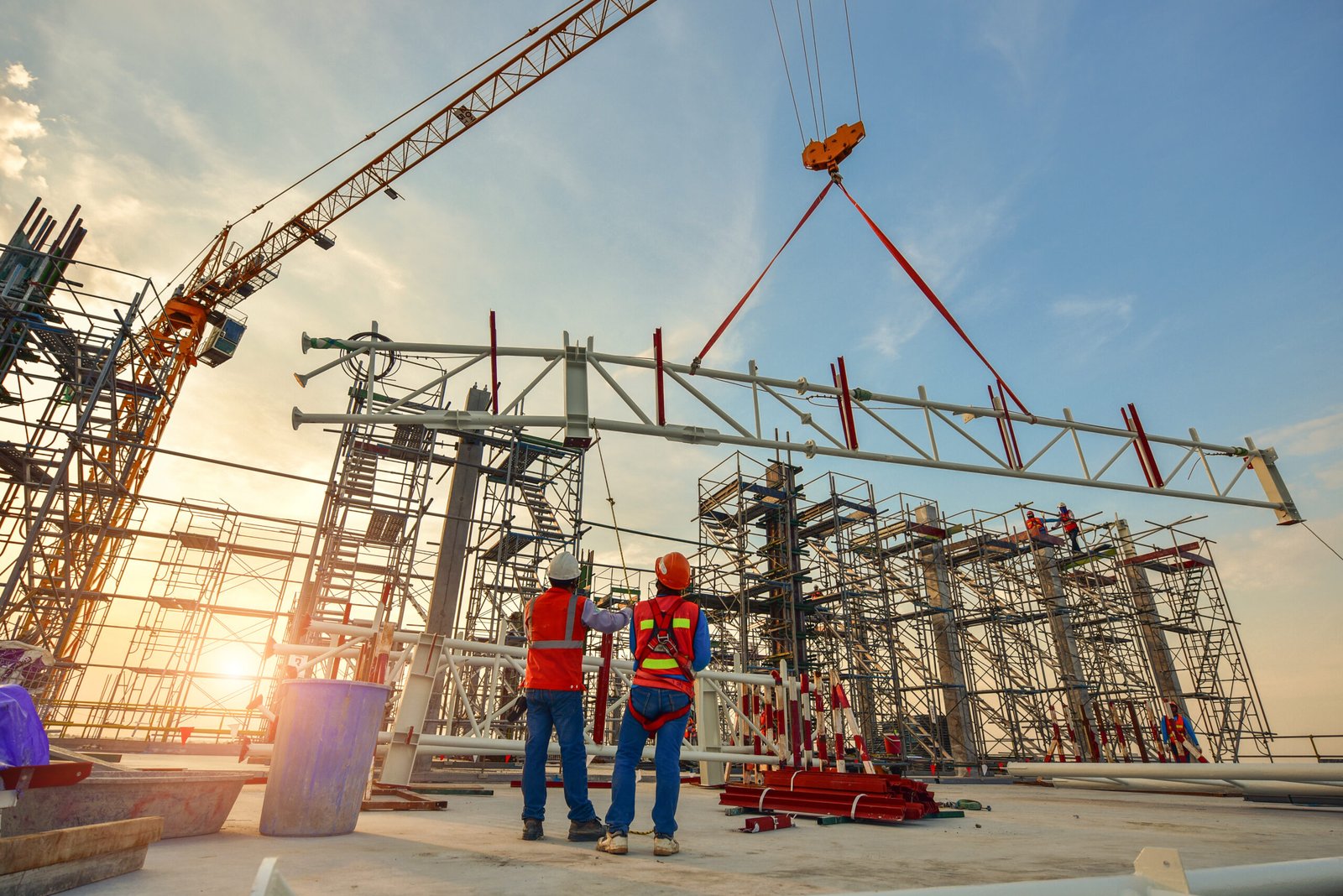
Concrete and Site Work for General Contractors and CM Firms in Las Cruces
Most general contractors call us when the shell is fully designed and nobody has priced the dirt. By then the master schedule already assumes a finished pad in a set number of weeks, and the trades behind us are counting on dry grade and a clean slab on specific dates. We are built for that handoff. We take the civil and concrete packages as one scope, which gives you one contract, one superintendent talking to yours and one place to look when a date slips.
In Las Cruces and Dona Ana County the work swings widely. The New Mexico State University campus occupies a core of 900 acres beside I-25 and I-10, with Fall 2025 enrollment of 23,888 across the university, so campus projects mean live pedestrians, shared utilities and tight laydown. Arrowhead Park, the 224 acre research park at the south end of the campus between the two interstates, lists a Dona Ana Community College Creative Media Technology Building and a planned Film and TV Soundstage Complex among its projects, where flat slabs and clean pads set the pace.
What follows is how we plug into a GC or CM team: how we price, what we manage, how we run the calendar and what to watch for on inspections. We write unit prices so you can carry them in a GMP without padding.
How we fit into your buyout
We bid by line item. Yardage of slab, linear feet of footing, square feet of flatwork, cubic yards of cut and fill, and linear feet of pipe each get their own unit price, with a plain qualification list underneath that says what is in and what is not. Pumping, curing compound and field finishing are in. Testing lab fees and special inspection usually belong to the owner, and we say so in writing so nobody finds out in the pay application.
During preconstruction we are happy to sit in on constructability reviews. We look at control joint layout against column grids, embed and sleeve coordination with the MEP drawings, and utility conflicts that potholing and locating can settle before a trencher is on site. An hour with the drawings in the preconstruction phase usually saves a change order in the field.
Concrete and dirt packages we take on
For a ground-up building we typically cover clearing, mass grading, building pad preparation, footings, grade beams, slab-on-grade and the site concrete around the building. For heavier structures we also place tilt-up panels, elevated decks and structural walls, coordinating crane and brace sequencing with your erector.
Underground, we install water, sewer, storm and fire service lines and the structures that go with them, and we build the electrical duct banks and conduit runs the utility asks for. When the owner is a school district or hospital, the same team can also coordinate the accessible routes, ramps and exterior flatwork that finish out the site. Your superintendent gets one lookahead for all of it.
People you can call by name, not by sub-of-sub
Managing the scope as one package matters on a GC's schedule because it removes layers of subcontractor handoffs. The same company that coordinates the concrete formwork also coordinates the rebar, schedules the pump, and manages the pour, finishing and curing. If the engineer revises a detail on Tuesday, you talk to the people who will coordinate it Wednesday.
The same goes for dirt. We coordinate the proof-roll, the compaction testing with the lab, and the bedding, pipe and backfill in lifts. Those are small-looking sentences, but they describe where schedule risk disappears: nobody is waiting for a different company to finish its part of the pad before ours can start.
Pour calendars and look-aheads you can post
Every pour on our calendar has a readiness list: forms and steel inspected, embeds verified against the latest shop drawings, pump and ready-mix confirmed, and a curing plan matched to the weather, plus the testing and quality control visits that go with it. Southern New Mexico adds its own wrinkles, since June highs average 96.2 degrees F and spring afternoons can be windy with blowing dust. We schedule placements early in the day and move a pour when conditions are wrong rather than push through and patch later.
We publish a three-week look-ahead to your superintendent and update it as the weather and inspections change. If a trade ahead of us slips, we tell you what it does to the next pour the same day, with the delivery tickets and testing windows that depend on it.
Open excavations, trucks and silica on a shared site
On a busy GC site, concrete trucks, pump booms, excavators and other trades share the same ground. We write a daily plan for truck access and pump location, mark trench and excavation edges, and protect open cuts with sloping, shoring or boxes as the soil requires under the federal excavation standard. When we saw or core cured slabs, we control dust with water or vacuum capture and keep other trades out of the cut zone.
We also follow the owner's site rules, whether that is a campus requiring badging and escorted access or a plant with permit-to-work procedures. Bring us your safety plan early and we will line our task hazard sheets up with it.
Licensing, codes and inspection coordination
New Mexico's 2021 Commercial Building Code adopts the 2021 International Building Code as amended and took effect July 14, 2023, and that edition is what your special inspector will use on structural concrete. The state's GB-98 General Building classification requires four years of foreman level experience, at least two of them commercial, so as the prime you should confirm the license classification on the whole team before award.
For work done for schools and healthcare owners or for industrial and manufacturing owners, expect the owner's own standards to sit on top of the code, and tell us early where they apply to tolerances, mix designs or testing.
Put us on your bid list
Send the drawings and your bid date. We will return a unit-priced proposal with exclusions spelled out, and we are glad to walk the site with your estimator first.
Questions Owners Ask
Do you bid lump sum or unit price to a CM at risk?
Both work for us. On a CM at risk project we like to give a unit-price breakdown that rolls up into a GMP number, so changes can be priced from agreed rates. For a hard-bid project we give a lump sum with a clear list of inclusions and exclusions.
How much notice do you need before a pour?
For a slab or structural placement, give us at least a few working days so we can confirm ready-mix, pump and crew and lock the inspection. Small flatwork placements need less. We would rather schedule a pour one day later with everything in place than move fast and show up without the inspector.
What do you need from our team before we mobilize?
The signed drawings and specifications, the geotechnical report, the site logistics plan with truck access and laydown, and the latest utility locates. We also ask for the owner's safety and badging requirements so our workers are cleared on the first day.
Who coordinates the special inspector and testing lab?
The owner or the GC normally hires the lab. We coordinate the schedule with them, hold placements for required inspections, and keep a log of slump, air and cylinder results. That log goes into your closeout file.