Concrete Testing and Quality Control on Las Cruces Projects
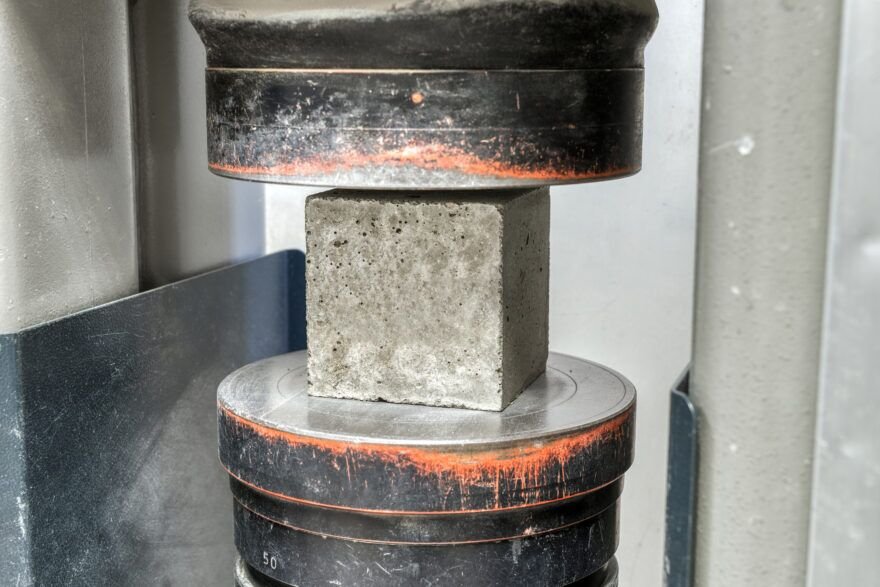
Cylinders break on a schedule, not on yours. A set cast on Monday is tested at seven and twenty-eight days, and if the numbers come back low the building does not wait politely while everyone sorts out what happened. That is why we treat testing as part of the pour plan rather than an afterthought handled by whoever shows up with a clipboard.
In Las Cruces, the commercial code in force is the 2021 New Mexico Commercial Building Code, which adopts the 2021 International Building Code as amended. Structural concrete under that code comes with special inspection and material sampling requirements, and the engineer of record writes the specific list of what gets tested and how often. Our job is to make that list easy to meet: sample access, shade for fresh cylinders, a clean place to run slump, and a ticket for every load.
The rest of this page walks through what gets sampled, who does what, and how we keep a failed break from turning into a schedule crisis.
What the code and the drawings ask for
The building code adopts the 2021 International Building Code as amended, and the structural drawings turn that into project-specific requirements: minimum compressive strength by element, air entrainment where exposure calls for it, maximum water-cement ratio, and testing frequency. Read the general notes first. They often say that tests are required at a set interval, such as one set for each 100 cubic yards or each day's placement, and that cylinders must be field-cured as well as lab-cured for certain elements.
We also read the specification section on concrete for hold points. If the engineer wants to see subgrade, rebar and embeds before any placement, we write that into the schedule, not into a call the morning of the pour. Where the drawings and the specification disagree, we raise a question with the design team before the order goes to the batch plant. A quick clarification on Tuesday is cheaper than a cut-out on Friday.
How we run sampling on the day
Sampling begins at the truck. The testing technician pulls the sample from the middle of the discharge, not the first or last few feet, checks slump and temperature, runs air content on air-entrained mixes, and casts cylinders in clean molds. We provide a level spot, shade, a curing box and a water source, and we do not touch the cylinders after they are cast. Cylinders stay still for the first day, then go to the lab or a controlled field box.
We keep our own simple records alongside the agency: truck number, batch time, arrival time, water added on site if the engineer permits it, placement location and weather. These notes make it possible to trace a questionable cylinder back to a truck and a section of slab. For large placements, we coordinate with the pump crew, as described in our notes on concrete pumping and placement, so the technician and the hose are never fighting for the same spot.
What gets tested, element by element
Footings and foundation walls usually follow the general frequency set in the structural notes. Slabs on grade add flatness and levelness measurement when the floor is specified for it, which we address under super flat floor slabs. Rebar is inspected before placement for size, spacing, cover, laps and chairs, and embeds and anchor bolts get a check against the drawings before the forms are closed.
Mass placements add temperature monitoring, since thick sections generate heat in the core and cool at the surface at different rates. Post-placement work includes verifying curing method and duration, and recording sawcut timing on slabs so joints are cut before random cracks form. Sitework has its own tests, such as soil compaction on pads and trench backfill, and we keep those separate from concrete records so each inspector has a clean file.
Heat, wind and the realities of desert curing
Las Cruces averages 9.14 inches of precipitation a year and its June highs average 96.2 degrees F, with windy spring afternoons that can carry dust. Those conditions affect testing more than people expect. Fresh cylinders left in direct sun can run hot and test high or low for the wrong reasons, and an unprotected field-cure box can swing in temperature. We keep cylinders in shade and use temperature-controlled boxes where the specification asks.
For the slab itself, the same weather affects early strength and finishing. Fogging, evaporation retarder, wet curing or curing compound and windbreaks all go on the plan before the pour. Then if the engineer asks why one corner of a slab looks different from the rest, our records show how that corner was cured. When a cylinder comes back below the target, the first step is to review the record, then core or non-destructive test the structure, as the engineer directs. Any corrective step is agreed with the engineer, never decided by the contractor alone.
Where testing meets the rest of the scope
Quality control is easier when the work around it is organized. Good rebar placement and well-built formwork make inspections quick, and a tidy subgrade makes the pre-pour approval a formality. We also tie testing to cold or hot-weather decisions, since temperature limits during placement come from the same specification. Commercial buildings carry that whole chain of approvals, as laid out in our commercial concrete contractor scope.
Healthcare work leans hardest on documentation. Local hospital operators have been investing in the city, including more than $10 million for a freestanding emergency center on North Main Street, and owners on projects like that often want every cylinder report organized by floor and element. We hand over a binder or digital file that follows the sequence of the building, and we work through it with schools and healthcare owners who must close out records for a permit.
Bring us the test requirements early
Send the concrete specification and the structural notes and we will map out sampling, curing and inspection holds before the first pour. For work near the MountainView medical district, we can walk the site with your inspector in advance. A short call now saves a long email thread later.
Questions Owners Ask
Who pays for concrete testing, the contractor or the owner?
It depends on the contract. On many commercial projects the owner hires and pays the independent testing agency, while the contractor pays for retests caused by rejected work. We read the contract and the specification at the start and tell you which costs sit where. Either way, we coordinate access and make sure the agency has what it needs.
What happens if a seven-day cylinder breaks low?
A seven-day break is an early indicator, not a final verdict, since concrete keeps gaining strength. We look at the batch ticket, the temperature and the curing record, and we tell the engineer promptly. The twenty-eight-day number is the one that counts, and if it is low the engineer decides whether to core, load test or leave the work in place. Panic does not help, but speed in getting records to the engineer does.
Can we add water on site to make the mix easier to place?
Only if the specification permits it and the engineer approves, and then only up to the limit on the batch ticket. Adding water raises slump but lowers strength and increases shrinkage cracking. We prefer to ask the supplier for a mid-range or high-range water reducer and send a correctly designed mix to the site.
How long should curing last in our summer weather?
The specification sets a minimum, often seven days of moist curing or a compound applied right after finishing. Heat and wind shorten the window in which the slab can lose water, so we start curing as soon as the surface can take it. For floors with a hard finish, we also discuss timing with the owner so equipment loads do not arrive too early.
Does a medical or school project need extra testing?
The structural engineer sets the list, and public and healthcare work often involve more documentation and sometimes more inspection hold points. We plan the schedule around those holds and keep a clean file. If your project is a hospital or an outpatient clinic, talk with us before the pour schedule is set.