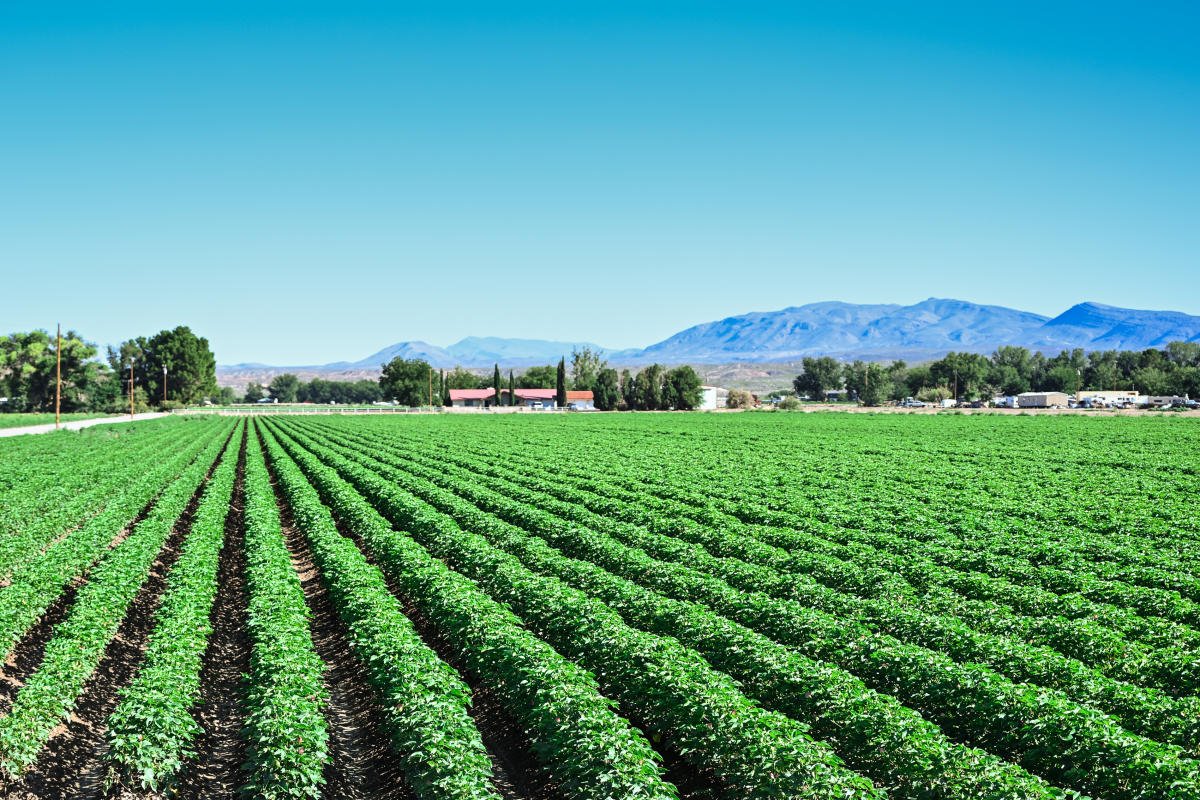
Agricultural and Processing Site Work in Hatch, New Mexico
Packing-shed floors get hosed down every day, driven on by forklifts and loaded with pallets of produce, and a floor that was not built for that starts to fail in a season or two. Hatch is chile country, and the owners we talk to here want concrete that drains to a trench, resists water and cleaning chemicals, and does not heave when the ground gets wet. We build those floors, the aprons and truck courts around them, and the water and sewer lines that serve the building.
Hatch is known worldwide for raising chiles, and the annual Hatch Chile Festival occurs each Labor Day, so the village sees a spike in visitors and truck traffic right when harvest is in full swing. The village had 1,539 residents at the 2020 census, which is small, but its agricultural footprint is large. Farm irrigation around Hatch uses wells and surface water from ditches that divert water from the Rio Grande and from Caballo Lake and Elephant Butte Reservoir, about 20 miles north of the village.
For site contractors, that water network matters. Ditches, headgates and field drains define where we can dig and where runoff has to go. A pad built next to a lateral without a drainage plan will flood the first time the ditch runs full. We plan the grading, outfall and any culvert crossing with the ditch owner in mind before we ever move dirt.
Farm, processing and storage owners
Agriculture and dairy owners are the core of the Hatch market. They need processing and packing buildings, cooler pads, equipment foundations, wash-down floors, loading docks and yard paving for trucks that haul product out. Their budgets are tied to the season, so they usually want to start right after one harvest and be done before the next one. We build the schedule backward from that date.
A processing owner thinking about food and beverage processing also needs sanitary floor slopes, drains, curbs to protect walls and a surface that can be cleaned. We detail those items at the start and share the details with the design team, since a wrong slope cannot be fixed without grinding or replacing the slab.
Wash-down floors, aprons and equipment pads
A typical Hatch scope has several parts. We grade and compact the pad, install underslab drains and plumbing in coordination with the plumber, place a vapor barrier where the plans call for one, and pour a floor with built-in slopes toward trench drains and concrete drainage channels. Joints get sealed or filled to keep water and debris out. Curing is slow and wet rather than fast and dry.
Outside the building, we pour truck aprons, scale pads, bin pads and equipment bases. These slabs see heavy point loads, and they get washed too, so thickness, reinforcement and surface texture are chosen for both. If a conveyor or sorting line is moving into an existing building, we saw, break out and replace only the section needed.
Rail, highway and where the product goes
Hatch is located just off Interstate 25, about 40 miles northwest of Las Cruces. On the Interstate 25 exit list, exit 41 is NM 26 west to I-10, toward Hatch, Deming and Lordsburg. The Southwestern Railroad also passes through Hatch. That mix of interstate, state road and rail gives shippers options, and it gives us a clear haul route for materials too.
When we plan a yard or truck court near the rail line or the highway, we pay attention to crossings, right-of-way boundaries and turning movements. A site that depends on the Southwestern Railroad needs coordination with the line's owner before we cut a trench or place an approach slab. We make the request early and plan the work around their answer.
Ground, elevation and the irrigation season
Hatch has a listed elevation of 4,062 feet, a bit higher than the Las Cruces area. That gives winter pours a little more risk, and we keep cold-weather protection available for them. During summer irrigation, groundwater and wet ground are a larger concern for excavation, so we watch trench conditions and plan for pumping if a trench fills.
We also pay attention to soil. We rely on the geotechnical report for the site, and we proof-roll the finished subgrade before placing forms. A wet or soft area gets over-excavated and replaced with compacted fill, or stabilized, before concrete goes on top of it.
Utilities and the work around the building
Agricultural buildings need water, sewer or septic, electric, and often fire protection. We install underground utilities as part of the site package, from the main to the building stub, and we coordinate with the electrical contractor on conduit and duct banks. Doing the underground early means the slab crew can pour without interruptions.
Owners also ask us about work in Rincon and Salem, both close by in the Rio Grande valley, since they share suppliers and project owners with Hatch. If you are building in more than one place, we price shared mobilization and keep the schedule coordinated.
Pour windows around harvest and festival traffic
Harvest and festival traffic can overload the local roads, so we plan deliveries to avoid peak times. Ready-mix trucks need clear access, and a slab pour that is delayed an hour by a traffic jam can cause a cold joint. We plan alternate routes, check with the batch plant on timing, and have a second finisher ready for long pours.
For work that must be completed before the season, we build in float, because weather, inspections and materials can all slip. If a deadline is firm, we schedule the critical pours earlier and move the less critical flatwork to later weeks.
Planning ahead of harvest in Hatch?
Send the building size, the process and the date you want to be operating. We will return a scope, a sequence and a price, with the drainage and floor details spelled out.
Questions Owners Ask
What kind of floor do you recommend for a washdown area?
A dense, well-cured slab with enough reinforcement and a mix designed for low permeability, sloped to drains at about the slope the design specifies. The finish should have enough texture for traction without trapping residue. The structural engineer and the food-safety consultant, if there is one, set the final requirements.
Can you work around a ditch or lateral?
Yes, with advance coordination. We find the owner of the ditch, learn when water is flowing, and design the work so we do not interfere with deliveries. Any piping, crossing or relocation of a ditch needs approval from the ditch owner.
Do you build cooler and cold-storage pads?
We build the slabs and the site around cold-storage facilities, including underslab insulation and heat protection where the design requires it. The refrigeration system is a separate trade. We coordinate pour dates and embedded items with that contractor.
How should we plan an agricultural project around harvest?
Start the design and permitting early, order long-lead items, and aim for the heavy concrete work to finish before the season begins. We can build a schedule with a target completion date and flag the dates by which decisions need to be made.
Will rail or highway access affect our pad design?
It can. Truck turning paths, grade differences at the road, and rail crossing rules all affect the layout. We review them early and adjust the pad, apron and joint plan to fit.