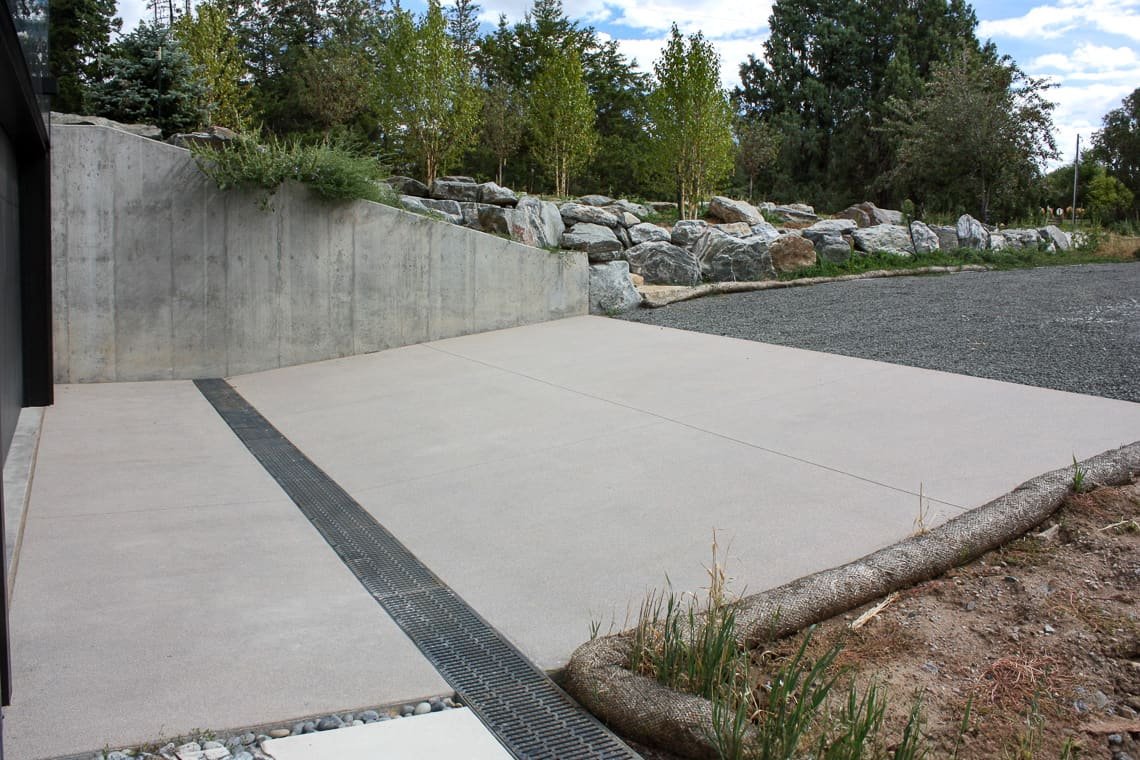
Trench Drains and Concrete Drainage in Las Cruces
Most days the Mesilla Valley wants for water. Then a thunderstorm drops an inch in an hour and every paved surface becomes a channel. A parking lot with a trench drain across the low end, a truck court with a concrete valley gutter or a hangar floor with a wash-rack drain is the difference between a wet afternoon and a flooded building.
We build trench drains, area drains, concrete valley gutters, swales, flumes, inlets and aprons. Some of them carry rain. Some carry washdown water from dairies, food plants and truck wash bays. A few carry both, which is where the design gets interesting, because stormwater and process water often have different rules about where they can go.
We work with civil engineers, general contractors, municipalities and owners to build drainage that works the first time water arrives. A drain that is two inches high at the wrong end does not work, and nobody notices until the first big storm.
Flat ground, flash water
The reference article on Deming notes that minor flooding sometimes occurs over large areas of flat ground, and the same description fits many sites in southern New Mexico. Water does not run far, it spreads. On flat lots the difference between a drain and a puddle is a quarter inch of slope per ten feet, and concrete finishing has to be accurate to hold.
Sunland Park sits next to the Rio Grande at the foot of Mount Cristo Rey, a setting where drainage has to be planned with both the river and the hill in mind, while Las Cruces is crossed by arroyos described as dry streams that often carry water after heavy thunderstorms. A site drainage plan that ignores where the offsite water comes from will fail. We ask for the drainage study and read it with the grading plan, and we flag mismatches before we pour.
Drains we install
Channel drains, often called trench drains, sit in a concrete trench with a grate at surface level. We excavate to depth, set the channel sections on a bed at the drawn slope, tie the outlet to the pipe and encase the channel in concrete with reinforcing as specified. The grate class (light duty for walkways, heavy duty for trucks and forklifts) is matched to the traffic. Frames are set flush with the surface and protected during the pour.
Concrete valley gutters carry water across paved areas. We form them to the design shape, usually a shallow V or a flat-bottom swale, and pour them with the surrounding pavement. Inlets, catch basins and aprons tie the drainage into storm pipes. Where the project includes new pipe, we coordinate with the crew installing the storm drain system so inverts and tie-ins match.
Plumbing code and site drainage rules
Drains that connect to building plumbing fall under the plumbing code. The Regulation and Licensing Department's code page lists the 2024 New Mexico Plumbing Code (14.8.2 NMAC) as effective August 1, 2026, with permits issued under either the 2021 or 2024 edition until January 1, 2027 and only under the 2024 edition after that. Because the transition date is close, we ask which edition the permit was issued under and make sure the drawings and the work match.
Site stormwater is a different regime. Municipal drainage ordinances and construction stormwater permits control where site water can go, how fast and with what treatment. Wash areas may need an oil-water separator or connection to sanitary sewer. We build the concrete and make the connections shown on the plans, and we raise questions when the plan shows a discharge point that is not clear.
Slope, subgrade and the pour
Drainage concrete is only as good as the slope under it. We set a laser or string line and shoot grades on the subgrade and again on the forms. The subgrade is compacted to the required density, because a soft spot under a trench drain becomes a low spot that holds water. Reinforcing is placed to keep the trench walls from cracking, and expansion joints are placed where the pavement and the drain meet.
Before the pour we verify invert elevations and channel slope. After the pour we flood-test the drain, usually with a hose, and watch the water. Water that stands is a problem we fix while the concrete is still fresh or soon after. We also protect grates and keep construction debris out of the channel, since a drain full of slurry is a drain that does not work.
Where drainage work is demanded
Airports and aviation are one example. Utilities, lighting and taxiways were being extended on the east side of Las Cruces International Airport to support hangar development, and hangar floors, aprons and wash areas need drainage designed for fuel and water. Logistics and warehouse developers ask for drainage across truck courts and dock aprons, where hundreds of square feet of pavement drain to a single inlet.
Agriculture and dairy owners need washdown drains and manure-handling slabs that slope to controlled collection points. Municipal clients want curb inlets, flumes and valley gutters that move street water to the storm system. Each has its own details, and we adapt the construction method to match.
What changes the cost
The channel system, grate class and length drive material cost. Depth, soil conditions and tie-in distance drive labor. A trench drain through an existing slab means saw cutting, demolition, installation and patching, which is more than twice the labor of a trench drain in a new pour. We separate those items so owners can compare options.
Choosing the right grate saves money too. Heavy-duty cast iron costs more than light-duty plastic, but a light grate under a forklift is a repair bill. Our concrete sawing, cutting and coring page covers the cutting side of retrofit drain work.
Water going the wrong way?
Send us the grading plan, the drainage study and a photo of the problem. We will confirm slopes, propose a drain layout and give you a price. For the underground side, see our page on culverts and headwalls.
Questions Owners Ask
How much slope does a trench drain need?
Many channel drains are installed with a small built-in slope, and the surrounding pavement must slope toward the drain at a design rate, often 1 to 2 percent. The drawings decide. We shoot elevations to confirm.
Can I put a trench drain in an existing floor?
Yes. We saw cut the trench, break out the concrete, set the channel and pipe, and pour the encasement. Patching and curing take a couple of days before heavy traffic returns. Connecting to a sanitary or storm line is part of the work.
What grate do I need for trucks?
Heavy-duty grates rated for the wheel loads, usually cast iron or ductile iron, with frames set solidly into the concrete. Light-duty plastic or galvanized grates are fine for pedestrian areas. The engineer picks the class and we install it to the manufacturer's instructions.
Do washdown drains need a separator?
Often. Wash areas for vehicles, equipment and food processing may require an oil-water separator, grease trap or sump before discharge. The plumbing design and the local authority decide, and we build to that design.
What if a storm hits right after the pour?
We cover fresh concrete when rain is forecast, and we protect the finish. A heavy storm on young concrete can scour it. If a storm does arrive, we inspect afterward and repair any damage.