Concrete Sawing, Cutting and Coring in Las Cruces
Every building that was ever poured eventually needs a hole in it: a trench for a new drain line, a door opening, a penetration for a pipe, a slot for conduit, a strip removed so a new pad can tie in. Cutting concrete is the part of a renovation that has to be right the first time, because the cut edge is what everything else gets built to.
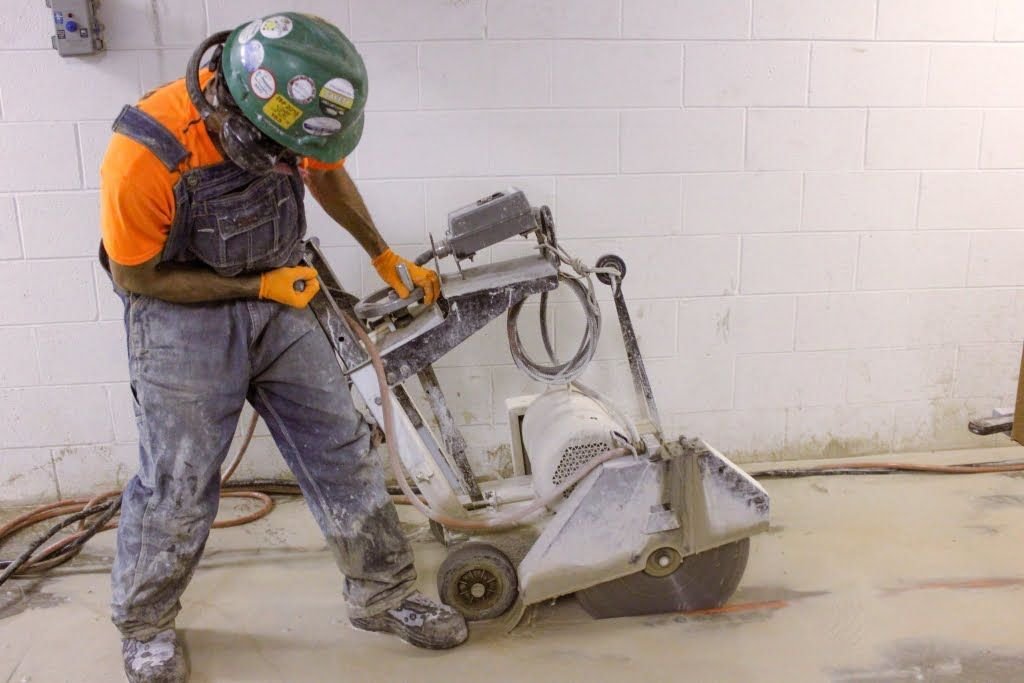
We cut slabs, walls, decks and pavements with walk-behind saws, wall saws and core rigs, and we scan before we cut. Rebar, post-tension tendons and embedded conduits are not always where the drawings say, and a blade or bit that hits one can cost far more than the saw cut itself. A quick scan with ground-penetrating radar or an electromagnetic scanner is almost always worth the time.
Our customers are general contractors, tenants and owners who need clean, accurate openings made in occupied or active spaces. We work with plumbers, electricians and framers so the opening is the right size when they show up.
Scan, mark, cut
First we locate what is in the concrete. Slabs on grade may have mesh or bar near the surface, suspended slabs may have post-tension cables, and older buildings may hide conduit nobody drew. We scan, mark the findings on the surface, and confirm with the engineer before cutting anything structural. When the structure demands it, we core small pilot holes and look.
Then we plan the cut. Saw cut depth, blade size, order of cuts and how the concrete piece will be removed all matter. Corners are overcut or cored to avoid stress cracks. Large pieces are lifted out with lifting eyes or broken in place, depending on weight and access. Slurry is vacuumed or contained, and we leave the edges clean enough that the next trade can set forms or dowels without chipping.
Silica, water and weight
Respirable crystalline silica is a real hazard in concrete cutting, and the controls are not optional. We use wet cutting where we can, vacuum shrouds and local exhaust where wet is not possible, and respiratory protection when the task requires it. Interior work gets containment, negative air where appropriate and floor protection. Slurry is collected, not washed to the storm drain.
Weight is the other risk. A cut slab section can weigh several tons, and releasing it without support is how people get hurt. We plan how each piece will be supported and lifted, set barricades under suspended slabs, and coordinate with the general contractor on shoring when we cut near a structural member. Utilities are located before any trenching cut, and we confirm the status of every line we are close to.
Working in occupied buildings
Many of our cuts happen in buildings that are open for business. Hospitals, schools and retail centers are examples where noise, dust and water must be controlled. Memorial Medical Center, listed among Las Cruces hospitals as a 286-bed facility with a building dating to 1971 on South Telshor Boulevard, represents the kind of older facility where cuts go through slabs poured long ago, and where the owner will want after-hours work and clear communication. We schedule noisy work for nights or weekends when asked and coordinate with the facility's infection control staff when required.
On new construction, cutting often follows the pour by a day or less. Early-entry saws cut control joints within hours, before shrinkage cracks form, and the timing is critical. A late cut leaves random cracks. We stage the project trade crew and equipment so the joint layout is cut as soon as the surface will take the blade without raveling, a window that is short on hot, windy days.
What we cut
Slab on grade: trenches for plumbing and electrical, openings for equipment, and control joints. Walls: door and window openings, ductwork penetrations and removal of sections for expansion. Elevated slabs: shafts, floor penetrations and stair openings after approval. Pavements: utility cuts, joint cutting and panel removal. Core drilling: holes from half an inch to several feet in diameter for pipes, fasteners, drains and inspection.
We also remove concrete with controlled methods, such as wire sawing and chain sawing, when walls are too thick for a conventional blade or when vibration must be limited. Where a piece is removed completely, we tie into our concrete demolition and removal work so the debris leaves the site together with the cut-out.
Campuses, parks and industrial tenants
The campus of New Mexico State University covers a core of 900 acres adjacent to Interstate 25 and bordered by Interstate 10, and buildings of many ages share that ground. Renovations there often need cores for new utilities and openings in older slabs. Arrowhead Research Park, a 224-acre development at the southern end of the campus, was built with a federally funded infrastructure project that widened Arrowhead Drive from two lanes to four and completed the wastewater system, and the buildings that followed bring fit-out work of their own. Our schools and healthcare owners page describes how we handle those occupied sites.
Industrial and manufacturing owners hire us to cut trenches for new equipment, remove old pads and open floors for process lines. In every case, we coordinate with the owner's safety lead and make sure the production schedule is respected.
Where cutting meets other scopes
Cuts are part of other jobs more often than they are standalone. Installing a new drain in an existing floor ties to our trench drains and concrete drainage work. Adding a pad for new machinery connects with equipment pads and machine foundations. Replacing a damaged area leads to patching, covered in concrete repair and restoration.
If your project involves several of these steps, ask us to bundle them. A single mobilization saves time and money, and a single team coordinating the cutting, removal, forming and pour keeps accountability clear.
Need an opening made?
Send us the drawings or photos, tell us what is in the way, and we will scan, mark and quote. We can also coordinate with your plumbing, electrical and structural trades. If you are renovating for a developer, our commercial developer page explains how we work with owners.
Questions Owners Ask
How do you avoid hitting rebar?
We scan the area with radar or an electromagnetic scanner, mark what we find and adjust the cut layout. If we must cut through steel, we do it deliberately, with the engineer's approval and sometimes with supplementary reinforcement afterward.
Can you cut concrete inside an occupied building?
Yes. We use wet cutting or vacuum systems, containment, floor protection and off-hour scheduling when needed. For sensitive spaces like clinics and classrooms, we coordinate with the facility team in advance.
When should control joints be cut in a new slab?
As soon as the concrete will hold the blade without raveling, often within hours on a warm day. Waiting too long risks random cracking. We time the cut by testing the surface and watching the weather.
What size cores can you drill?
From small bolt holes to cores several feet across. Larger cores need a rig fixed to the slab and good water control. We confirm the diameter, depth and reinforcement before drilling.
How is slurry handled?
We vacuum slurry from the cut and collect it for proper disposal. It does not go down a storm drain or onto the ground. Where the slurry is alkaline, we treat it according to the project requirements.