Concrete Repair and Restoration in Las Cruces
Six blocks of Main Street became a pedestrian mall in 1973, and downtown Las Cruces has been asking its concrete to carry foot traffic, market stalls and weather ever since. That is the kind of wear we repair: not new work gone wrong, but good concrete that has spent decades in sun, cold nights and occasional heavy rain, and is starting to spall, crack or settle.
Repair is a different skill from new construction. New concrete goes into clean forms on a prepared base. Repair concrete has to bond to old concrete, match what is around it, and cure fast enough that the owner can reopen the space. A bad patch looks fine for a year, then lifts. A good one survives the next ten.
We repair slabs, sidewalks, docks, columns, beams and equipment pads on commercial and public sites. We start every job with a survey, mark what is bad, sound the rest, and tell the owner what is worth repairing, what should be replaced and what can wait.
Why concrete fails the way it does here
Desert climates look gentle on concrete but are not. Las Cruces averages 9.14 inches of annual precipitation, with summer highs averaging 96.2 degrees in June and windy spring afternoons that carry blowing dust. Fast drying in that heat produces plastic shrinkage cracks in new slabs. Daily temperature swings open joints, and when the rare heavy storm arrives, water gets into those joints and the reinforcing steel starts to rust.
Irrigation and site drainage add more. Water that stands against a slab edge soaks the subgrade and lifts the edge or washes out support. Salts carried by irrigation or deicing products attack the surface. The repair is only half the answer: we look for the cause, whether it is poor drainage, a missing joint or a rusting dowel, and fix that or tell you how to.
Surveying before a single patch is cut
We begin with a walk and a hammer, sounding the surface for hollow areas and marking cracks by width and activity. A hairline shrinkage crack needs a sealer. A wide crack that moves with temperature needs a flexible joint sealant. A crack that keeps growing may point to settlement that needs a slab lift, which we cover in concrete leveling and slab lifting. If reinforcing steel is exposed, we measure the section loss and bring in the engineer when it matters.
Next we check the details that decide whether a repair lasts: surface profile, moisture, temperature and what is under the patch. A repair mortar placed over damp, dusty concrete will not bond. A patch set into a joint will crack when the joint moves. We write a short scope so everyone, including the owner, knows what the repair will and will not fix.
How we do the work
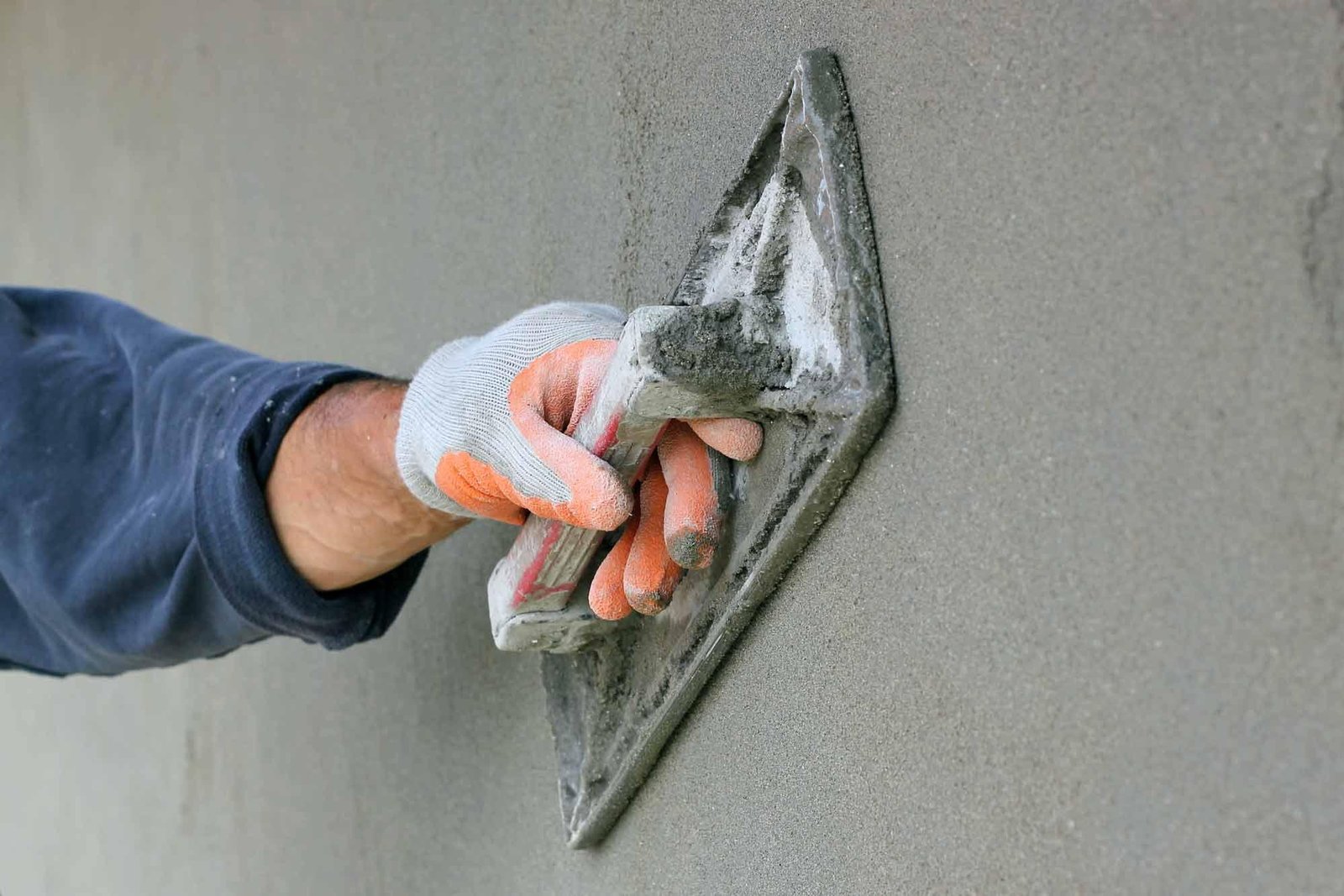
Removal comes first. We saw cut the perimeter of a repair area to avoid feathered edges, then chip or hydrodemolish the bad concrete until we reach sound material. Exposed bars get cleaned, coated if needed and supplemented when the loss is significant. We set forms where the patch needs shape, apply a bonding agent or scrubbed slurry coat to a saturated, surface-dry substrate, and place a repair material suited to the thickness: a polymer-modified mortar for thin areas, a flowable repair mix for deep voids, or conventional concrete when the depth justifies it.
Curing is not optional. In dry, windy weather a patch can lose water in minutes, so we use curing compound, wet burlap or plastic sheets right after finishing. Our hot and windy weather concrete notes apply to repair as much as to new pours. We also match texture so the repair does not become a visible scar.
Repair, restore or replace
The cheapest option is not always the best. A small spall repaired with a patch costs less than replacing a panel, but if the whole slab has failed subgrade, the patch will fail again. We give owners a three-way comparison where it makes sense: repair what is local, restore what is worn, replace what is beyond saving. Replacement includes demolition, subgrade fix, forms and new concrete, which we coordinate with concrete demolition and removal.
Cost drivers include area, depth, access, working hours and the owner's schedule. Night work or small phased areas add cost. Large flat areas that can be cleaned and resurfaced in a single operation are cheaper per square foot than scattered patches. We tell you where the breakpoints are so you can budget before approving.
Where we repair most
Public and civic space is a good example. The historic downtown and the La Mesilla Historic District, which includes Mesilla Plaza and was declared a National Historic Landmark in 1961, place special demands on any work in them. Repair must match appearance, protect surrounding materials and often respect review requirements. We discuss with the owner and the reviewing body how a repair will look and work before cutting begins. See our government and municipal page for related public work.
Industrial floors and docks are the other big category: joint spalls from forklift wheels, cracked slabs from heavy racking loads, and damaged dock approaches. Older commercial buildings may fall under the 2021 New Mexico Existing Building Code (14.7.7 NMAC) when an alteration or repair is permitted, and we ask the owner's design professional which provisions apply. Warehouse and distribution owners tend to need quick repairs that keep the dock open, so we plan phasing to match.
Seeing cracks or spalls?
Send us photos or ask for a walk-through. We will mark what needs attention and what can wait, and give you a written scope with a realistic duration. For ongoing work with property owners, our commercial developer clients can combine repair with new construction.
Questions Owners Ask
How do you know whether a crack needs repair?
We measure width, check whether it moves and look for water or staining. Hairline cracks that are not growing may only need a sealer. Wider or moving cracks need a flexible sealant or structural repair. Cracks that open over time can point to a larger problem.
How long before a repair can be used?
It depends on the material. Rapid-set repair mortars can take traffic in a few hours. Conventional concrete takes days. We choose the material based on the closure window you have, and we explain the trade-off in strength and shrinkage.
Will the patch match the old concrete?
We match texture and joint pattern, and we can tint materials when appearance matters, but color from old concrete is hard to duplicate exactly. For visible areas, we make a small sample area for the owner to approve.
Can you repair concrete without shutting down operations?
Often yes. We work in phases, barricade work areas and use fast-curing materials. For a dock, a warehouse aisle or a store entry, we schedule around your busiest hours and reopen the area at the end of each shift when possible.
What if the rebar is rusting?
We remove the damaged concrete around the bar, clean it, coat it if the engineer requires, and replace the cover with a repair material. If section loss is significant we bring in the engineer for supplemental steel. The cause of the corrosion is addressed too.