Concrete Leveling and Slab Lifting in Las Cruces
A slab that has dropped an inch at a joint is a trip hazard today and a drainage problem tomorrow. Lifting it back to grade can cost a fraction of replacement, if the reason it sank has been found and dealt with. If the soil underneath is still moving, lifting only buys a season. We start by working out which of those situations you are in.
Settlement happens for a handful of reasons in this region: broken or leaking irrigation and utility lines washing out the base, runoff pooling at a slab edge, soil that was never compacted well enough under a thickened edge, or the slow compression of fill placed over a poorly prepared site. Each leaves a different pattern, and each calls for a different fix.
We lift and level sidewalks, parking slabs, loading dock approaches, building slabs and equipment pads, and we tell you when a panel should be replaced instead. You will get a straight answer on the choice, not a push toward whichever scope is easier for us.
What lifting actually involves
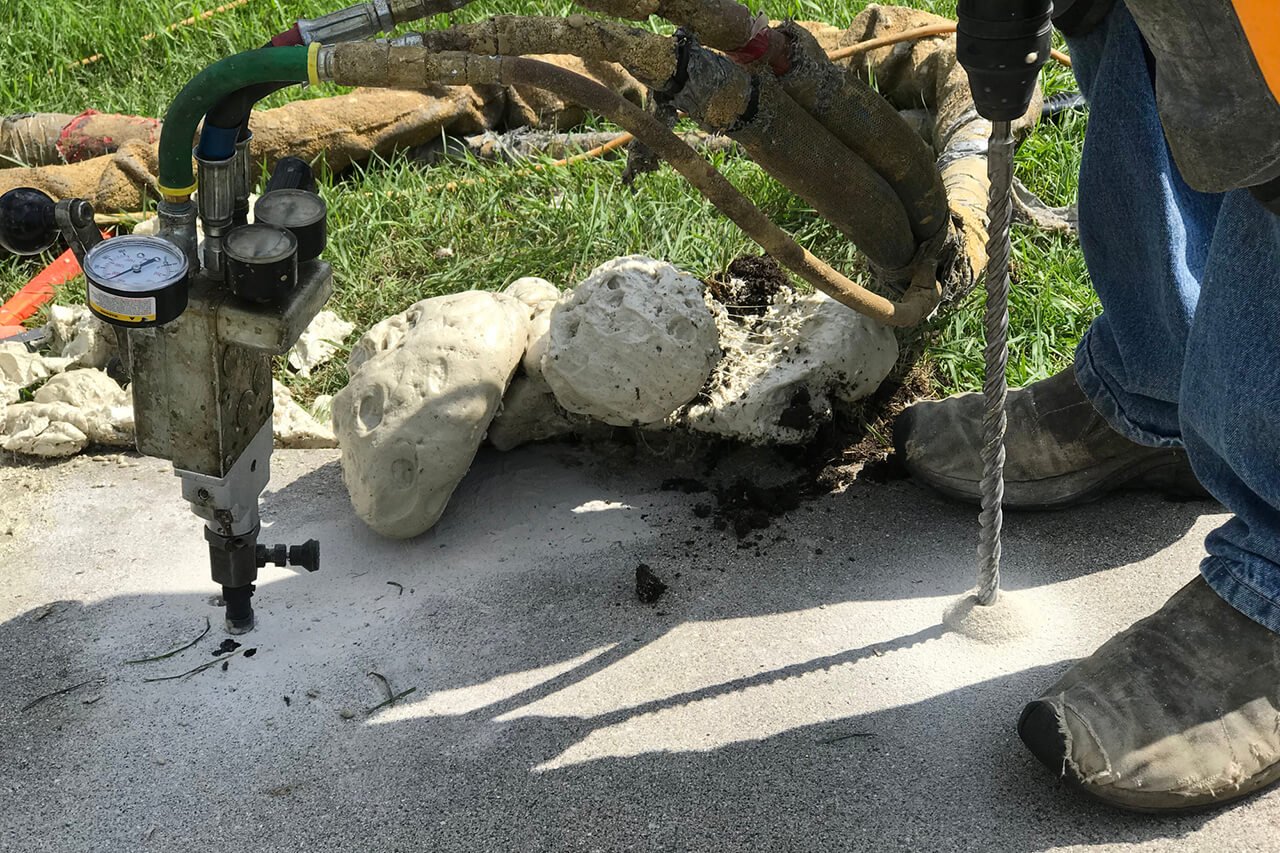
There are two common methods. Polyurethane foam injection places a lightweight, expanding material through small holes drilled in the slab, filling voids and raising the slab as the foam expands. Cementitious grout, sometimes called mudjacking when pumped at low pressure, uses a heavier slurry to fill voids and raise the slab through larger holes. Foam is lighter and cures fast. Grout is heavier and may suit larger voids or deep fill. We choose based on the void depth, the soil, the slab thickness and the load it carries.
The process is the same regardless of material. We drill injection holes in a pattern, monitor slab movement with a laser or a straightedge as we pump, and stop when the slab reaches grade. After lifting, we patch the holes, grind trip edges and seal joints and cracks to keep water out. A properly done lift is usually back in service within hours.
Water and flat ground
Settlement in the valley is usually a water story. Deming notes that minor flooding sometimes occurs over large areas of flat ground, and the same pattern of sheet flow and slow drainage affects many sites across the region. A parking lot or a dock apron with no clear path to a drain will pond, and water soaks into the base along joints and edges. Over time the base loses fines, voids form and the slab drops.
Irrigation lines and canals add risk. Farm irrigation around Hatch uses wells and surface water from irrigation ditches that divert water from the Rio Grande, so buried pipes and seepage are part of the picture near agricultural land. We trace the water source before recommending a lift, since lifting a slab and leaving the leak in place wastes the owner's money.
Lift, replace or leave
A lift usually costs less than replacement, takes hours instead of days and keeps the slab in service. It makes sense when the slab is structurally sound, the settlement is limited and the cause has been fixed. If the slab is cracked into many pieces, the reinforcement is corroded or the base is gone across a large area, replacement is the honest answer, and we will tell you so. Replacement includes saw cutting, removal, subgrade repair and new concrete; our concrete demolition and removal page explains that path.
Price drivers for lifting are the area, the depth of the void, the number of injection points and the access. Tight or interior spots cost more. Warehouse floors in large buildings, such as the 365,000 and 135,000 square foot speculative warehouses that private builders were constructing at Santa Teresa, are examples of slabs where an inch of settlement at a rack line can matter a great deal, and the cost of downtime is higher than the cost of the lift.
How we diagnose before we lift
We measure first. A laser or a rotating level gives us a settlement map across the slab, and a ground-penetrating or probe survey, when needed, shows voids. We note what is above and below: drains, downspouts, utility lines and the nature of the fill. We check whether adjacent slabs are also moving and whether joints are open. If the site is on a drainage path, we correct the drainage along with the lift, using trench drains and concrete drainage or regrading where needed.
During the lift we monitor continuously, because over-lifting is easy to do and hard to undo. We go slowly near joints, cracks and thin sections, and we stop when the slab is within tolerance. If a panel starts to crack under the pressure, we stop, release and rethink the injection pattern rather than pushing on, because a split panel will need replacement anyway. On interior floors we also protect racking, finishes and equipment from dust and drilling water, and we keep the work area small so the rest of the building keeps running. After the lift we leave the surface clean, with the injection holes patched and the joints re-sealed.
What often comes with a lift
Leveling is often paired with repair. Cracked slabs may need concrete repair and restoration to restore the surface, and spalled joints may need re-cutting and sealing. Truck courts and dock aprons that have sunk at the building line may also need a closer look at the underlying base. For logistics and warehouse developers, we can combine a lift with joint rehabilitation so the whole apron is restored in one visit.
On new projects, avoiding settlement starts with good subgrade work. The over-excavation and recompaction trade crews can correct weak material before the slab is poured, which is cheaper than lifting afterward.
Slab sunk or tilted?
Tell us where it is, how far it has dropped and what is around it. We will visit, measure and give you a lift-or-replace recommendation. For the bigger picture of slab work, see our slab on grade page.
Questions Owners Ask
How long does a slab lift take?
Most lifts are completed in a few hours. A single sidewalk panel may take under an hour. Large areas can take a day or two. The surface is usually ready for foot traffic immediately and vehicle traffic soon after, depending on the material used.
Will the slab settle again?
It can if the cause is still active. If a leak, a drainage problem or poor fill caused the settlement, we need to correct it. When the cause is fixed, a lifted slab can stay at grade for many years.
Is foam or grout better?
Neither is always better. Foam is light and cures quickly, which helps on weak soil and tight schedules. Grout is heavier and fills large voids at lower cost per volume. We choose based on void size, soil, access and load.
Can you lift a warehouse floor?
Yes, in many cases. We drill small holes, inject carefully and monitor tolerances. For floors with strict flatness requirements, we work with the owner's engineer to set targets. Some slabs with severe cracking are better replaced, and we will say so.
What does it cost compared with replacement?
Lifting is generally a fraction of replacement for the same area, since it avoids demolition, new concrete and long downtime. The exact figure depends on void size and access. We provide a written estimate after a site visit.