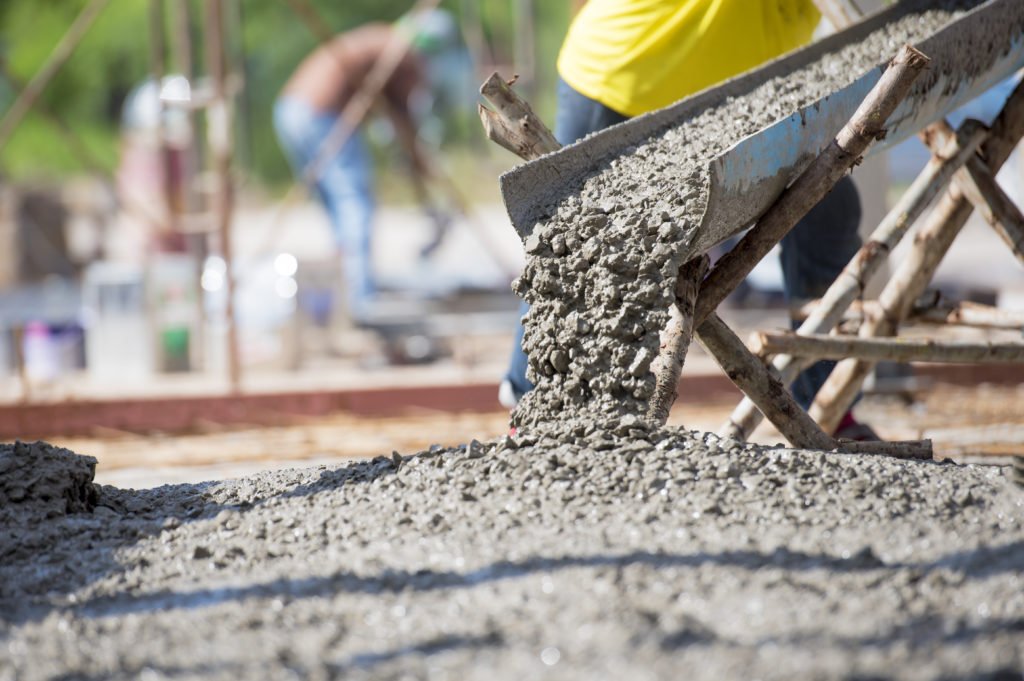
Hot and Windy Weather Concrete in the Mesilla Valley
Concrete loses water in two ways: the water the cement uses up, and the water the sun and wind pull off the surface. In a Mesilla Valley June you can lose the second kind faster than finishers can follow it. A slab that cracks across the middle by noon was not poured badly. It was poured without a plan for evaporation.
We plan hot and windy pours the way a farmer plans a field, around the calendar and the forecast. The forecast tells us the air temperature, the humidity, the wind speed and the sun. The mix tells us how fast it will stiffen. The crew tells us how many square feet it can finish before the surface starts to skin over. Everything else is arithmetic.
Our customers are general contractors, developers and owners who have a parking lot, a warehouse floor or a mile of curb to place in July and who cannot wait for October. The answer is not to avoid summer. The answer is to start earlier, stay organized and protect the surface.
The tools we bring to a hot pour
Mix temperature comes first. We ask the plant to deliver concrete at or below the specified maximum, using chilled water, ice or shaded aggregate when needed. Retarding admixtures buy finishing time on hot days, and the mix design is adjusted for slump and setting characteristics. We keep trucks moving at a steady rate so concrete does not sit in the sun, and we reject loads that arrive hotter than the spec allows.
On the surface, we use fog nozzles to raise humidity just above the slab, evaporation retardant sprayed on after screeding, windbreaks upwind of the pour and sunshades or tents over small areas. Subgrade is dampened to a saturated, surface-dry condition so it does not suck water from the bottom of the slab. Forms and reinforcing are cooled with a light spray when they are hot enough to heat the mix.
What the numbers say about this climate
Las Cruces averages 9.14 inches of annual precipitation, with summer highs averaging 96.2 degrees F in June, and spring afternoons that can be windy with blowing dust. That combination of heat, low humidity and wind is the textbook set of conditions for plastic shrinkage cracking, where the surface dries faster than bleed water can rise to replace it. The calculation that engineers use to predict evaporation rate takes air temperature, concrete temperature, humidity and wind speed, and a rate of about 0.2 pounds per square foot per hour is a common caution line.
Sites near the river and the border face the same pattern. Sunland Park sits next to the Rio Grande at the foot of Mount Cristo Rey at an elevation of 3,740 feet, and the large paved yards and warehouse floors of Santa Teresa, where private builders were constructing speculative warehouses of 365,000 and 135,000 square feet, expose big flat areas to the sun and wind. A big flat slab has lots of surface and nowhere to hide, so planning matters more as the pour gets bigger.
Start early, finish early, cure at once
Most hot weather pours start before sunrise. Cooler air, lower mix temperature and less wind give finishers an extra hour or two. We plan screeding and floating to keep up with the placing rate, and we schedule the finishing crew so no section sits waiting. When bleed water is gone and the surface is ready, we finish. When the surface is ready too early, we do not wait for convenience.
Curing begins the moment finishing ends. Curing compound goes on as soon as the surface will accept it, in the coverage the manufacturer specifies. On flatwork, wet burlap and plastic sheeting are an option. For slabs that will receive floor coverings or coatings, the curing method is chosen to be compatible, and we talk with the flooring contractor beforehand. See our slab on grade page for more on floor finish and curing.
What we ask before we schedule a hot pour
We ask about the pour size, the placing method, the distance from the plant and the number of finishers. A 100,000 square foot slab in a single day takes more people and more equipment than the same area in four pours. We ask about the mix: its cement content, slump and set time. We ask about access, because trucks stuck on a haul route in the heat mean concrete that is too old to place.
We also look for places where the pour could stall: a pump breakdown, a late truck, a lack of water for curing or a section of the site that cannot be reached quickly. A backup plan for each one, including a spare pump or a bulkhead location, is part of the schedule. Commercial teams working with logistics and warehouse developers tend to ask for large slabs, and we plan these in strips with controlled joints.
Heat illness and the crew
Concrete crews work in the sun on a surface that reflects heat. We schedule shade, water and rest breaks, start early to avoid the hottest hours and watch each other for signs of heat illness. New workers are acclimated to the heat over several days, not thrown into a peak-day pour. Supervisors know the symptoms and the first aid steps, and every crew member has water within reach.
Chemical safety counts too. Curing compounds, retarders and sealers have handling requirements, and we keep safety data sheets on site. Wind carries dust and overspray, so we stay clear of neighboring lots and cars. In extreme conditions we stop, because a rushed pour in 110-degree heat gives a bad slab and a hurt crew.
Heat applies to every scope
Hot weather practice affects concrete paving and sidewalks and flatwork, where large flat areas dry quickly. In each case, the same principles apply: cool the mix, keep the surface moist and cure early.
It also shapes mass concrete pours, where internal heat adds to the air temperature, and thin patches in repair work, which lose water in minutes. If you want to plan an entire summer of work, talk to us about phasing. We often move flatwork to early morning, schedule structural pours at dawn and shift curing and protection to the afternoon crew. That keeps the schedule moving without asking concrete to do what it cannot.
Summer pour on the calendar?
Tell us the size, the start time and the placing method. We will run the evaporation numbers, set the plan and recommend a start time. For work in the border communities, see our page on Sunland Park.
Questions Owners Ask
What is the biggest risk when pouring in desert heat?
Plastic shrinkage cracking. It happens when the surface loses water faster than it is replaced by bleed water, and it forms in the first hours. Early starts, fogging, evaporation retardants and quick curing reduce the risk.
What temperature is too hot to pour?
Many specifications limit concrete temperature at placement, often around 90 to 95 degrees. Air temperature, wind and humidity matter too. We calculate evaporation rate and decide whether a pour can proceed or should be moved to a cooler window.
Do you use ice in the mix?
When the specification requires it or the conditions demand it, yes. Ice or chilled water cools the mix without adding extra water. It must melt completely before discharge, so we coordinate with the plant on batching.
Is a night pour a good idea?
For some projects, yes. Night pours avoid the heat and wind of the day, but they need lighting, a crew and a plan for neighbors. We use them for large slabs and for pours that cannot be moved otherwise.
How soon do you start curing?
As soon as the surface will accept curing compound or wet cover without marring the finish. In hot, windy weather that can mean within minutes of final troweling. Delay is the most common cause of surface cracking.