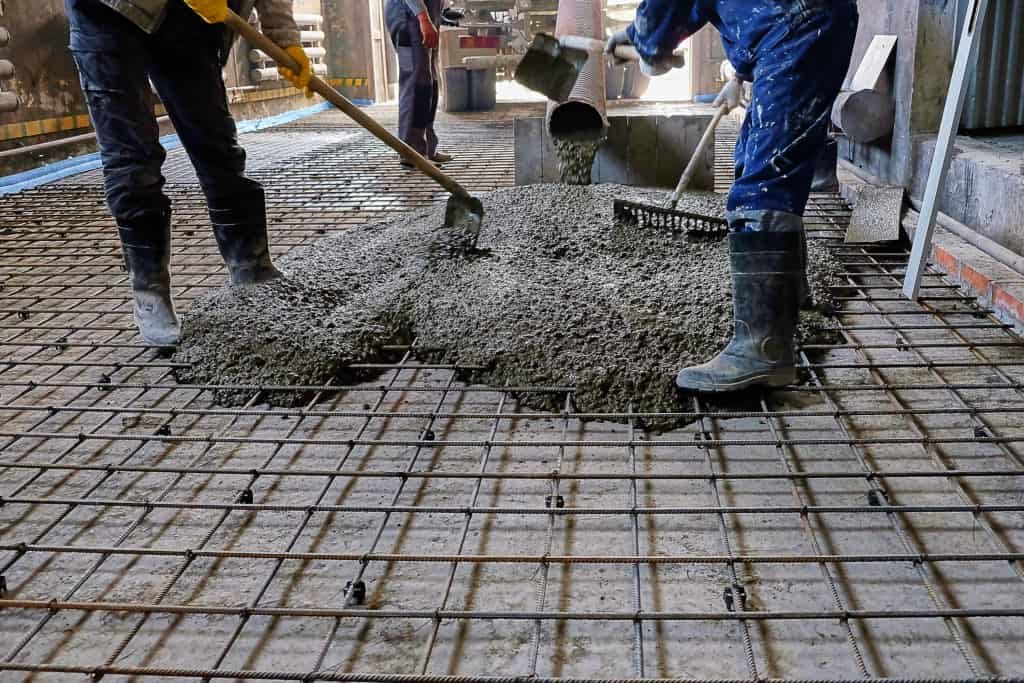
Mass Concrete Pours for Heavy Foundations in Las Cruces
A concrete mat that is five feet thick makes its own heat. Cement hydrates, the core warms up, and if the surface cools faster than the middle, the temperature difference cracks the concrete from the inside out. That is the core problem of mass concrete, and it is why a big pour is planned more like a thermal event than a construction task.
We pour thick mats under heavy equipment, large pile caps, tall foundations for process buildings, transformer pads and foundations for crane or silo structures. Each project starts with the same questions: how thick, how large, how fast can trucks arrive, and how hot will the mix and the ambient air be?
Owners and general contractors usually come to us with a drawing that shows a thick section and a date. We respond with a pour plan: mix design coordination, placement sequence, temperature limits and a curing method. That plan is shared with the engineer and the testing firm before the first truck rolls.
Why the region produces heavy pours
Large-scale development has arrived in southern Dona Ana County. An August 2026 newspaper article describes a 1,400 acre data center under construction in Santa Teresa, and a Border Report article says the Santa Teresa industrial complex supports more than 5,000 jobs and describes a state-backed plan that includes a $40 million expansion of a rail swap yard and 2,400 linear feet of new in-house railroad tracks. Projects like these involve heavy equipment foundations, large mats and thick pads for power and cooling gear.
Heat adds a second layer. Las Cruces summer highs average 96.2 degrees in June, and the surrounding desert is dry and windy in spring. Mass concrete placed in those conditions must manage both the internal heat of hydration and the heat and evaporation from the air. We choose pour dates and times of day to keep the mix cool and the surface protected, and we talk with data center and industrial owners about it long before the pour.
What we figure out first
Thickness, volume and cement content are the starting inputs. A section thicker than about three feet often qualifies as mass concrete for planning, though the engineer's specification defines it for the project. The mix may use fly ash or slag to slow heat development, a lower cement content and chilled water or ice to bring the placing temperature down. We coordinate with the ready-mix supplier early, since special mixes and ice supply need lead time.
Next is the geometry of the pour. A large mat may be too big for a single continuous placement, so we plan lifts and cold joints. We lay out pump positions, truck routes and a placing sequence, and make sure the batch plant can supply the rate we need through the night if necessary. The site needs lighting, traffic control and a dependable water supply for curing, so these are planned too.
A pour that runs all day and sometimes all night
Large pours take hours or days of continuous work. For a mat of several thousand cubic yards, a plan may call for dozens of trucks per hour, multiple pumps and a crew with shifts. Trade crews rotate, our supervisors stay on site for the full duration and the testing technician is on call the whole time. We tell the owner and the neighbors ahead of time when the pour will run overnight, and we coordinate with the city or county about truck routes.
After the pour, curing and monitoring continue for days. Insulating blankets, wet cure or a sealed cover keep the surface warm enough to avoid thermal gradients, and sensors in the concrete tell us when the difference between the core and the surface is within the limit. General contractors and CM firms appreciate a pour that finishes on time and a cure that does not delay the next phase.
Temperature control, step by step
Before the pour, we place thermocouples or wireless sensors at the core, the surface and the edges, at locations the engineer approves. During the pour, we watch placing temperature at the truck and at the point of discharge. After the pour, we log temperatures at regular intervals, send them to the engineer and adjust the curing if the gradient approaches the limit. If it gets close, we add insulation. If the core is hotter than the limit, we may extend the cure.
We never remove insulation until the temperature difference is within the limit, even if the schedule is tight. Early removal is a common cause of surface cracking. For very large pours, cooling pipes embedded in the concrete may be specified, and we install and test them as part of the work. See our notes on hot and windy weather concrete and cold weather concrete for how air conditions affect the plan.
Specs, testing and records
Mass concrete is usually governed by project specifications that go beyond the building code. Those specs set temperature limits, maximum difference between core and surface, mix requirements and monitoring procedures. The base code is the 2021 New Mexico Commercial Building Code, which adopts the 2021 International Building Code as amended, and special inspections apply. We read the spec before we bid and we raise questions early.
Testing includes slump, air, temperature and cylinders. The testing lab also monitors core temperatures when the specification calls for it. We provide daily logs, delivery tickets and pour records. If you want help with the testing side, our concrete testing and quality control page explains how we coordinate with the lab.
Planning a thick foundation?
Send us the section details and the date. We will respond with a pour plan, a temperature control approach and a list of what we need from the engineer. For the heavy concrete under industrial equipment, see our page on equipment pads and machine foundations.
Questions Owners Ask
When does concrete count as mass concrete?
There is no single answer. Many specifications treat sections thicker than about three feet as mass concrete, but the project spec defines it. What matters is whether the heat of hydration can cause a damaging temperature difference.
Why can't we just pour it all at once?
Sometimes we can. The limit is usually how fast trucks can arrive and how many pumps the site can hold. If the pour is too big for continuous placement, we plan lifts or sequenced sections with proper joints.
How do you keep the concrete cool in summer?
Chilled water, ice in the mix, shaded aggregate stockpiles, early morning starts and sometimes night pours. We also protect the surface with covers or wet cure and use temperature monitoring to confirm results.
How long does it take to cure a large mat?
Active monitoring usually lasts several days. Strength gain for the owner's purpose might take weeks. We coordinate with the engineer on when loads can be applied and when insulation can come off.
What does a mass pour cost?
Cost depends on volume, mix, pumps, labor, cooling and monitoring. We separate the items in the estimate so owners can see where the money goes and compare alternatives such as splitting the pour.