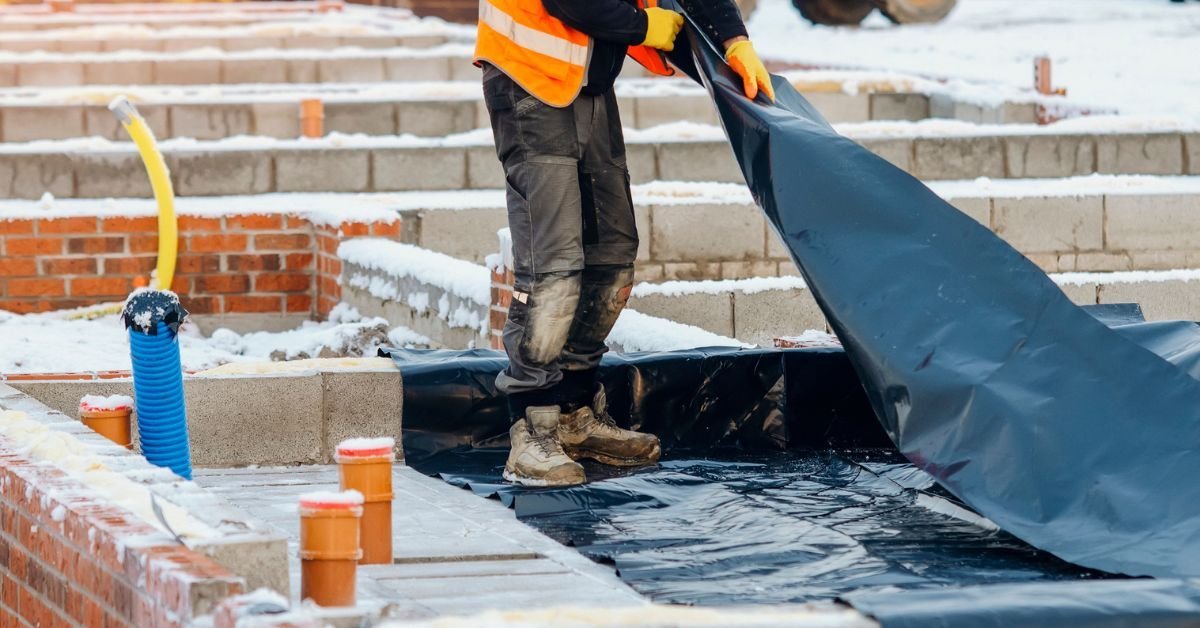
Cold Weather Concrete Placement in Southern New Mexico
Frost is not the first thing people associate with Las Cruces, but concrete does not care about reputations. It cares about the temperature of the mix, the subgrade and the air for the first couple of days after the pour. When those drop below the range the mix needs, strength gain slows, surface freezing can ruin the top inch and a pour that looked fine at finishing time turns out soft a week later.
Southern New Mexico gives us short winters, but not no winters. Clear desert nights shed heat fast, and a slab placed in the afternoon can be sitting at freezing by sunrise. We handle cold weather concrete as a planned operation, with a protection kit in the truck and a forecast checked the night before.
General contractors, developers and owners ask us the same question each winter: can we keep pouring? Almost always the answer is yes, with the right preparation. Here is what we do.
Higher ground, colder nights
The metro climbs as you leave the river. Las Cruces sits at about 3,908 feet above sea level, Hatch at 4,062 feet, Salem at 4,150 feet, and Organ, in the southwest foothills of the San Augustin Mountains, at 5,056 feet. Each step up the elevation ladder tends to mean colder overnight lows, more frost days and a longer cold season, so a pour schedule for Organ or the Hatch valley is not the same as one for the valley floor in the city.
We pay attention to that gradient when we plan work for northern Dona Ana County and for sites along the foothills. The contractor who assumes valley weather at higher ground gets caught by a cold snap. We check the forecast for the actual site, not the closest city, and we adjust the plan for the lowest forecast temperature in the first 48 hours after placement.
Protecting the concrete from the first hour
Cold weather practice starts at the plant. We ask for heated mixing water and, when needed, heated aggregates so the concrete arrives at the minimum placing temperature in the specification. We avoid calcium chloride in reinforced work and use non-chloride accelerators when the engineer approves them. A water-reducing admixture lowers the water in the mix, which reduces bleed water and the time to finish.
On site, we check the subgrade. Concrete should never be placed on frozen ground, and if the subgrade froze overnight we thaw it with blankets or heat before we pour. Forms and reinforcing are cleared of ice and snow. Finishing is timed carefully because the cold slows set time, and finishers who go too early trap bleed water. Right after finishing we cover the slab with insulating blankets, and for slabs on grade we may add heated enclosures with indirect-fired heaters, vented away from the work.
What protection looks like on different elements
Foundations and footings are protected with blankets and backfill. A trench footing poured late in the day is covered with straw, blankets or insulated tarps, then backfilled once the engineer allows. Walls are protected with insulated forms or with form blankets, and kept covered until the concrete reaches strength. Columns and piers receive similar protection, with extra attention to the top surface.
Slabs and flatwork need the most care because they have the largest exposed surface. We pour them early in the day to maximize heat gain from the sun and to finish before dark. Cure with blankets or insulated covers, and use heated enclosures for larger pours. Exterior flatwork such as sidewalks and flatwork and concrete paving often has the least protection built in, so we are strict about not pouring when forecast lows will damage the slab. A related case is the freezer floor in a cold storage facility, where the slab itself becomes the cold source and needs an underslab heating or insulation system to keep frost from heaving the subgrade. That is its own design, but the pour needs the same attention to temperature and curing, and we coordinate with the engineer on how the underslab layers are protected while they wait for concrete.
Deciding to pour or wait
We use a simple set of rules. If the air temperature is forecast to be below 40 degrees F during the first 48 hours, we treat the pour as cold weather and use the protection plan. If the temperature at the site is below the minimum in the specification, we wait. If the temperature will drop well below freezing and heating is impractical, we reschedule. Waiting a day or two costs less than replacing a slab.
The schedule also considers when strength is needed. If a floor must be ready for equipment within a week, we may specify a higher-early-strength mix and a longer protection period. We keep cylinders on site and cure them alongside the slab so the strength results reflect the actual conditions. Owners who work with commercial developers and general contractors benefit from a schedule that includes weather float.
What cold weather adds to the price
Protection is not free. Heated water and aggregates add to the concrete price. Blankets, enclosures and fuel add labor and materials. Accelerators cost money. Extended curing can delay the next trade. We list those items separately so the owner can see them, and we compare them with the cost of a delay or a failed slab.
In many cases, cold weather costs less than people fear. A small foundation pour with blankets may add a few hundred dollars. A large enclosed slab may add much more. We give a realistic number once we know the size, the forecast and the schedule, and we tell you honestly when waiting is the better option. For a look at the opposite problem, read about our hot and windy weather concrete approach.
Winter pour coming up?
Tell us the site, the element and your date. We will check the forecast, set a protection plan and give you a cost for the extras. If your project is in the foothills, ask about our work near Organ.
Questions Owners Ask
At what temperature do you stop pouring?
There is no single cutoff. We follow the project specification and common practice: protection plan when the forecast low is under 40 degrees, and rescheduling when the conditions cannot be managed. Frozen subgrade or a mix that cannot reach the minimum placing temperature is a stop signal.
Does cold weather concrete get weaker?
Properly protected concrete gets to the same strength, though it may take longer. Concrete that freezes early, before it reaches about 500 psi, can lose strength permanently. That is why protection in the first day or two matters most.
Can you use salt or antifreeze in the mix?
We avoid chlorides in reinforced concrete because they promote corrosion. Non-chloride accelerators can speed set time and strength gain when the engineer allows. Antifreeze products are not a substitute for protection.
What about snow or rain on a fresh pour?
Rain or snow during finishing is harmful. We stop and cover the work, and we do not finish with water on the surface. If the weather forecast shows precipitation, we usually reschedule.