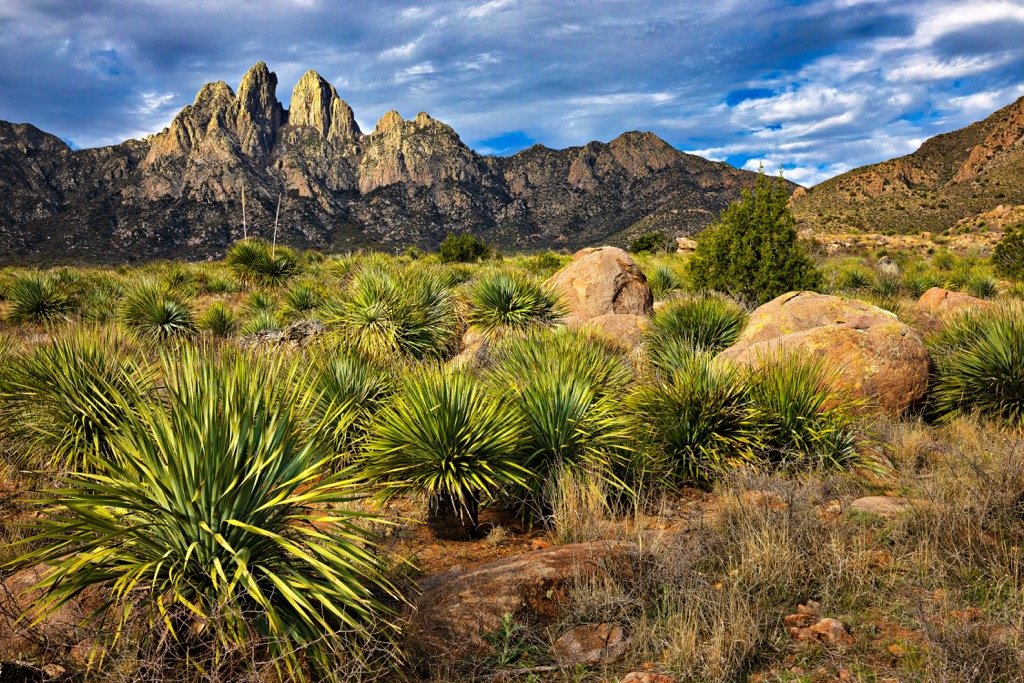
Foothill Foundations and Rock Excavation in Organ, New Mexico
Rock under the topsoil changes a foundation bid more than almost anything else, and a foothill community like Organ is where we ask about it first. Organ lies at the southwest foothills of the San Augustin Mountains, and US 70 crosses San Augustin Pass nearby toward the Organ Mountains. A site on sloping ground at the base of a mountain range has to be read for rock, for drainage and for cold, and we want those answers in hand before we put a number on a footing or a pad. If any of the three is unclear, we say so in the proposal and carry an allowance that the owner can see and adjust.
The place has a working history. Mines produced gold, lead, iron and silver, the largest being the Torpedo Mine, and mining largely stopped in the 1930s when the mines flooded. After White Sands Missile Range opened and nuclear weapons testing began in 1945, Organ grew again by serving military personnel and government contractors nearby, and it remains active in supporting the range. Its listed elevation is 5,056 feet, and the 2020 census counted 242 residents.
On the Interstate 25 exit list, exit 6 is US 70 and Del Rey Boulevard toward Las Cruces, Alamogordo, White Sands National Park and White Sands Missile Range. So a contractor or supplier serving the range is only a short drive from the interstate, and our haul routes follow that same corridor. We build the pads, footings, utility trenches and access drives that those users and the local owners need.
Rock, slope and cold at 5,000 feet
We plan for hard ground on every foothill job. That starts with the geotechnical report, borings and a walk of the site, and it continues with an excavation method chosen to match what we expect to find. Where rock is likely, we price rock and hard ground excavation as a unit rate and list the assumptions, so a surprise is a quantity change and not a dispute.
Slope matters as much as rock. A building pad on a slope needs cut and fill balanced across the footprint, benching into the existing grade, and drainage that carries runoff around the structure. We review the grading plan for how storm water will cross the lot, and we propose changes when we see a path that points at the building.
Reading the ground before the bid
Our estimators look at the soil report, the plan and the site together. If the report is thin, we recommend more borings, since a few extra test holes cost far less than an unplanned rock excavation. If the pad has sat undisturbed, we look for old fill, buried debris and signs of earlier use.
When fill or soft material needs to be replaced, over-excavation and recompaction is our standard fix. We dig to firm material, scarify and moisture-condition the bottom, and then place fill in thin lifts with density testing. This gives the footing a uniform bearing surface, which is what the structural engineer assumed in the design.
Footings, pads and trenches on sloping ground
Typical Organ work includes concrete foundations for small commercial and industrial buildings, equipment pads, shop floors, driveway aprons and the underground lines that serve them. On sloping lots, footings step with the grade, and we form and reinforce the steps carefully to keep the load path continuous.
Excavations in rocky ground need extra care with trench walls. Where we cannot get a clean wall, we widen the trench and bed the pipe with imported material, then backfill and compact. We keep spoil piles back from the trench and away from the downhill side of the lot so loose material does not wash onto a neighbor or into the road. Utility runs often follow the road, and we coordinate with the road owner and the utility on depth, crossing and restoration.
Winter mornings and long haul days
At 5,056 feet, Organ is colder than the valley floor in winter, and a pour that would be routine in the valley can need protection here. We watch the overnight lows, keep blankets and heaters on hand, and decide whether to pour or wait based on conditions, not the calendar. Frozen subgrade is never acceptable.
Summer brings its own problems. Thunderstorms can send runoff through the arroyos fast, so we keep the site graded to drain and the excavations protected. We plan deliveries from the interstate side, check the weight limits on the road and make sure the ready-mix truck can turn around before we schedule a pour. We plan those trips from Las Cruces, the nearest large market down the same corridor.
Buildings that fit a range-support community
Owners who support the missile range or the aviation community may need shop buildings, storage, and in some cases aircraft hangar floors. Hangar slabs need to be flat and strong, with tight control of joints and slopes to drain water out the door. We pay special attention to the transition at the hangar door.
General contractors and construction managers building in the area often bring us in as the site and concrete partner. We can do grading, underground and slab work for them, and we plan material trips along the interstate through the I-10 and I-25 interchange area so deliveries arrive on time.
Looking at a lot in the Organ foothills?
Send the parcel number, the soil report if you have one and what you plan to build. We will review the ground and give you an honest scope and price.
Questions Owners Ask
How can I tell if my lot has rock before I buy?
A geotechnical investigation with borings or test pits is the reliable way. Surface outcrops are a hint, but they do not show what lies below. We can review the report and tell you what it means for excavation cost.
Does a sloping lot cost more to build on?
Usually, because of stepped footings, extra drainage, and more careful cut and fill. It does not have to be a large increase if the design works with the slope. Early site planning is the best way to control the cost.
Do you pour in freezing weather?
Only with proper protection. We check the forecast, avoid frozen ground, heat or blanket the concrete and monitor its temperature. If conditions cannot be controlled, we reschedule.
Can you bring a crew and equipment out for a small job?
Yes. We combine small jobs when possible so mobilization is shared, and we tell you what the minimum charges are. For remote sites, we plan material deliveries to match the crew schedule.
What happens to the rock we dig out?
Some of it can be crushed or screened and reused as backfill or base if the engineer approves, which saves hauling. The rest is stockpiled on site or hauled off, and we list both options with their costs. Oversized pieces and organic material never go back into a footing excavation.