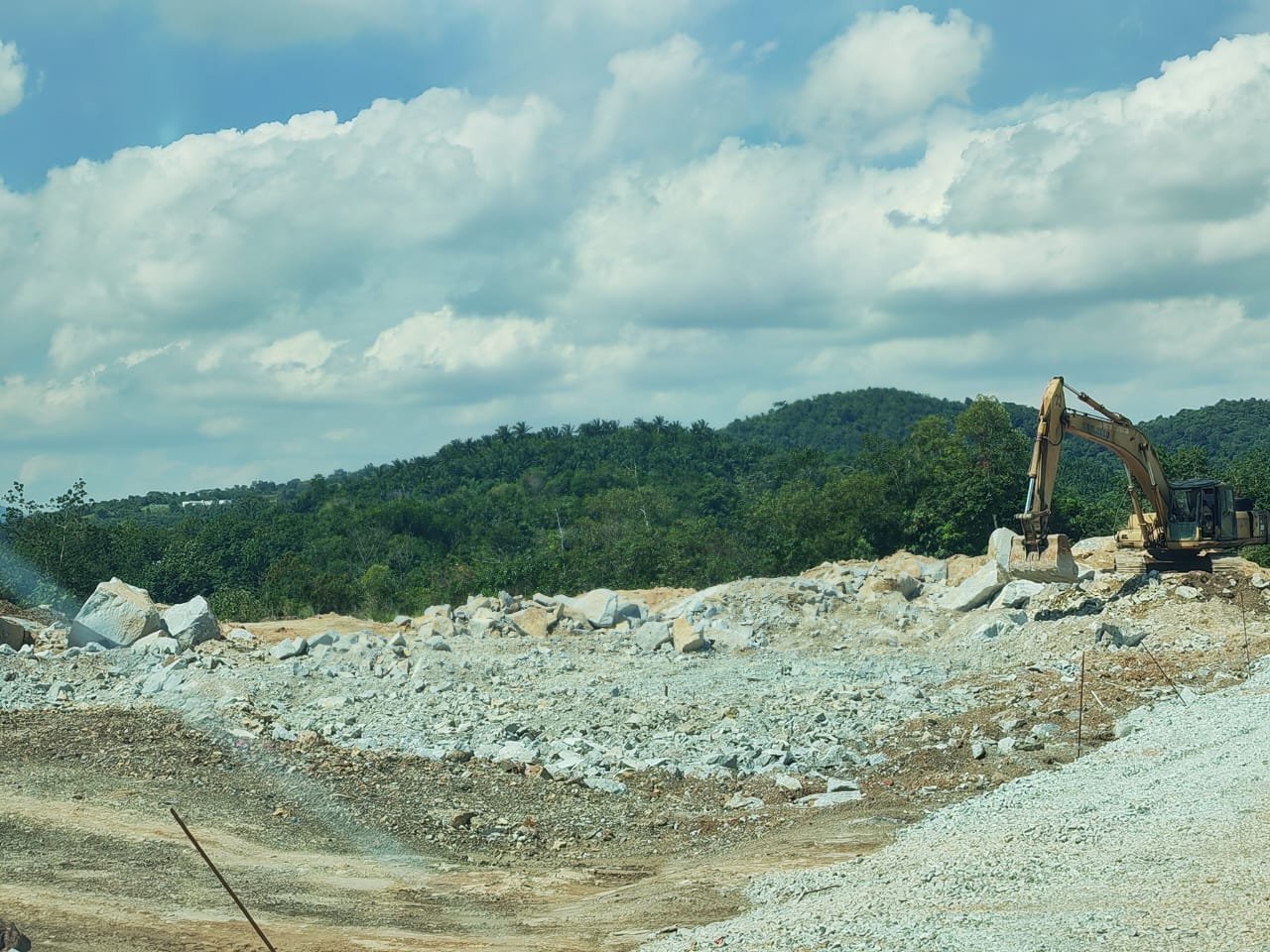
Rock and Hard Ground Excavation in Dona Ana County
A single line in the geotechnical report can change an excavation price: the one that says where the ground stops digging and starts breaking. Rock and hard ground excavation covers cemented soil layers, cobbles, boulders and bedrock that a bucket cannot remove at normal production, so they need rippers, hydraulic hammers, drilling or sometimes blasting by a specialist, and a different way of measuring and paying for the work.
Dona Ana County has real rock close to its edges. Organ sits in the southwest foothills of the San Augustin Mountains at an elevation of 5,056 feet, and US 70 crosses San Augustin Pass nearby toward the Organ Mountains. Sunland Park sits at the foot of Mount Cristo Rey, next to the river. Sites in the foothills and along the mountain fronts present harder ground than valley floor sites, and we plan for it from the start.
We excavate hard ground for foundations, utilities and roads, from a trench for water main installation to a footing pit for a metal building, and we tell owners early when the report suggests the ground will fight back.
How rock is defined, measured and paid
The word rock means different things in different specifications. Some define it by the equipment, as material that cannot be removed with a certain size of excavator at normal production. Others define it by strength or by the need for hammers or blasting. We read the definition before bidding and ask the engineer to clarify anything vague, because the definition drives payment and sets the line between common excavation and rock.
We prefer unit pricing for rock: a base price for common excavation and a higher unit for rock, measured by survey or an agreed method. That way the owner pays only for the rock found, and we are not pricing an unknown into the lump sum. Test pits or an added boring program before bid reduce the uncertainty, and we recommend them on sites where the report suggests hard layers.
Choosing the method that fits the ground
We match the method to the material. Cemented layers and weak rock often yield to a ripper tooth on a dozer, which is the cheapest approach. Harder rock and trench rock call for hydraulic hammers, which are slower and noisier. Where hammers cannot keep up, drilling and controlled blasting by a qualified specialist may be needed, with the permits and notifications that come with it.
Whatever the method, we control the size of what comes out. Oversize rock is broken to a size that can be loaded and, if reused, crushed to meet the fill specification. Trench bottoms in rock are over-dug and bedded with sand or fine aggregate so pipe does not rest on points, a detail that matters for sanitary sewer installation where grade is unforgiving. We always check for utilities before hammering, since vibration and a missed line are a bad combination.
Equipment that earns its place
Hard ground punishes equipment, so the right machine matters. We use excavators with rock buckets and hammer attachments sized to the work, dozers with ripper shanks for cut sections and drills for pre-splitting where required. Tracked equipment is preferred on rocky footing. Wear parts such as teeth and cutting edges are replaced on schedule, because dull teeth cut production sharply.
Operators in rock work learn to read the ground, noticing the sound and the feel of the bucket as it meets harder layers. That experience cuts overbreak and protects the final cut line. We also keep a water truck handy to suppress dust and trucks organized to keep broken rock moving, since a stockpile of muck slows everything else.
Noise, vibration, flyrock and dust
Breaking rock throws fragments, noise and vibration. Hammering and ripping are managed with exclusion zones, machine guards and hearing protection. Blasting, when it is used, is performed by a qualified specialist with a plan covering notification, monitoring and flyrock control, and it is not something we do casually near buildings or utilities.
Silica dust from rock and cemented soil is a health hazard, so we wet the work, use enclosed cabs and respiratory protection and control exposure under the applicable rules. Neighbors are told in advance about noisy work, and we limit hours where needed. Vibration monitoring protects adjacent structures, which matters most near older buildings or buried utilities.
What hard ground adds to the price
Production is the main driver. A trench that advances hundreds of feet a day in soil may advance only tens of feet in rock, with hammer, fuel, wear parts and labor all rising. Disposal and reuse matter too, since broken rock can be crushed for base or fill, offsetting some cost if the site can use it.
Risk is the other piece. Because the quantity of rock is uncertain until the excavation reveals it, we use unit prices, allowances and a defined measurement method. We encourage owners to invest in more borings or test pits, which usually cost far less than a change order for a big rock quantity. Utility and energy companies running lines through rocky terrain value unit prices that follow what is actually found.
Where the hard ground is in this metro
Hard ground is not evenly spread. The valley floor along the Rio Grande tends to be softer, while the edges of the metro near the mountains and mesas bring cemented layers and rock closer to the surface. Around Organ, where the foothills rise, and along US 70 toward the Organ Mountains, we expect harder digging than at a valley site near Mesilla.
We also respect the history underfoot. Mines near Organ produced gold, lead, iron and silver until they flooded in the 1930s, and old workings are a reason to check records and drill before digging near them. Where we do not have good information, we say so and recommend investigation, because a hole that opens into an old working is a safety problem and not just a cost problem.
Think your site has rock?
Send the boring logs and the excavation limits. We will mark the likely rock zones, recommend extra investigation if it is warranted and price common and rock excavation as separate units.
Questions Owners Ask
How do I know if my site has rock?
The geotechnical report is the first source, but borings sample only a few points. Test pits with an excavator show more, and nearby projects or surface outcrops are good hints. We recommend extra investigation when the site is near the foothills or the report mentions hard layers.
Is blasting allowed?
It depends on the location, the neighbors and the permits required, and it is performed only by qualified specialists. Near occupied buildings or utilities we generally prefer hammering, even if it is slower. We discuss options with the owner before choosing.
How is rock quantity measured?
By survey of the rock surface before and after excavation, by a measured trench length and width or by another method agreed in the contract. We settle the method before starting so there is no argument at pay time.
Can broken rock be reused?
Often, if crushed to meet the fill or base specification. Large pieces can be used for erosion protection, if the design allows. We test and stockpile it separately from soil to keep the options open.