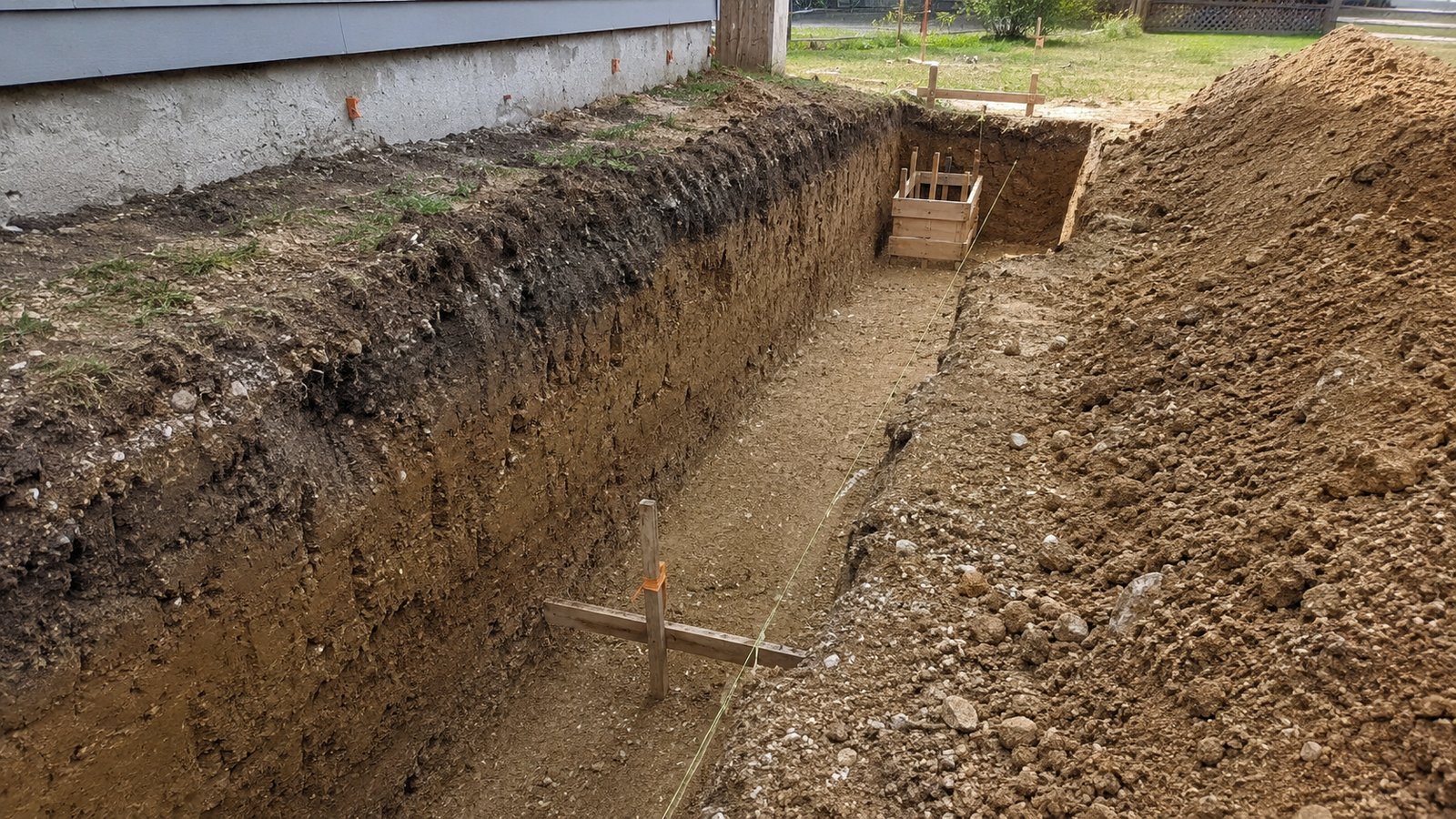
Excavation for Foundations, Pits and Utility Vaults in Las Cruces
Before a bucket touches the ground, someone has to know what is underneath it. Excavation looks like the simplest scope on a site, a hole of a certain size in a certain place, yet most of the cost and nearly all of the risk comes from what the hole runs into: an old water line, a buried conduit, a soft pocket or groundwater. We start every excavation by locating utilities, reading the geotechnical report and agreeing with the project team on the limits of the dig and where the spoil goes.
The river and the irrigation system shape what is underground in the Mesilla Valley. The Rio Grande runs west of Las Cruces through the valley, and farm irrigation in places such as Hatch uses ditches that divert water from the river, so shallow water and old ditch alignments are real possibilities when you dig near the valley floor. Higher ground on the mesa behaves differently, and we adjust the dig plan to the part of the metro your site sits in.
Most of our excavation is for builders: foundation pits, mat footings, elevator pits and the broad cuts for loading areas and drainage. Anything deeper than a few feet brings in shoring and trench safety, which is where our work on trenching and backfill and groundwater dewatering connects to the dig.
Keeping a deep hole safe for the people in it
Excavation is one of the few construction activities where a short lapse can bury a worker, so safety planning comes before the machine moves. A competent person inspects the excavation daily and after any rain, slopes are cut or shored to match the soil, ladders or ramps are placed within reach of the work area, and spoil stays back from the edge. Heavy equipment is kept off the lip of the cut, and a spotter works any time a truck backs near an open hole.
Underground utilities are the other hazard. We call for locates, expose lines by hand or vacuum when the plans show them near the cut, and mark what we find before the excavator is released. An unmarked line is a conflict until proven otherwise, and a conflict found with a hand shovel costs a day, while one found with a bucket can cost much more. Open excavations are fenced or barricaded at day end, with lights where the public is nearby.
What an excavation package covers
The scope starts with stripping and ends with a ready subgrade. In between we cut to the lines, stage spoil, load and haul what leaves, and trim the bottom and sides. Typical items include building pads and basements, footing and grade beam excavation, elevator and sump pits, utility vaults, and large cuts for pond or dock areas. Each has a different tolerance for over-digging, because a footing that is dug too deep is filled with concrete or select fill, while a pad that is dug too deep is rebuilt with compaction.
We separate common excavation from conditions that call for a different method, such as cemented layers, cobbles or old foundations. The contract should say how those are measured and paid so both sides know what happens when the ground is harder than the report suggests. Our proposals also state where we plan to put spoil and what we do with material that does not meet backfill requirements.
Digging in the right order
We cut from the top down and keep the excavation shape stable. Slopes are cut to the angle the soil allows, or supported with shoring where space is tight, and equipment stays back from the edge. Spoil goes where it will not load a slope or block drainage, and haul trucks are lined up so the excavator never waits. We watch the bottom as it comes up and call the geotechnical engineer when what we see does not match the report.
The final trim is done by hand and with small equipment where the finished surface matters, such as a footing bottom or a pit floor. We avoid over-digging because it costs money to fix, and we keep the bottom dry and undisturbed until the inspector has seen it. After approval we move straight to forms, reinforcement or backfill so the open hole is exposed for as short a time as possible, since a rain or a washed-in arroyo can spoil a good bottom overnight.
Where we dig across the metro
We excavate across Las Cruces and the communities along Interstates 10 and 25. In the town of Mesilla, where La Mesilla Historic District was declared a National Historic Landmark in 1961, work near historic fabric calls for slow digging, tight spoil control and a conversation with the owner and the town before the first cut. Elsewhere the concern is elevation and drainage: Las Cruces sits at about 3,908 feet, and ground moves water differently on the mesa, on the valley floor and out toward the foothills.
Truck access decides which sites are cheap to dig. Interstate 25 begins at I-10 exit 144 just south of the university campus, with exit 140 at Avenida de Mesilla and exit 142 at Main Street in between, and we plan haul routes around the interchange area, school zones and the truck limits the city or county applies. We confirm the disposal site before the first truck loads, not after.
What makes one hole cost more than another
Depth is the biggest multiplier. A hole twice as deep is more than twice the work because of slope allowance, shoring and haul. Soil comes second: loose valley alluvium digs fast but may need shoring sooner, while cemented or rocky material slows the machine and wears the teeth. Groundwater near the river can add pumping, and a wet bottom needs stabilizing before anything is built on it.
Disposal and access are the quiet line items. Taking material off site costs trucks, fuel and a dumping location, and a tight urban lot with no room for stockpiles forces haul-off on the same day it is dug. We show those costs separately and tell you what a yard of spoil costs to move, so you can see whether re-using it on site is worth the effort.
Excavation and the trades that depend on it
Excavation rarely stands alone. Where it feeds a building it connects to building pad preparation and to the foundation crew. Where it feeds underground pipe it is the first half of the trench. We also work with utility potholing and locating so the lines we cannot see are exposed before we dig on top of them.
The buyers are mostly utility and energy companies and contractors building commercial sites. A hospital project is a good example of why the groundwork matters: deep pits for elevators, mechanical rooms and stormwater tanks all depend on a clean, inspected bottom, and any delay at that stage pushes every trade above it.
Have a pit or foundation to dig?
Send the site plan, the soils report and the depths you need. We will confirm utility locates, shoring needs and disposal, then give you a price and a start date.
Questions Owners Ask
Do you handle utility locates before digging?
We call for the public locate and compare it with the plans. When the drawings show a line near the cut, we expose it by hand or vacuum first. Locates are a starting point, not a guarantee, so the foreman stays alert for anything unmarked.
What happens if we hit groundwater?
We stop at the wet zone, tell the geotechnical engineer and decide whether to pump, install sumps or change the sequence. Near the river and irrigation ditches this is a real possibility, which is why we ask for boring logs and water levels before pricing.
Do you shore every deep excavation?
Not every one. The soil, depth, space and nearby loads decide between laid-back slopes, benched cuts and engineered shoring. Where an open slope is not possible because of a property line or a neighboring structure, we use shoring designed by an engineer.
Who inspects the bottom of the excavation?
The geotechnical engineer or the special inspector named in the project documents looks at the bottom before footings or fill go in. We hold the area clear and dry until they have signed off. Re-excavation after a failed inspection is billed according to the cause.
Can you dig near a historic district?
Yes, with more care and more lead time. We confirm with the owner whether any review or monitoring applies, tighten spoil and equipment control, and keep vibration and traffic low. Mesilla's landmark status is a good reason to plan the dig early.