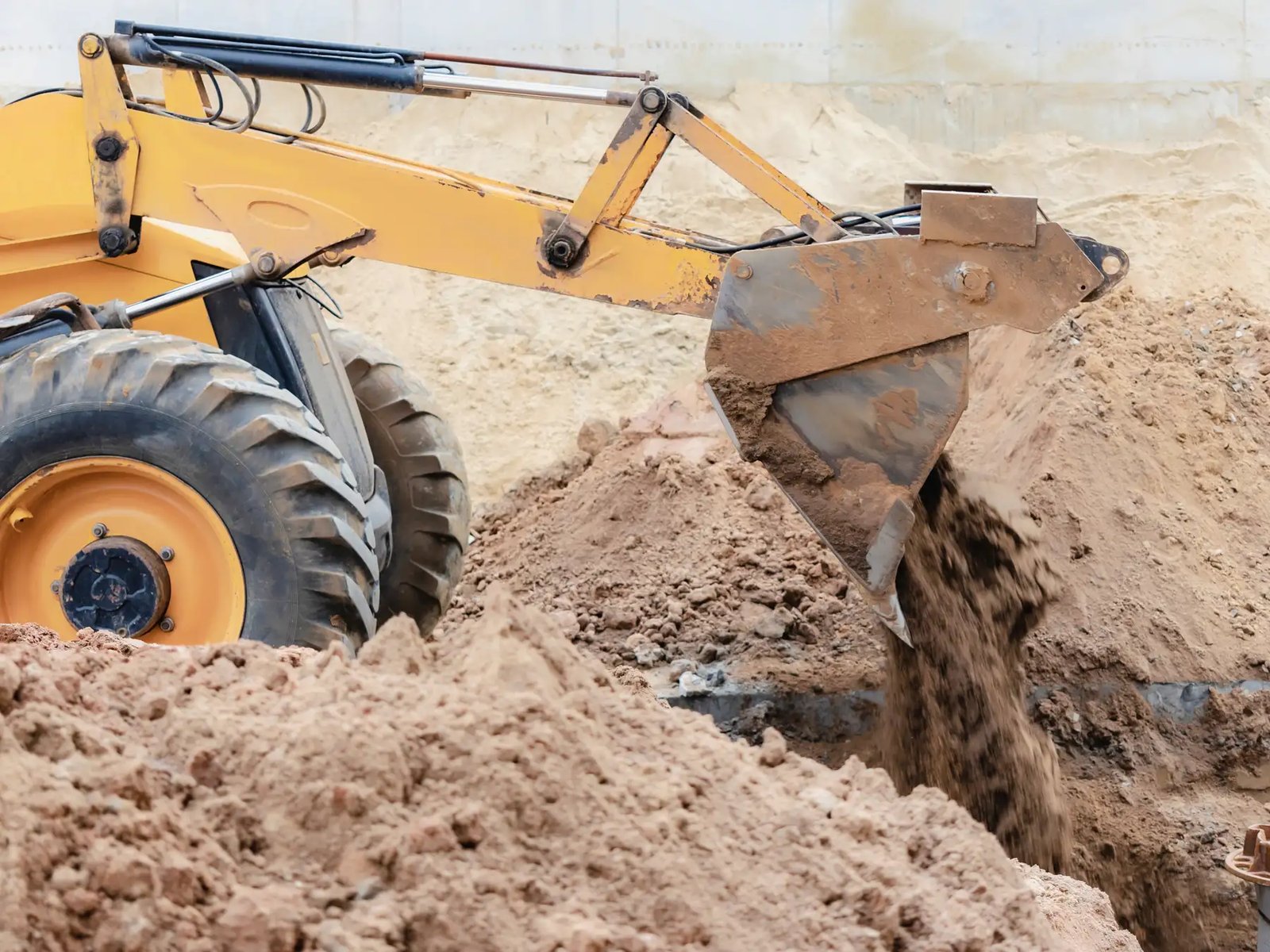
Trenching and Backfill for Underground Lines in Las Cruces
Backfill is where trench settlement is decided, long before anyone notices it. A pipe can be laid to perfect grade and still sit under a dip in the parking lot two winters later if the soil around it was dumped in thick lifts or placed too dry. Trenching and backfill is the part of underground work that connects the pipe crew to the paving crew, and it is where we put most of our attention: trench width, bedding, shading around the pipe, lift thickness, moisture and density testing.
Trenches here run through farm edges, town streets and corridors such as NM 28, a two-lane state highway that runs roughly parallel to the Rio Grande and passes through the Mesilla Valley communities of La Union, Anthony and Vado. Utility lines follow those same corridors. A trench along a highway shoulder has little room for spoil and a lot of traffic beside it, so we limit how much trench is open, plate crossings, and keep backfill close behind the pipe.
The work is for contractors installing water, sewer, storm and electrical lines and for public owners with their own standards. We coordinate with the pipe crews on water main installation and sanitary sewer installation, and with the project engineer on bedding and backfill requirements.
Bedding, shading and lifts
We cut the trench only as wide as the pipe, the manufacturer and the safety rules require, because every extra inch of width is more backfill to compact and more load on the pipe. The bottom is trimmed to grade and bedded with the material the specification calls for, typically sand or fine aggregate, and the pipe is laid on that bed so it is supported along its whole barrel and not just at the bell.
Shading comes next: select material placed and hand-compacted on both sides and over the top of the pipe to a set depth. Above that, backfill goes in lifts sized to the compactor, each moistened and tested as required, and heavy equipment stays off until there is enough cover. If the native soil does not meet specification, we bring in select material or use engineered fill and soil stabilization, and we say so before the first trench opens.
Trench safety on a narrow, busy line
Trench collapse is the textbook excavation fatality, and the controls are well known: sloping, benching, shields or shoring matched to the soil and depth, a competent person on site and a way out within reach. We use trench boxes on most pipe runs because they let the crew work at depth without opening a wide cut, and we move the box forward with the pipe so nobody works outside it.
Traffic and the public are the second concern. Open trenches near roads need barricades, lighting and plates for crossings, and we cap how much trench stays open at day end. Underground conflicts are handled with locates and hand digging before the machine arrives, since a nicked gas, power or fiber line is a bigger emergency than a late pipe crew. After a thunderstorm we inspect every trench before anyone enters, because saturated walls behave differently from dry ones.
Specifications, plumbing code and inspection points
Public lines follow the owner's standard details for bedding, backfill material, density and surface restoration, and private lines inside a project follow the plans and the plumbing code. The Regulation and Licensing Department lists the 2024 New Mexico Plumbing Code as effective August 1, 2026, with permits issued under either the 2021 or 2024 edition until January 1, 2027 and only under the 2024 edition after that, so we confirm which edition governs your permit before we price fittings and cover.
Inspections happen at defined points: the bedded trench before the pipe goes in, the pipe and joints before cover, and often density tests on the finished backfill. We schedule each with the general contractor and the inspector and we do not cover work that has not been seen. Any road cut or right-of-way work carries its own permit, plating and restoration rules, which we sort out early because a late permit can hold a whole line.
Who hires us to trench
Municipal and public works departments extending or replacing lines, site contractors laying services for new buildings and developers connecting to existing mains all use trenching crews, and each has a different rhythm. A municipality cares about restoration quality and the long-term condition of the street, while a private owner mostly cares about getting the building connected.
Industrial users tie in too. A manufacturing plant needs process water, fire water and drainage trenched before the slab, and the backfill has to be dense enough to carry equipment traffic. At the south end of the valley, work around Vado and the I-10 exit 155 corridor often means connecting new construction to existing lines, so we confirm what is actually in the ground before we tie in.
Production, weather and the open-trench rule
Trenching production depends on depth, soil and the pipe being laid. We plan a daily footage the pipe crew can sustain and match backfill to it so the trench closes behind the work, including for storm drain installation where pipes are larger and cuts are deeper. A trench left open overnight is a safety and stability risk, so we set a limit on open length and hold to it even when it slows the pipe crew.
The weather window here is mostly about summer thunderstorms and wind. Las Cruces averages about 9 inches of precipitation a year, but the arroyos carry water after heavy storms, and a trench in a low area can fill quickly. We watch the forecast, keep the open length short in monsoon season and have pumps ready. Dry heat helps with wet soil but it can also dry a lift before it is compacted, which is why the water truck is part of the crew.
Have a line to cut and close?
Send the utility plans, the trench details and the pavement restoration notes. We will price the cut, the bedding and the backfill with testing, and plan open length around your pipe crew.
Questions Owners Ask
How wide does a trench need to be?
Wide enough for the pipe, the joint and the crew to work, plus whatever the shield or trench box requires. Specifications often give a minimum and a maximum width. Going wider than the maximum can change the pipe load, so we stay inside the limits and check with the engineer if a field condition forces a change.
Can we reuse the native soil as backfill?
Sometimes. Above the pipe zone, native soil that meets the gradation, organic and moisture requirements can go back in. Around the pipe, the specification usually calls for sand or fine aggregate. We test what comes out and report what can be reused.
Why do trenches settle after paving?
Almost always because the backfill was placed in lifts that were too thick, too dry or too wet to compact properly. The soil then consolidates under traffic. Placing thin, tested lifts is the cheap fix, and repairing a sunken trench line in finished pavement costs far more.
How much trench can you leave open at one time?
We agree on a limit with the project team, usually a short length that the pipe crew can lay and cover in a day. In monsoon season or beside traffic we shorten it further. Nothing is left open without barricades and lighting.
Who does the density testing?
An independent testing lab, hired by the owner or contractor, takes the density tests on the schedule the specification sets. We time the lifts to the technician's visit and rework any failing area right away, then retest.