Asphalt Paving Base Preparation in Las Cruces
Asphalt gets the credit, but the aggregate base underneath it does the carrying. A few inches of asphalt over a poorly built base will crack, rut and pothole no matter how good the mix is, and the repair brings the paving crew back at the owner's cost. Base preparation is the layer between subgrade and pavement: graded aggregate hauled in, spread, watered, compacted and trimmed to a tolerance tight enough for the paver to lay a uniform mat on top.
The metro has pavement of every size. The Mesilla Valley Mall area opened with 4,500 parking spaces on 77.4 acres, a reminder of how much asphalt one retail center carries, and the Dona Ana County International Jetport has a 9,550 by 100 foot asphalt runway that went through a $9 million renovation completed in 2020. Parking lots and runways ask the same thing of the base: be uniform, dense and drained.
We build bases for parking lots, drives, truck courts and roads, working after road subgrade preparation and ahead of the asphalt contractor, and we tie in with the crew doing storm drain installation whenever pavement grades depend on inlet elevations.
Base type, thickness and what the design assumes
The pavement design sets the base: the material, often crushed aggregate meeting a gradation, along with thickness, density and finish tolerance. The design assumes a certain subgrade strength, so a weak spot in the subgrade must be fixed before base goes on or the base thickness is wasted. We review the pavement section and the geotechnical report together and flag mismatches, such as a base thickness designed for firm subgrade on a site where the soil is soft.
Heavy truck areas deserve more thought. Truck courts, dock aprons and fire lanes carry loads and turning stresses that differ from a car parking stall. Where a design uses the same section everywhere, we ask the engineer whether the truck routes need more, or whether those areas should be rigid pavement, and our notes on truck courts and dock aprons explain the trade.
Aggregate specifications, density and tolerance
Base aggregate is specified by gradation and quality limits, and the supplier provides test reports that we keep on file. Density is a percentage of a laboratory maximum, with moisture held near optimum, and the testing agency checks it. The finished surface tolerance is tight, often measured with a straightedge or machine control, so the paver lays a mat of consistent thickness.
Public agencies and large owners often have their own standards, and we follow them. Where the project plans govern, we follow the plans. Accessible stalls and routes require careful grading of the base, since the paving cannot fix a slope the base got wrong. We build to the accessible slope limits shown on the plans and confirm them with a level before paving starts.
What pushes base cost up
Aggregate is heavy, so trucking is a large part of the cost, and the haul from the pit to the site can change the unit price more than the quarry price does. Thickness multiplies everything: an extra inch of base across a large lot adds a lot of tons. Compaction, water and testing round out the number.
We offer value engineering where it is honest. If a lot sits on firm subgrade, a thinner base may be justified if the engineer agrees, and recycled materials may substitute where the specification allows. We do not cut base to win a bid, because a thin base is a callback waiting to happen, and we show each option in plain per-ton and per-square-yard terms.
Buyers who ask for base preparation
Homebuilders and multifamily developers need parking and drive areas that drain, hold up under delivery trucks and look right at lease-up, and a lot that ponds water or ravels at the edges is visible to every resident. General contractors want a base that is accepted the first time so the paver can mobilize on the booked date.
Logistics and warehouse developers have the heaviest demands, with long truck routes, trailer parking and turning areas where a weak base shows up as rutting in the first season. For them we spend extra time on proof-rolling and on drainage, since standing water under tires is what breaks a base fastest.
Spreading, watering and rolling the base
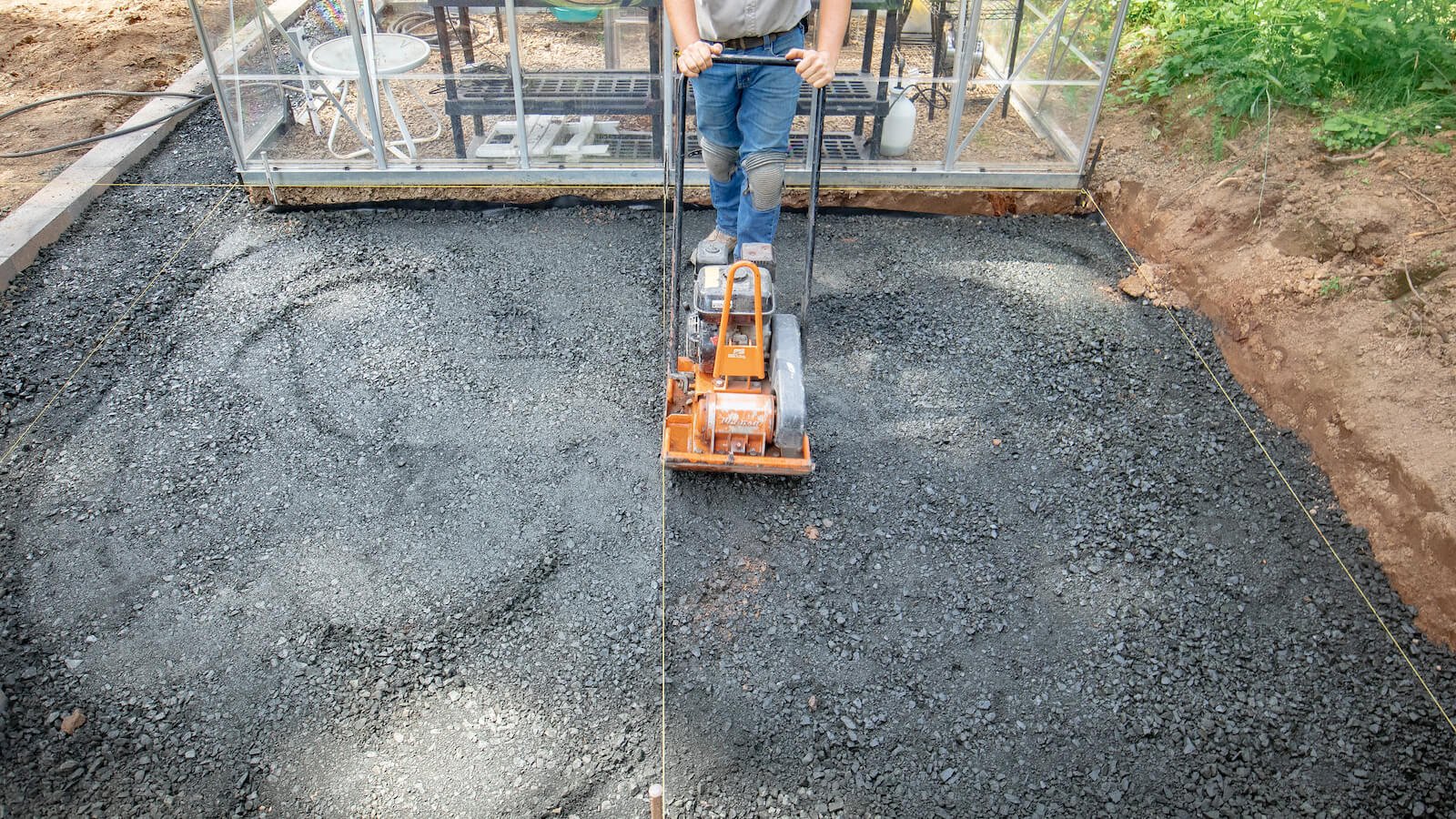
Base arrives by truck and is spread with a grader or a spreader box in lifts the roller can compact fully, and thick sections go down in two lifts. We condition the aggregate with a water truck while it is spread so it compacts to density instead of fluffing, then roll with vibratory equipment until test results confirm it, finishing with a steel drum roller to close the surface.
Trimming is what the paver sees. We trim to grade with machine control or string line, check with a straightedge and correct highs and lows. A base a quarter inch low in one place and high in another produces a mat of uneven thickness that wears unevenly. Before paving we proof-roll, repair failures and keep traffic off the base until the paving crew arrives, and we walk the lot with the paving foreman so surprises come out early.
Paving windows, heat and handoffs
Asphalt wants warm weather, and base preparation has to be ready when the paving window opens. In Las Cruces June highs average about 96 degrees, which suits paving but is hard on a base that has been sitting in the sun and drying out. We water and re-roll before the paver arrives so the surface is firm and not dusty, and we avoid leaving finished base open for long periods.
Sequence with other trades matters. Curb, utility adjustments and striping layout all depend on base elevations. We make sure manhole rings, valve boxes and inlets are set to base grade with the right allowance for the asphalt thickness, and we tell the paving contractor in advance if anything changes. A delay in any of these can push paving into a less favorable season, so we plan the handoff days in the schedule.
Lot or road ready for base?
Send the pavement section, the grading plan and the aggregate specification. We will price base by the ton and square yard, include testing and schedule it ahead of your paver.
Questions Owners Ask
How thick should the aggregate base be?
The pavement design sets it, based on traffic and subgrade strength. Light car parking may call for a few inches and heavy truck areas considerably more. We build to the design and flag any mismatch with the soil report before work starts.
How soon can the paver start after base is placed?
As soon as the base passes density and tolerance checks and is stable under a proof-roll. In hot, dry weather we water it again just before paving. If more than a short time passes, we retrim and retest.
Can recycled material be used for base?
Often, if the specification allows it. Crushed concrete and reclaimed asphalt can meet base requirements when gradation and quality are met. We test samples first and place it the same way as virgin aggregate.
What causes asphalt to fail early?
Most early failures trace to the layers below: weak subgrade, thin or poorly compacted base, or standing water. Surface mix problems exist, but they are less common. Getting the base right is the cheapest insurance.