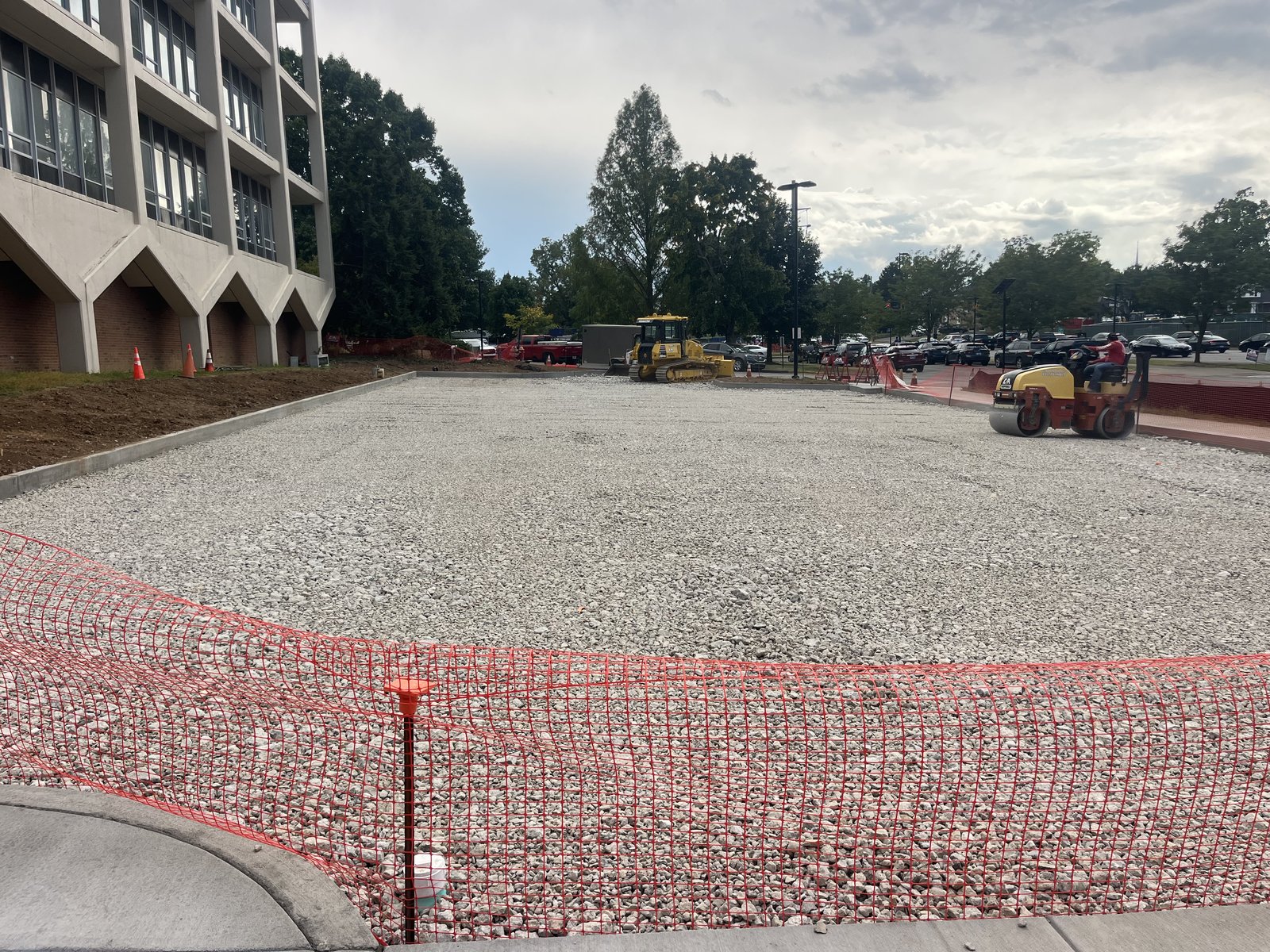
Road Subgrade Preparation for Streets and Drives in Las Cruces
Roads fail from the bottom up, and the bottom is the part nobody photographs. Road subgrade preparation is the shaping, conditioning and compaction of the natural ground under a pavement section, so that base course and asphalt or concrete sit on a uniform, firm, drained platform. A pavement that is designed well and built on a weak subgrade will rut, pump and crack, and the repair costs more than doing the bottom right the first time.
Dona Ana County is a county of long two-lane roads and growing communities. NM 28 alone runs 30.346 miles as a two-lane state highway beside the Rio Grande, and Chaparral, a community of 16,551 people at the 2020 census, is served by NM 213, NM 404 and U.S. Route 54. Every new street, driveway apron and commercial entrance in a place like that starts with a subgrade built to a specification and tested.
We prepare subgrade for streets, drives, parking lots and haul roads in sequence with the utility crew and the paving contractor. When soil is weak we turn to engineered fill and soil stabilization, and when the next layer is aggregate we coordinate directly with asphalt paving base preparation.
Streets and roads in a county that keeps growing
A community like Chaparral, which spans two counties and is described as geographically isolated from the rest of Dona Ana County, shows what a road builder faces here: long hauls for materials, few alternate routes and neighborhoods that need streets built right the first time. Subgrade work in places like that leans on careful testing and on controlling moisture, since water and fill are expensive to bring in from far away.
Along the valley the issue is different. Farm roads and state highways cross irrigation ditches and low ground, and a street that crosses an old field edge or a ditch alignment has to deal with soft or variable soil and with water moving beneath the road. We look for those transitions in the plans and on the site walk, and we fix them before paving, not after the first winter.
What road subgrade preparation includes
The scope covers stripping, rough shaping, utility backfill compaction, scarification and recompaction of the natural ground, proof-rolling, final trimming to grade and crown, and sometimes stabilization with lime, cement or geotextile. We prepare subgrade for curb lines and shoulders as well as the travel lanes, because edges are where early failures start.
The finished subgrade is checked for elevation, crown, density and stability. Elevation is verified by survey or machine control, density by the testing lab, and stability by proof-rolling with a loaded truck. The result is a subgrade ready for base course, and the documentation goes to the paving contractor so it can place its layers with confidence.
Equipment and crew for linear work
Road work is linear and moves fast: graders, rollers, water trucks and trimmers working in line with a survey crew ahead. We run motor graders with machine control for crown and cross-slope, vibratory rollers matched to the soil type and heavier rollers for proof-rolling. Everything is selected to keep a steady rhythm and avoid stops.
We keep the water truck close to the grader because moisture drifts as soon as the surface is exposed. Utility trenches that cross the road are checked for settlement before final trimming, and manhole and valve covers are marked so the blade does not catch them. We coordinate the grading and compaction and work with specialty trades for stabilizers or geotextile when needed.
Standards, tolerances and testing
Public streets follow the standard specifications of the city, county or state agency that owns them, with their own density, moisture and tolerance requirements. Private drives and parking lots follow the project plans. Whatever the owner, the testing agency checks density and the engineer approves the subgrade before base goes on, and we do not cover subgrade that has not been signed off.
Right-of-way work needs its own permits, traffic control plans and inspections, and in-street work may need lane closures. We prepare the traffic control plan with the owner, plate or backfill cuts before the end of each day and keep driveway access open. Accessibility rules for curb ramps and cross-slopes apply at crossings, and we set crowns and slopes with them in mind, working alongside the crew doing curb and gutter.
Sequencing with utilities, curb and paving
Subgrade follows underground utilities and precedes curb and base. We insist that trenches under the street be backfilled and tested before the grader arrives, because a trench settling under fresh base is the quickest way to ruin a street. For new subdivision streets the usual order is utilities, rough grade, curb, subgrade, base and pavement.
Rain and heat shape the daily plan. We work in short sections so no area stays exposed long enough to soften or dry out, and we protect finished subgrade with a light seal or a quick cover of base. The paving contractor's schedule often drives ours, so we keep a few days of finished subgrade ahead of them. Concrete paving crews may want grade held to a tighter tolerance, and we adjust the final passes.
Streets from the valley to the outlying communities
We build subgrade for streets and roads across the metro, from Las Cruces neighborhoods and the commercial corridors along I-10 and I-25 to the valley communities on NM 28. For city and county work we follow the owner's standards, and for private roads we follow the engineer's drawings.
Public owners make up a large share of road customers, and our approach for municipal and public works includes traffic control, reporting and record drawings in the format they ask for. We keep daily notes on moisture, passes and tests so inspectors can follow the work without waiting for the final report.
Streets or lots ready for subgrade?
Send the pavement design, the grading plan and the soils report. We will price subgrade by the square yard, include testing and fit the work around your utility and paving crews.
Questions Owners Ask
How is road subgrade different from a building pad?
It is long, thin and exposed to traffic, so edges, crowns and drainage matter more than depth. A pad is a compact area with a heavy point load. Both rely on tested compaction, but roads are built in linear sections with graders and rollers.
What density do you compact subgrade to?
The percentage in the specification, which comes from the owner's standard or the geotechnical report. It is measured against a laboratory maximum, and the moisture is held in a narrow range. We test and rework until the result passes.
What if the subgrade is soft after rain?
We stop heavy traffic on it, let it dry or work it with a disc and roller, and retest. If it keeps failing, treatment with lime or cement or replacement with select material may be needed, and we price those options before starting.
Do you handle traffic control on public streets?
We prepare the plan with the owner or a traffic control subcontractor, set up the lane closures and keep access open for residents and emergency vehicles. The permit decides the hours and the detour.