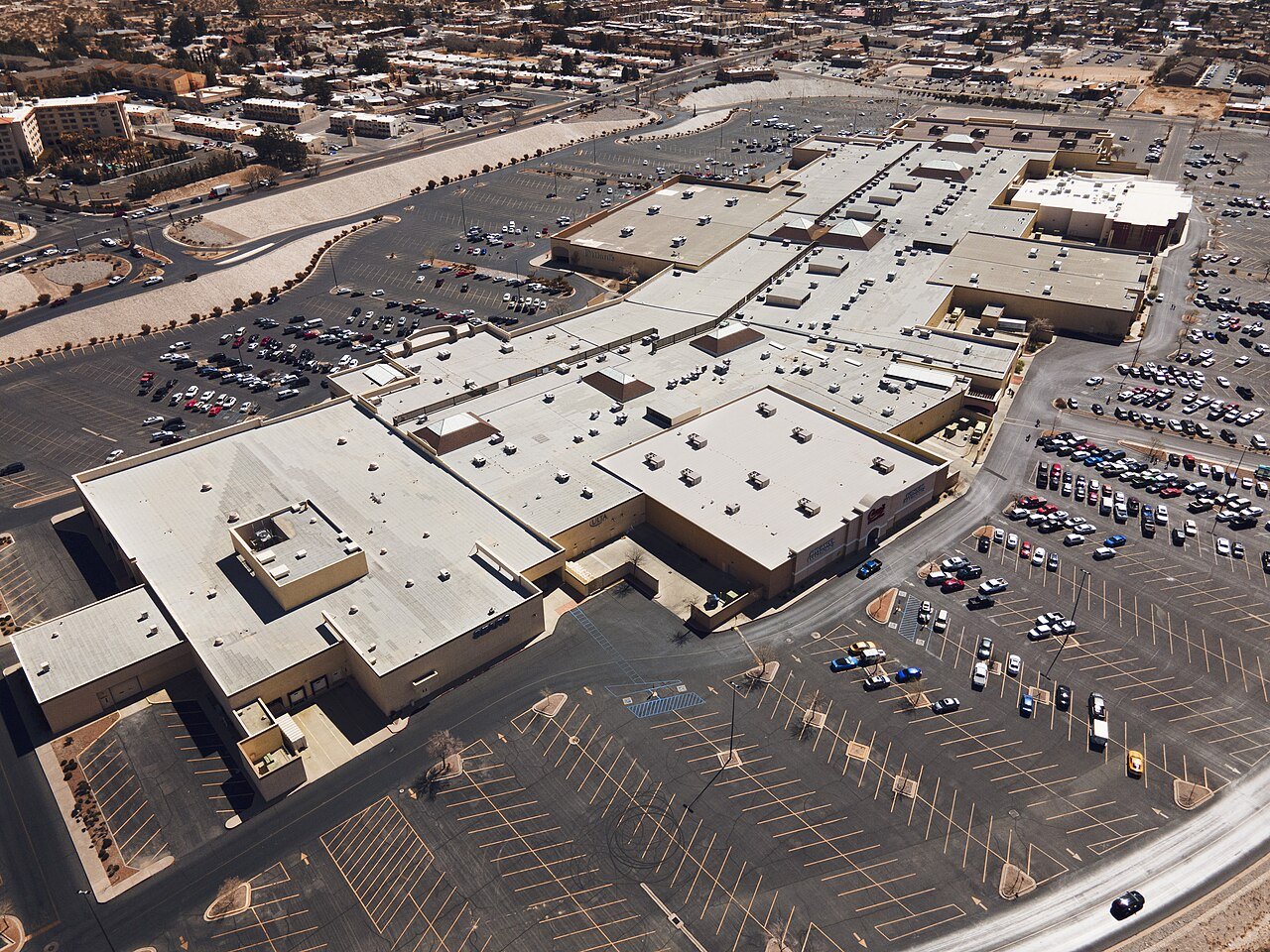
Parking, Pads and Slab Work at Mesilla Valley Mall
A shopping center has to keep selling while we work on it, so the first thing we plan at Mesilla Valley Mall is how customers will get from their cars to the doors without noticing a construction site. The mall opened in 1981 as an indoor center with 602,150 square feet on 77.4 acres, and it carries 4,500 parking spaces. That is a lot of pavement, and pavement of that age and size wants regular attention: repaired joints, replaced panels, restriped stalls, new curb ramps and drainage that actually drains.
The property lists 85 stores and five major tenants, which gives the owner both small-shop and large-box needs. A small shop turnover might ask for a new floor slab section after plumbing is moved, a trench for a grease line or a new accessible entry. A large-box change can mean sawing a demolition opening, forming a new dock or pouring a new pad for mechanical equipment. We handle these in the same way, with a short plan, a protected route for customers and a clean site at the end of every shift.
We coordinate the demolition, excavation, forming, reinforcing and concrete work, which means the owner and tenants deal with one team that knows the property rather than a changing cast of subs. A single realty group owns and manages the property, so one decision-maker can approve a phased program for the whole lot, which is what makes a multi-year pavement plan workable.
Working in a lot that never really closes
Parking is revenue, so we phase work by area and keep the main entrances open. A typical sequence closes a small group of rows at a time, uses temporary fencing and signage, and puts the work crews on one side while shoppers use the other. Where we remove concrete panels, we saw-cut cleanly, break out the slab, check the base, replace what is soft and pour new panels with dowels or tie bars so they work with the neighbors.
Surface drainage matters at a property this size. With 77.4 acres under pavement and roof, water travels a long way and gathers speed. We check the slopes, clean and repair inlets, and set patches to the surrounding grade so we do not create a new birdbath. Our parking lot concrete work covers both repairs and full replacement, and we help owners figure out which areas should be rebuilt and which can be patched.
What we do for retail properties
Our retail scope runs from small patch jobs to ground-up pad sites. For an outparcel or a new retail shopping center building, we prepare the pad, place footings and slab, and install the utilities and storm connections. For an existing center, we repair settled or cracked panels, replace damaged curb and gutter, rebuild accessible ramps and pour equipment pads for rooftop or ground-mounted units.
Slab openings are another common request. When a tenant needs a new drain line or floor penetration, concrete sawing, cutting and coring lets us open a clean, straight trench through the floor, place the pipe, backfill and compact, and then patch the slab so it looks as if it was never touched. We use dust control and protection so adjacent stores stay open.
Customers, carts and cars
A retail site has a general public that does not think about construction. We build in the assumption that someone will wander toward the work, so barricades are solid and visible, walkways are clear and signage is simple. Equipment moves only when the area is clear, and spotters are posted at corners and backing points.
Fresh concrete in a busy lot is a particular hazard, since people will walk across it if they can. We fence every pour area, post it clearly and keep it watched until it can be driven on. For accessible routes, we maintain a marked path from the accessible stalls to the entrances during all phases.
Around retail seasons
The calendar is driven by shoppers, not by our convenience. Heavy-sales periods near the year-end holidays and the back-to-school stretch are times when owners prefer limited disruption, so we look for gaps in the schedule when the property is quieter. We commit to the dates we promise and give tenants written notice of noise, dust or access changes, and our superintendents attend tenant meetings when the owner asks.
Night work is possible for sensitive areas, such as slab openings near food service or entries that cannot be blocked during the day. We price that work separately so the owner can weigh the premium against the lost sales from a daytime closure. For work near the neighboring MountainView medical district or on downtown Las Cruces streets, we use the same approach to timing and traffic control.
Repair, replace or rebuild
Cost for a large lot is mostly about the amount of pavement that needs full replacement. We recommend a condition survey that marks cracks, settlement and joint failure, then assigns each area a treatment. Often, a combination of joint sealing, panel replacement and selected asphalt or concrete overlay costs far less than a full rebuild. We work with commercial developers and property owners to put numbers on those options.
Other drivers are night work, small-quantity concrete deliveries, and the cost of keeping access open. We list those as separate items, so the owner can choose between a short, intensive closure and a longer, quieter phase.
Plan retail work with us
Send us the property map, the zones that matter most and the dates you cannot touch. We will build a phased plan that keeps shoppers moving.
Questions Owners Ask
Can you repair a parking lot without closing the whole thing?
Yes. We break the lot into zones, close a few at a time, and keep the main entrances and accessible stalls available. Temporary fencing and signs direct traffic, and the schedule is set so that one zone reopens before the next closes.
How do you decide whether to patch or replace a concrete lot?
We look at the cause of the distress. Isolated cracks and joint failures can be repaired and sealed. If the base is washed out, the slab is settling or the surface is breaking up in many places, replacement is more economical in the long run. A survey with photos and a map of the lot lets the owner see the recommendation.
How long does a typical panel replacement take?
Removal and replacement of a panel can happen in a few days, and the new concrete needs time to gain strength before it carries traffic. Mixes with an accelerator can shorten that wait if the owner needs the area back sooner, though they cost more. We tell the owner the opening time up front.
Do tenants have to be involved in slab work?
Often. If we are cutting a floor inside a store, the tenant will need to plan around noise, dust and access. We provide a work plan, the schedule and a contact person, and the owner can share it with the tenant.
What about drainage when we add a new pad site?
The new pad needs a drainage plan that ties into the existing system or provides its own detention. We coordinate with the civil engineer and grade the pad and its drives to shed water toward the inlets. We also check that existing inlets and pipes have the capacity for the added flow.