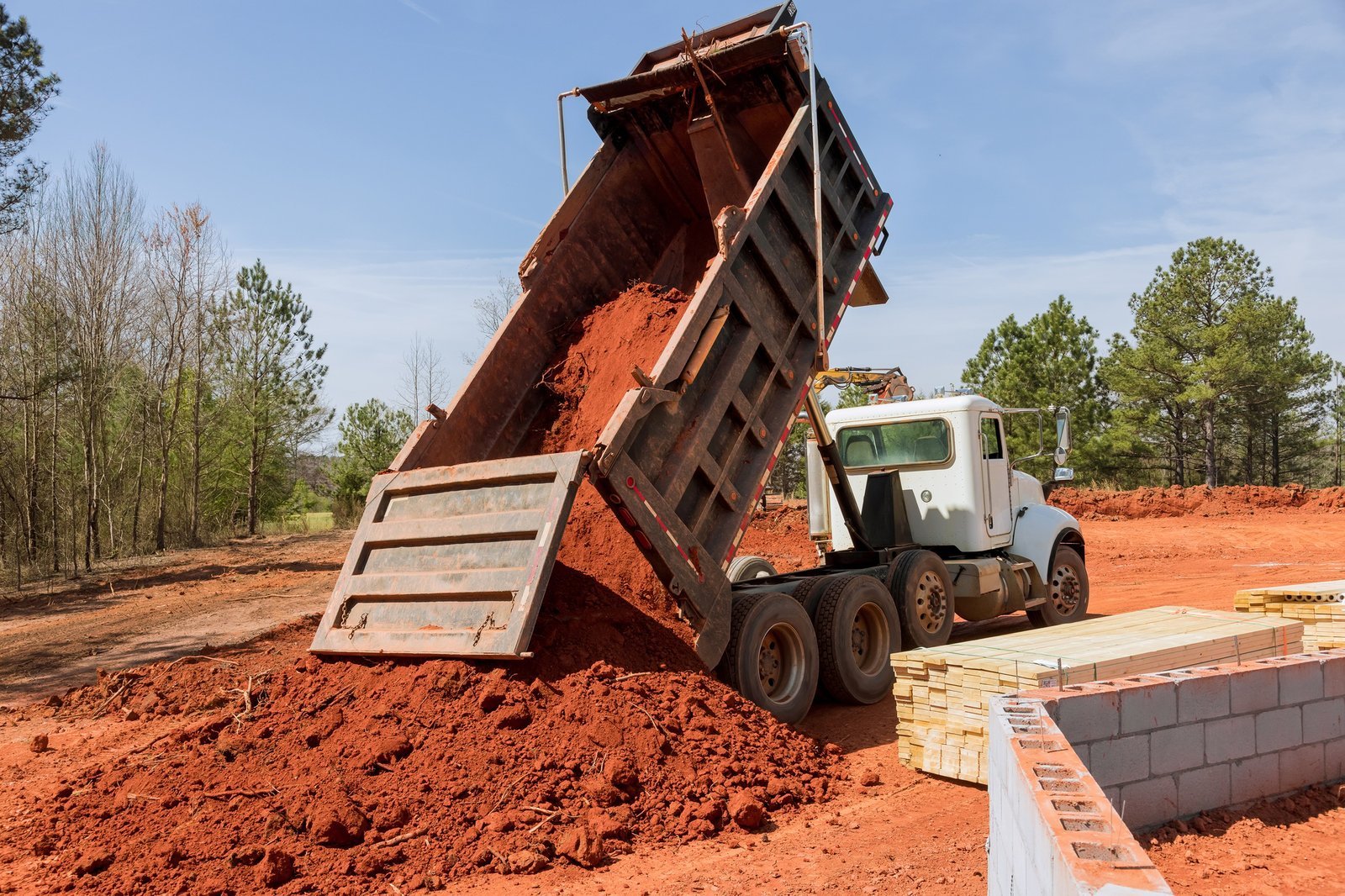
Import, Export and Haul-Off Services in Las Cruces
Trucks are the cost, and the route is the schedule. Import and export means bringing material onto a site that is short of it, or hauling material off a site that has too much, and in both cases the work is mostly logistics: how many yards, what material, from where to where, on which roads and at what hour. We run haul-off and import as a managed operation with a daily tally, not as a string of loads somebody hopes will add up.
The metro is strung along two interstates, which helps. Interstate 25 begins at I-10 exit 144 just south of the university campus in a tri-stack interchange, and the exits at Avenida de Mesilla, Main Street and the university give trucks several ways on and off. Even so, a loaded end-dump rolling through a school zone at the wrong hour can cost a job a phone call from the city, so we plan the route as seriously as the dig.
Our customers are developers and contractors whose sites do not balance, and public owners with surplus material from street or utility work. The upstream work is usually excavation work, and the people on the receiving end of the paperwork are often municipal and public works staff who need load records and dump tickets.
Building a haul plan
The plan starts with the numbers: bank yards to move, truck capacity, round-trip time and the number of trucks that keep the loader busy without lining up on the street. We use the round trip to work out production and set a daily target, then adjust it for traffic and the hours the project allows. A loader waiting on trucks is wasted money, and so is a line of trucks idling at the gate.
We also plan for the far end of the route. An import site needs a place to stage, test and place material, and an export site needs a disposal location that accepts what we are hauling. We confirm the receiving site before the first load, collect any tickets or tests it needs and keep a record of every load. Weather can stop hauling on unpaved ground, so in the monsoon months we keep a few dry-weather days of margin in the schedule.
Material sources and disposal in the metro
Material comes from pits and from other projects, and which one makes sense depends on where the job sits. Sites in the Innovation and Industrial Park at the junction of Interstates 10 and 25, where the city lists more than 400 acres shovel ready, are close to both interstates, so haul distances to and from them are short. Sites in the smaller communities along NM 28 or north on I-25 add length to the haul.
Disposal needs care. Clean soil, rock and broken concrete can often be reused as fill or road base on another project, which reduces both cost and landfill volume, while contaminated or mixed debris cannot. We separate material at the source, test when the owner or regulator requires it and keep paperwork showing where each load went. Over a job, matching surplus from one site with demand on another can save both owners money.
Routes to the communities we serve
From the southern end of the county, exit 151 serves NM 228 to Mesquite, about 13 miles southeast of Las Cruces, and exit 155 serves NM 227 toward Vado and Berino. Haul routes for sites in those communities usually run to the interstate on those state roads, and we check weight limits, bridges and school hours on each one before we price.
North of the city, Interstate 25 exit 9 serves NM 320 toward Dona Ana, and Hatch sits about 40 miles northwest of Las Cruces just off the interstate. Long hauls to places like that are priced by the round trip, and we say so plainly so the owner can decide whether it is cheaper to rebalance the site or to haul.
What drives a haul price
Hauling is priced by the load, the ton or the hour. Distance, truck type, wait time at either end and the cost of the material itself all play in. Import prices include the material, the loading and the trucking, and export prices include trucking and the dump fee. The cheapest haul is usually the shortest, so we start by asking whether the site can balance with a small change in finished grades, the kind of adjustment we discuss under cut and fill earthwork.
Hidden costs include tickets and tracking, street cleaning after trucks, flaggers for traffic control and extra time when a receiving site closes early. We include or list each of these in the proposal, and we show a clean per-yard number and a total so you can compare it against moving material around on your own site.
Who asks for haul-off and import
Commercial developers and subdivision builders often find a site does not balance and want one contractor to take the surplus or supply the shortage. Public works departments and utility owners have the same need after trenching, when spoil cannot go back in the ditch and has to go somewhere. Logistics and warehouse developers need large volumes of structural fill brought to a pad to reach design elevation.
The common thread is predictability. These buyers want to know the daily tonnage, the number of trucks on the road and the date the last load leaves, and we give them a schedule and a daily tally they can pass to their own project teams. Where an owner has an unusual material, such as broken concrete or a stockpile of mixed rubble, we sort it and tell them what it can be used for before pricing the haul.
Trucks, tracking and the public road
Haul traffic puts heavy equipment next to the public, so a few rules matter: covered or wetted loads, no overloading, driver hours respected, entrances with spotters and flaggers, and a stabilized exit that keeps mud off the street. We schedule loading so trucks do not stack on the road, and we avoid hauling through school zones at pick-up and drop-off.
We also look after the road itself. A sweeper or water truck cleans the street if trucks track dirt, dust is controlled at the pit and the dump, and trucks are checked for tailgate latches and leaks before they leave. If a neighbor or the city calls, we respond the same day, because a haul job runs on goodwill with the people who share the road.
Short on dirt or long on it?
Send the earthwork quantities and the site address. We will give you a haul plan with trucks per hour, route, receiving site and a price you can compare with balancing the site.
Questions Owners Ask
How do you decide between hauling off and rebalancing the site?
We compare the cost per yard of trucking and disposal against the cost of changing finished grades or building a berm with the surplus. Where the engineer approves, small grade changes often beat hauling, but a large surplus has to leave regardless.
Do you test imported material?
Yes. We take samples at the source and send them for gradation and the other properties in the specification before the first load. After that, tickets from the pit document what arrived, and the site lab verifies placement.
Where does exported material go?
Clean fill and rock can go to another project that needs it, a permitted fill site or a pit that accepts it. Debris and mixed material go to a facility licensed for it. We confirm acceptance and fees before the first truck rolls.
What hours can trucks run?
That depends on the project, the city or county and the neighbors. Many jobs limit early morning and weekend hauling. We build the schedule around the allowed hours and add trucks to meet production instead of breaking the rules.
Can you track every load?
We keep ticket counts by truck and by day, tied to the material source or destination. A summary goes to the project team on request so quantities can be reconciled at the end of the job without surprises.