Dairy and Orchard Concrete Work in Chamberino, New Mexico
Feed lanes, milking-parlor floors and manure-handling pads are some of the hardest-working concrete anywhere, and Chamberino is surrounded by the farms that need them. Cattle, wash water and heavy equipment wear a floor down from every direction at once, and a surface that is too smooth, too thin or poorly sloped becomes a daily expense. We build agricultural concrete with the slope, texture, thickness and joints that make it last, then grade and drain the ground around it.
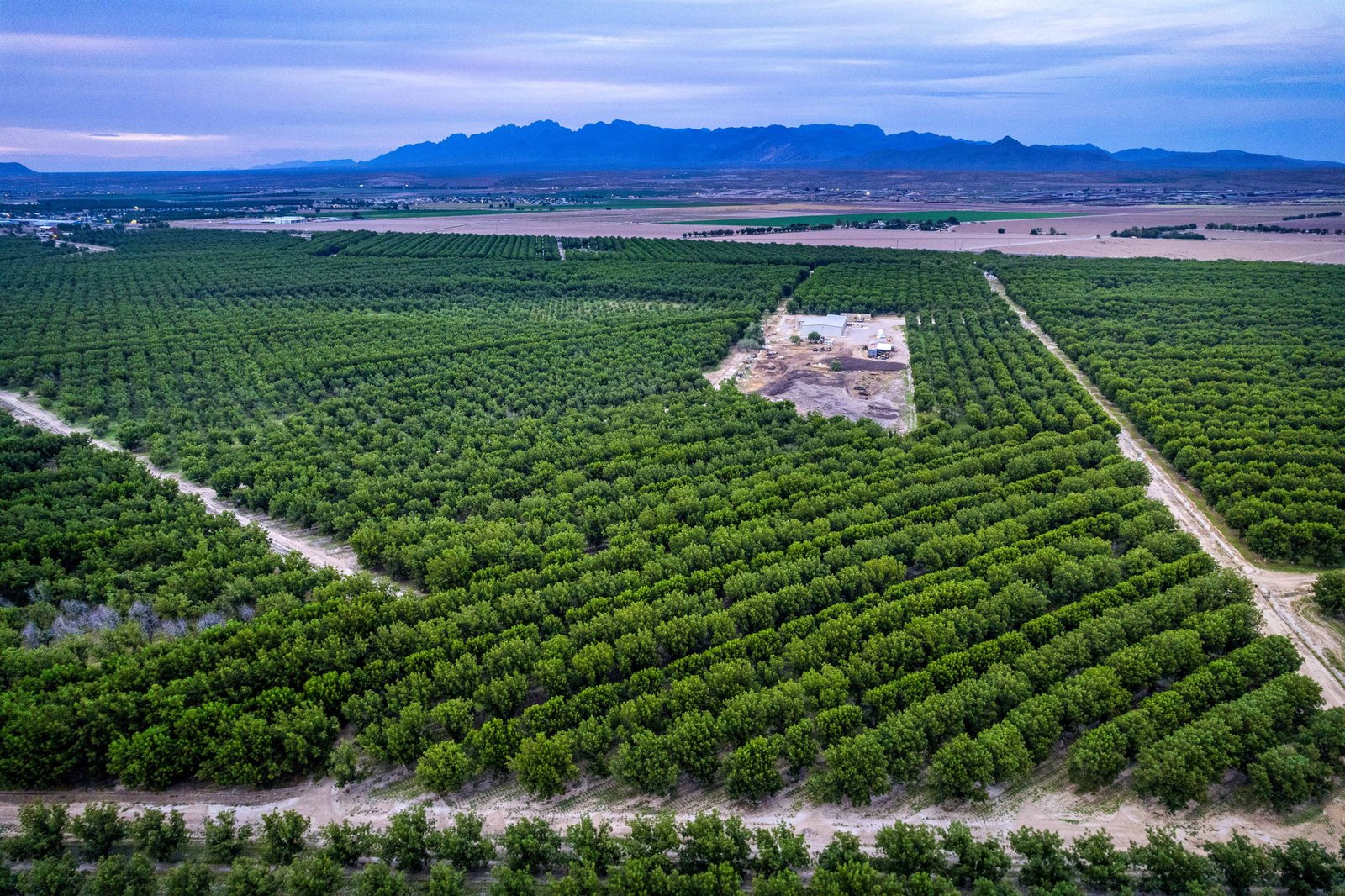
Chamberino is one of the communities along NM 28, the two-lane Lou Henson Highway that runs 30.346 miles roughly parallel to the Rio Grande, and NM 226 meets NM 28 near Chamberino and leads east toward Berino. The highway passes farmland, dairy farms, vineyards and pecan orchards in the Mesilla Valley. The community is unincorporated and had a 2020 census population of 736, so most of the building here is done by farm owners and agricultural operators who know exactly what they need.
That clarity helps. A dairy owner can tell us how many cows, how the animals move, how the cleaning works and where the waste goes. A pecan grower can describe the delivery trucks, the drying and storage areas and the equipment. We turn those answers into a site plan, a concrete plan and a schedule that fits the operation, not the other way around, and we write down each assumption so a change in herd size or equipment shows up as a clear adjustment to the price.
Dairies, orchards and vineyards along NM 28
The mix of dairy farms, pecan orchards and vineyards means each owner has different needs. A dairy needs floors that drain and resist chemicals. An orchard needs a processing pad, storage floor and good access for hauling. A vineyard may need a crush pad, a winery floor with drains, and a place to park equipment. We have a different checklist for each, and we confirm it with the owner at the start.
Because the highway is a two-lane road, delivery planning is important. A mixer truck turning into a driveway on NM 28 needs space and time. We look at sight distances, turn radii and the condition of the shoulder, and when necessary we ask for flaggers or arrange a staging spot so trucks do not queue on the road.
Drainage, containment and neighbors
On a farm, the most important feature of a concrete slab may be where the water goes. Liquid from washing and rain must flow to a collection point, and from there to a pond, a tank or a treatment area as the design requires. We build containment pads and curbs so that fluids stay where they belong, and we test slopes with a laser before the pour.
Neighbors, ditches and orchards share the valley, so we keep dust, mud and runoff on our own site. We stabilize the entrance, wet the haul road, and avoid pushing soil toward a neighbor's ditch. Chamberino's listed elevation is 3,803 feet, and our grading plans allow for rainstorms by keeping drainage paths clear while the work is open.
Forms, steel and finishing on one schedule
Agricultural concrete involves more small details than a big slab does: keyways, curbs, bunker walls, feed bunks, equipment bases, tie-ins to existing floors and embedded sleeves. One coordinated schedule for the forms, the steel and the finishing can adjust on the spot, and the owner talks to one superintendent instead of three.
We pump concrete when the layout makes trucks hard to position, and we describe the pumping and placement plan in the proposal. When the owner is installing machinery, we set equipment pads and machine foundations using the manufacturer's drawings, and we leave the anchor bolt layout to the template supplied.
Building around the farm calendar
Farm work does not wait, and many owners want a floor poured in the off-season between harvest and planting, or when a pen can be emptied for a few days. We build the schedule around the owner's calendar and will phase a project to keep part of the operation running. Pours in an occupied dairy happen in sections, with temporary fencing and clear instructions for the people who work there.
Heat is the other schedule driver. For summer pours we start early, keep trucks moving and apply curing as soon as the surface is ready. In winter, we check the forecast, avoid frozen subgrade and use blankets. We would rather move a pour a day than risk a floor that will be cleaned and driven on for years.
Barns, sheds and the buildings that go on the slab
Many farm buildings are pre-engineered metal buildings, which need foundations that match the anchor bolt plan from the building supplier. We set footings and slab edges to the manufacturer's reaction loads and check bolt locations before we pour. For dairy buildings with long, repeating bays, we pay close attention to alignment and slope.
If your operation spreads across communities, we can price work in La Union or La Mesa on the same schedule. Owners with several sites often like to phase their improvements, and we plan the crews and equipment to follow the plan. Our approach to agriculture and dairy projects is the same everywhere: understand the operation first, then build.
Planning farm concrete near Chamberino?
Describe the operation, the footprint and the season you want the work done in. We will return a slab, drainage and schedule proposal that fits how the farm runs.
Questions Owners Ask
What slope should a feed lane or wash pad have?
The design drawings specify it, usually a gentle fall toward a collection channel. Too flat holds water, too steep makes it hard for animals and equipment. We verify the slope with a laser or level at several points before and after the pour, and we correct it while the concrete is still workable.
Can you work in the middle of an operating dairy?
Yes, with a plan. We schedule work in sections, put up barriers, confirm animal movement with the owner, and clean up daily. The farm's own safety and biosecurity rules take priority, and we follow them.
How do you handle a driveway on a two-lane state highway?
We check with the state and the property owner about access rights, plan delivery times to avoid peak traffic, and use flaggers if the work affects the road. A pre-pour meeting with the batch plant confirms the truck sequence.
What kind of concrete mix is right for a farm floor?
The structural engineer or the project specification picks it, but typical priorities are strength, low permeability and surface wear. We work with the ready-mix supplier to confirm the mix, and we test slump and cylinders on delivery.
Can you repair a worn feed lane instead of replacing it?
Sometimes. If the base is sound and the slab is worn at the surface, grinding and a bonded topping or joint repair can extend its life. If the slab has settled or cracked through, replacement is cheaper in the long run. We inspect, core a sample where useful, and give you both prices so the decision is yours.