Erosion Control and SWPPP Compliance for Las Cruces Construction Sites
A desert thunderstorm does not need much time to move a lot of dirt. The arroyos around Las Cruces are dry streams that often carry water after heavy storms, and a graded site with no vegetation, no berms and no stabilized entrance is a ready-made channel for that water. Erosion control keeps soil on the site, and the stormwater pollution prevention plan, usually called a SWPPP, is the written plan that says how, where and who checks.
We install and maintain erosion and sediment controls as part of our earthwork, and we also take them on as a separate scope when a general contractor or owner wants one team accountable for the whole system. The point is not paperwork. It is that an August storm does not carry silt into a neighbor's lot, an irrigation ditch or a public street, and that the inspector who walks the site finds what the plan says.
The same controls run through our mass grading and land development infrastructure work, and we tailor them to the site's slope, soil and final stabilization plan.
Permits, plans and who signs what
Construction that disturbs one acre or more generally needs coverage under the construction stormwater permit, and the SWPPP is the plan that goes with it. Cities and counties often add their own grading, drainage and erosion requirements on top. Before we mobilize we read the permit, the SWPPP and the grading plan together, because the controls on paper are only useful if they match the way the dirt will actually be moved.
The SWPPP names the controls, the person responsible for inspections and the steps for final stabilization. We keep that person informed of every change in the work, since a new haul road or stockpile can need a new control, and we document inspections, repairs and rain events in the format the permit expects. A site graded in phases may update the plan as each phase opens, and we work with the engineer on the revisions.
Controls first, stabilization last
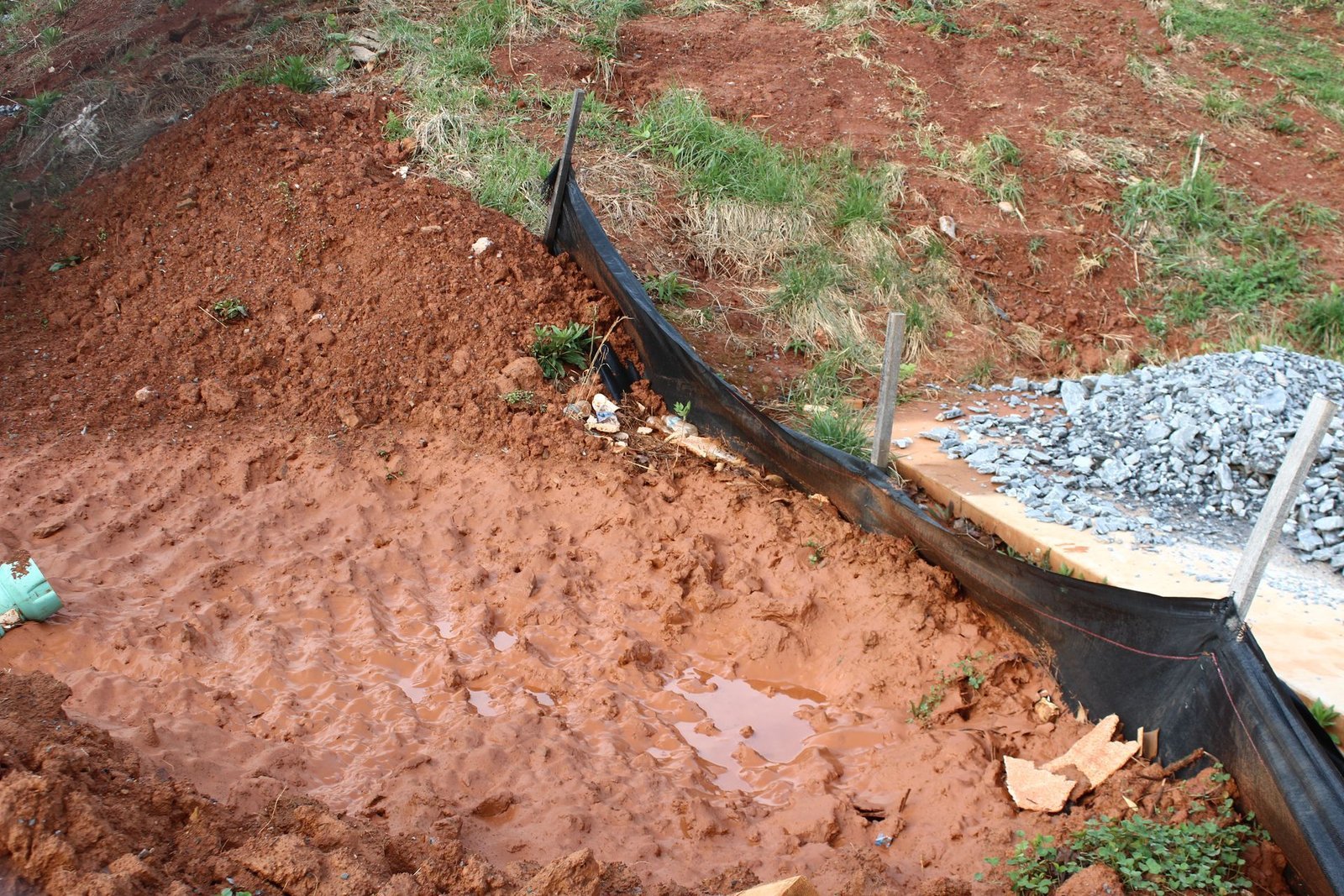
Perimeter controls go in before the first scraper, and the stabilized construction entrance goes in with them. We install silt fence or wattles on the downhill side, inlet protection at existing storm structures, and temporary berms and swales that route water around the work. Only then do clearing and grading begin, so the first storm after disturbance meets a working system.
The end of a job needs as much planning as the start. Finished slopes are seeded, mulched, covered with aggregate or paved as the plans call for, and in a dry climate seed does not take without water, so stabilization and irrigation have to be scheduled together. Temporary controls come out only when the permit allows, usually after the site is stabilized, and we keep them in place through any rain event until then. Where we can, we aim to have exposed ground stabilized before the summer storms arrive.
Controls that fit the ground from valley floor to foothills
Sites in the Mesilla Valley, on the mesa and near the foothills drain differently. Flat valley ground sheds water slowly and may hold it, while sloped ground concentrates it. Near the river, farmland and ditches mean discharges can reach irrigation infrastructure. Leasburg Dam State Park, about 15 miles north of Las Cruces, has a diversion dam completed in 1908 that sends river water into canals serving Mesilla Valley farms, a reminder that sediment leaving a site can end up in someone's working canal.
We adjust the controls to the setting. Valley sites often use perimeter sediment control plus stabilized entrances, while sloped sites need check dams, diversion ditches and slope protection. Around Radium Springs, at the upstream end of the valley along the river, we pay special attention to how water leaves a site, because a short path to the river leaves little room for a second line of defense.
Keeping the controls from becoming a hazard
Erosion controls are work too. Silt fence stakes, wattles and rock check dams are trip and impact hazards, and sediment basins are open water in the middle of a construction site. We fence deep basins, mark berms so equipment operators see them and keep entrances clear so trucks can get on and off without tracking mud or meeting a pedestrian. Maintenance crews work with a spotter near haul traffic.
Storm response is a safety issue as well. When a storm is forecast, we check the controls, clear inlets and stage pumps and extra material. After the storm nobody goes into basins, ditches or trenches until they have been inspected, because saturated edges slough. Dust control, the dry-weather side of the same job, uses water trucks and speed limits so neighbors and traffic are not left in blowing dust.
What decides how many controls a site needs
Slope length, soil, area disturbed, time exposed and the distance to a receiving channel decide the answer. A small flat lot near a paved street may need little more than perimeter control and a stabilized entrance, while a data center campus like the 1,400 acre one under construction in Santa Teresa is a different problem: phased disturbance, sediment basins and a lot of inspection. Owners should expect the plan to be proportionate, with more measures where the risk is higher.
We also consider who is downstream. A neighbor, a road, a dry wash that leads into a developed area or a canal each carries a different consequence, and the plan should reflect it. When the plans do not show a drainage path the site clearly has, we raise it with the engineer before it turns into a violation.
Tying erosion control to the rest of the earthwork
Erosion control rarely stands by itself. It rides with topsoil stripping and stockpiling, because stockpiles are among the most erodible features on a site and need their own perimeter and cover. It also pairs with pond and basin excavation, since a detention basin built early can serve as a sediment trap during construction before it is finished as the permanent facility.
For owners who want one point of contact, we can combine controls with grading and utility work so the same team that opens the ground also closes it. Commercial developers often ask for this, because inspectors look at the site as a whole and a gap between two contractors is where citations tend to appear.
Disturbing an acre or more?
Send the grading plan and the SWPPP, or tell us what you have and we will help scope it. We will price the controls, inspections and final stabilization and put them on the schedule.
Questions Owners Ask
When does a site need a SWPPP?
Generally when construction disturbs one acre or more, or when it is part of a larger common plan of development, and also when the local authority requires one. The engineer or owner prepares the plan, we install and maintain the controls, and the permit holder keeps the inspection records.
Who does the inspections?
The SWPPP names an inspector, who may be the owner's representative, the general contractor or a third party. We inspect and repair our own controls routinely and after rain, and we hand over the notes so the formal record stays complete.
What do you do about dust?
Water trucks, haul speed limits, stabilized roads and covered or wetted stockpiles. In spring wind, we also reduce the area exposed at any one time. Dust and sediment are both part of keeping the site compliant.
When can temporary controls come out?
Only when the permit and the plan say the site is stabilized, with vegetation established or hard surfaces in place. We remove silt fence and wattles at that point and repair any area disturbed by removal.
Can the detention basin serve as a sediment basin?
Often, with care. We build it early, protect the outlet and clean accumulated sediment before it becomes the permanent facility. The engineer must approve the sequence because the final grades and outlet details need to be restored.