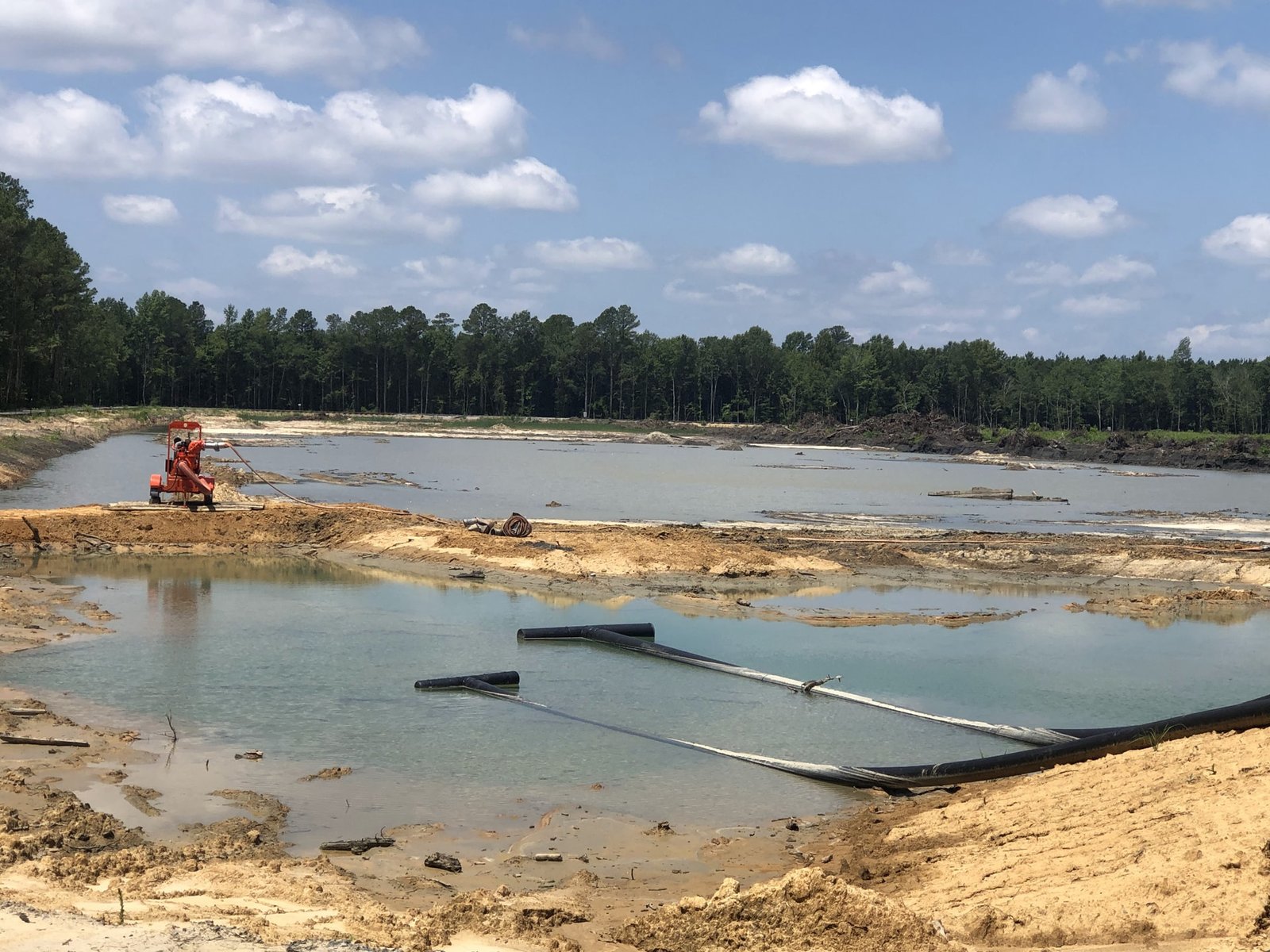
Pond and Basin Excavation for Stormwater in Las Cruces
Most ponds around here never hold water for long, and that is by design. In a climate that averages just over 9 inches of precipitation a year but throws short, violent thunderstorms, the pond that matters is the detention or retention basin: a graded depression that catches a storm's runoff and lets it drain or soak away at a controlled rate so the downstream channel, street or neighbor is not flooded. Building one is excavation with unusually tight rules about shape, slope and soil.
Flat ground floods in this region. Deming records minor flooding over large areas of flat ground at times, and the arroyos around Las Cruces carry water after heavy storms. Developers meet that reality with basins sized by the engineer to hold a design storm, and those basins are some of the largest earth-moving items on a site.
We excavate detention and retention basins, stormwater ponds, ditches and swales, and landscape or irrigation ponds when the plans call for them. They share a site with detention and retention pond structures and culverts and headwalls, and they depend on accurate fine grading at the bottom and sides.
Water in a dry place
Water has two roles in the Mesilla Valley: it is scarce, and it arrives suddenly. Leasburg Dam State Park, about 15 miles north of Las Cruces, has a diversion dam completed in 1908 that sends river water into canals serving valley farms, so the valley has long relied on engineered water channels. A new basin sits in that landscape and must not interfere with ditches, drains or existing flow paths.
We look at where a basin will discharge before we look at its shape. An outlet that drains into an irrigation ditch or a county road drain needs approval from whoever owns it, and a basin expected to infiltrate needs soils that can accept water. If the soils report shows tight soil, the engineer may have to change the design, and we prefer to hear that before we excavate a deep hole, not after.
Design storm, side slopes and approvals
Basins are designed to a storm event and a volume, with a specified bottom elevation, side slopes, freeboard, inlet and outlet structures and sometimes an emergency spillway. We build to the lines and grades on the plans and verify the volume by survey as we go, since a basin that is a foot shallow across its whole bottom can fall well short of its required storage.
Approvals come from the city, county and sometimes an irrigation or flood control authority. Side slopes, fencing and access are part of the review, and some owners require maintenance ramps. Embankment fill that forms a berm must be placed and compacted as engineered fill with testing, because a poorly compacted berm leaks and fails. We coordinate those tests with the owner's lab.
Deep excavation and side-slope safety
A basin is a deep excavation, and unfenced it is a hazard to the public. During construction we fence or barricade open basins, post signs and keep equipment away from edges. Side slopes are cut to a stable angle and watched after rain, since saturated slopes slump, and workers stay out of the basin when storms threaten. A school campus next door makes fencing and gate discipline more important, not less.
After the basin is built, the safety design continues: flatter side slopes a person can climb out of, access ramps for maintenance and outlet structures that keep children and debris out. These details are on the plans, and we build them carefully because owners are responsible for their basins for the life of the project.
Excavating a basin that holds its shape
We strip the topsoil, set grade stakes for the bottom and sides and excavate in benches so the final slope is trimmed from firm material. Spoil goes to the berm, to a planned fill area or off site, depending on the balance of the project. The bottom is graded to the specified low point or flat grade, depending on whether the basin infiltrates or drains.
The finish matters for performance. We avoid compacting the bottom of an infiltration basin, since compaction reduces infiltration, and we use low-pressure tracked equipment on it. Berms are built up in lifts and compacted. Outlet structures are set to the exact elevation before the bottom is final, so inlet and outlet inverts are accurate. During construction the basin also serves as a sediment trap under our erosion control and SWPPP plan, and it is cleaned out before it becomes the permanent facility.
Soils, groundwater and where the dirt goes
Soil tests decide whether the basin can infiltrate and how steep its sides can be. Near the river, shallow groundwater can flood a deep basin bottom and may require dewatering during construction. Sand and gravel layers drain quickly, while clay layers can hold water and soften. We read the borings with the engineer and plan accordingly.
Spoil volume is large, since a basin may be several feet deep over a large area. If the site needs fill elsewhere, the basin supplies it, and that balance is the best economy of the job. If it does not, hauling the excess is a cost and a traffic issue we coordinate under import, export and haul-off.
Why basins cost what they do
Volume is the driver: cubic yards excavated, hauled, placed and compacted. The cost per yard drops with scale, but extras such as dewatering, rock, lining, inlet and outlet structures and fencing add up. Tight tolerances on the bottom and slopes add fine grading time, and a basin to be seeded needs topsoil placed.
Savings come from design choices made early: locating the basin where the cut balances the fill elsewhere, using shallower, wider shapes where land is cheap and avoiding lined or concrete slopes where vegetation will do. For commercial developers and public owners alike, a basin that doubles as landscape or park space can change the economics, and we help evaluate options with the engineer.
Need a basin dug to the plan?
Send the drainage plan and the soils report. We will confirm volume, berm and outlet details, price the excavation and plan the spoil so it earns its keep elsewhere on the site.
Questions Owners Ask
How do you confirm a basin holds the required volume?
We survey the bottom and slopes during excavation and compare them to the design surface, then run a final volume check before the basin is accepted. A shortfall is corrected before we demobilize, because it is cheaper to dig deeper now than to fix it after the first big storm.
Can an infiltration basin be built in clay soil?
The engineer decides, based on the borings and any infiltration tests. Clay drains slowly, so the design may use an outlet instead, or a combination. We build what the plans show, and we report what we see in the cut if it differs from the report.
What happens if we hit groundwater?
We stop, tell the engineer and pump or dewater as needed to finish the excavation safely. Near the river this is possible, so we ask for groundwater readings before bid and carry a dewatering allowance when the risk is high.
Do basins need fencing?
During construction, yes. After construction, it depends on depth, slopes and the owner's policy. Many designs use gentle side slopes in place of fences, with fences where depth or location calls for them.
Can the dirt from the basin be reused?
Often. If it meets fill requirements, it forms berms or builds pads elsewhere on the site, saving haul-off. We stockpile and test it to confirm before it is placed.