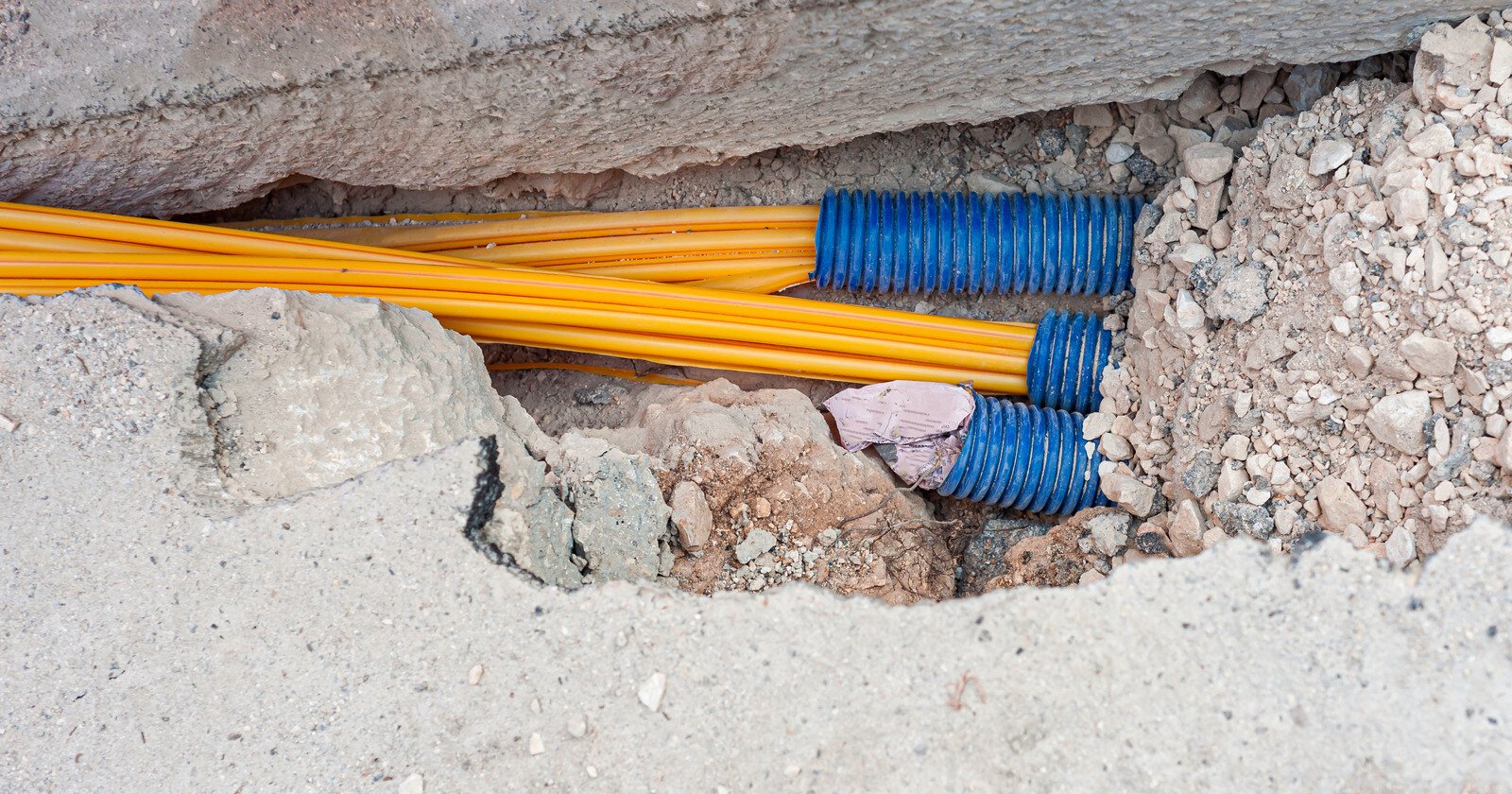
Conduit and Fiber Trenching Across Dona Ana County
Fiber is cheap to bury and expensive to cut. One backhoe bucket through a live cable can take down a plant, a clinic or a whole stretch of valley farmland, so the way we trench is built around what is already underground. We locate before we open the ground, we pothole where it counts, and we leave the trench so it can be found again.
The geography here makes the work interesting. NM 28 is a 30.346-mile two-lane highway that runs roughly parallel to the Rio Grande past farmland, dairy farms, vineyards and pecan orchards, and communities such as Chamberino sit along it. NM 9 runs 59 miles east from Columbus to Santa Teresa. Long, narrow corridors like these are exactly where conduit and fiber are needed, and exactly where the work crosses irrigation ditches, driveways and farm roads.
We trench and install conduit for telecom carriers, electrical contractors, municipalities and private owners.
What the trench includes
Our scope starts with the route. We review the plans, mark the centerline, call for locates and walk the alignment with the owner or the engineer. We then trench to the required depth and width, usually in a narrow cut to limit restoration, install conduit with the specified spacing, lay warning tape and tracer wire and backfill and compact. For longer pulls, we place handholes or vaults at the intervals shown on the plans.
The conduit size and type depend on the cable. Smaller innerduct and micro-conduit are used for fiber, and larger rigid or PVC conduits are used for power. When a project calls for several conduit types in one trench, we coordinate the layout so each one has the separation required, which ties in closely with our work on electrical duct banks.
Locate first, dig second, restore fast
Every route begins with a call to the one-call center and with a review of the as-builts. Where the plans suggest a conflict, we expose the line with potholing and locating before the trencher arrives. The bend radius of a fiber conduit matters, so we form sweeps by hand where necessary and never force a bend around a corner.
Production trenching works best with a clear crew order. One crew trenches, another lays conduit, a third backfills and compacts, and a fourth restores the surface. Keeping those crews close together shortens the time any trench stays open. We keep the work zone tidy, protect driveways with plates and maintain access for neighbors. On farm roads and shoulders, we repair the surface to match what was there.
Planning the route and the work window
Fiber and conduit projects tend to have tight windows. A carrier might need the route finished before a cutover date, or an owner might want the conduit in before paving starts. We lay out the production rate for the route and identify the places where progress will slow, such as rocky ground, crossings or tie-ins. We then build a schedule that includes locate lead times and permit waits.
Right-of-way work depends on permission. Crossing a state highway, a county road, an irrigation ditch or a railroad usually requires a permit and sometimes a flagger or inspector. We prepare the traffic control plans and apply for permits early. In the valley, ditch crossings often have to be done while irrigation water is off, so we confirm those windows with the ditch managers before we promise a date.
Buildings that depend on a good conduit run
Logistics buildings are the biggest users. A logistics fulfillment center needs fiber for its automation, security and communications, and the conduit usually runs from a street or a carrier vault to a main distribution room. Santa Teresa has a 1,100 acre Gateway Rail Park and a Port of Entry, which suggests how much connectivity the area depends on.
Truck terminals and cross-docks have similar needs, with extra conduit to gate houses and scale pits. We plan routes to a truck terminal or cross-dock by laying sleeves under truck courts before the concrete goes in, so the paving will not be cut again when a new tenant moves in. Schools, clinics and offices need the same basics at a smaller scale.
What drives the price per foot
Production rate controls the price. A route through open soil with no surface restoration costs less per foot than one through paved streets with utilities on both sides. Rock or hard ground slows the trencher; surface restoration, traffic control and permits add cost. A route that needs boring under a road, a ditch or a rail line costs more per crossing but avoids a long closure.
We give owners a price breakdown for trench, conduit, handholes, restoration and traffic control, and we list the assumptions. If the route is long, we suggest a unit price for rock or unforeseen conditions, which protects both sides. For rural reaches serving agricultural users, agriculture and dairy owners often prefer a route along a field edge rather than the road, which can be cheaper but may need an easement.
Where we trench
We work across the Mesilla Valley and the surrounding highway corridors, including the NM 28 communities such as Chamberino, the I-10 corridor, and the border area around Columbus, which sits about three miles north of the border with Mexico. Distance affects mobilization, so we plan routes with that in mind and combine trips when possible.
We also take small jobs, such as a service lateral to a new building or a conduit across a parking lot. The same locate, pothole and restore discipline applies to a fifty-foot trench as to a five-mile one.
Walk the route with us
Send the route map and the carrier's specification, and we will walk the alignment, flag the crossings and price the trench with clear assumptions. Whether the job is a short lateral in Santa Teresa or a long run along NM 28, an early look saves time later.
Questions Owners Ask
How deep should fiber conduit be buried?
The depth is set by the carrier's standard, the owner's specification and the local authority, and it varies with surface type and crossings. Roadways and farm fields usually need more cover than landscape areas. We follow the plans and tell you if a field condition makes the required depth hard to achieve.
Can you trench through rock or other hard ground?
We can, with the right equipment. Hard ground slows production and raises cost, so we identify it early from the geotechnical report or test pits. Our page on rock and hard ground excavation describes the methods.
What happens when we hit an unmarked line?
We stop, protect the area, call the owner if known and document the situation. Potholing before trenching reduces the chance. Marked lines are not always where the paint says, so we dig carefully near them.
How do you handle ditch and road crossings?
Road crossings are done by open cut with traffic control or by boring, depending on the permit. Ditch crossings usually require a dry window and permission from the ditch owner. We plan these crossings as separate tasks with their own schedules.
Will the surface look the same after restoration?
We match what was there as closely as the plans allow. Paving is saw-cut and patched, gravel is regraded, and landscaping is replaced. A few weeks after the work, we revisit the trench to check for settlement.