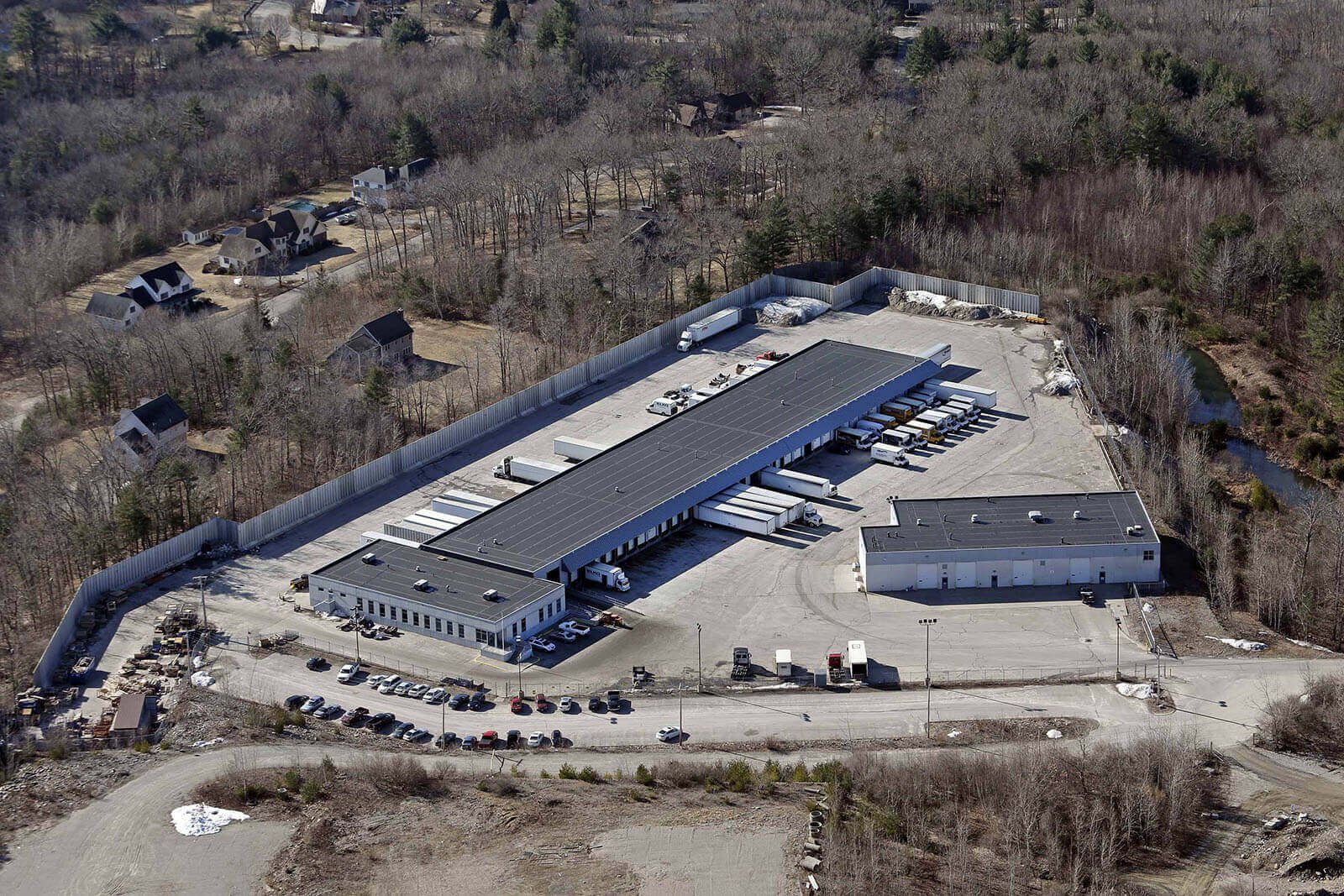
Truck Terminal and Cross-Dock Concrete in Las Cruces
Cross-dock freight does not sit. Trailers back in, freight moves across the floor and out the other side within hours, and the pavement outside takes the full weight of tractors turning on the spot all day. A truck terminal is among the most pavement-intensive building types there is, and its performance is measured in how little repair it needs.
Two corridors in this metro pull trucking. One is the Santa Teresa rail and port area, where the Union Pacific intermodal terminal lists 1,266 container and trailer parking stalls expandable to 4,380. The other is the interstate pair at Las Cruces, where I-25 ends at I-10. Both draw carriers and shippers who want a place to move loads between trucks.
We build the terminal's floors, aprons, drive lanes and underground utilities. Here is how we go about it.
Dock slab, apron and the long lanes outside
A cross-dock floor is a long, narrow slab with doors on two sides, built for forklift or conveyor traffic. We pour it with load transfer at joints and a surface that resists wear, then step outside to the apron, where doweled slabs take landing gear loads and braking. Door pits and ramps get the same attention, and our work on loading dock pits and ramps explains the details. Terminals paired with a storage building follow the approach on our storage warehouse page.
The yard is where terminals are won or lost. Drive lanes and parking stalls take repeated turning of loaded tractors, which scuffs asphalt and tears weak joints. We design the base, dowels and joint pattern for that load, and we use concrete paving in turning areas and queues, where its stiffness resists rutting under standing trailers.
Yard drainage, fueling and the small concrete
A terminal yard is a big flat paved area, so water needs somewhere to go. We grade toward inlets and detention areas with slopes gentle enough for trailers to stay level at the doors and steep enough to clear a thunderstorm. Surrounding arroyos often carry water after heavy thunderstorms, so we protect natural drainage paths and keep inlets clear of silt during construction.
Fueling areas, wash bays and maintenance shops need containment, oil-water separators and special concrete details. Light poles, gates, guard shacks and truck scales each need foundations placed in the right order, and scale pits need drains and a flat approach. Our bollards and site concrete scope covers the smaller pieces that still have to be placed to tolerance.
Building the yard in layers
We work from the bottom up: clearing, grading and compacting the yard, certifying the subgrade with a proof-roll and placing a stable base before any concrete. Where soils need help, lime and cement soil treatment gives a stiffer platform. A weak base under a heavy turning lane shows up within a year as cracks and pumping joints.
Then we sequence pours to keep the site working. Terminals often need to run partly during construction, so we build in phases, placing the dock apron first for the carrier's earliest door count and maintaining gate access and detours for trucks. Placements run in the early morning during summer, and we cure with compound or wet methods right behind the finishers.
Trucking corridors in the metro
Santa Teresa has the Santa Teresa Port of Entry and a 1,100 acre Gateway Rail Park served by the Santa Teresa Southern Railroad, which interchanges with the Union Pacific. A New Mexico Border Industrial Association presentation lists 74,000 feet of trackage at the intermodal terminal, expandable to 145,000. A terminal here handles freight from trains and trucks, and our page on Santa Teresa describes the area.
Elsewhere, I-25 begins at I-10 exit 144 in Las Cruces, I-10 exit 155 leads to Vado and Berino, and NM 9 runs 59 miles from Columbus east to Santa Teresa. Sites near those interchanges give carriers options on routing. For neighbors on the same corridors, see logistics and warehouse developers and the distribution center page.
Where terminal money goes
Pavement area is the main driver. A terminal can have several times more paved yard than building floor, so every inch of slab thickness and every foot of dowel spacing multiplies across acres. We price the apron, drive lanes and parking separately, and we show the cost of thicker sections only where the loads justify it.
The next driver is the subgrade. Importing fill, treating soft soils and hauling spoil off site add up faster than most owners expect, which is why we ask for the geotechnical report before giving a firm number. A yard with good native soil and a short haul distance for concrete can cost noticeably less than one that needs treatment and import.
Trucks, people and open trenches
Yard construction is dangerous because it sits next to live traffic. We separate haul routes from public trucks, set barricades and flaggers when we work near moving trailers and keep operators and drivers in clear communication. Concrete trucks and pumps share the lanes with terminal traffic, so we stage them out of the way.
Utilities cross terminal yards at odd angles. We locate and pothole before digging, support or protect exposed lines and restore trench backfill with compacted material so a heavy tractor does not find a soft spot a month later. Our trenching and backfill practice emphasizes compaction in thin lifts and density checks at every section.
Share the door count
Share the door count, the yard size and your operating date, and we will plan the dock slab, apron, drainage and utilities for your truck terminal.
Questions Owners Ask
Should a truck terminal yard be concrete or asphalt?
Concrete holds up better where trailers stand and tractors turn, such as dock aprons and queue lanes, while asphalt can serve lighter drive lanes at lower first cost. Many terminals use both. We price the split and show the long-term repair difference so the owner can decide.
How do you pour a yard while the terminal keeps running?
We build in phases with gate access and detours for trucks. Each phase is planned around the carrier's peak hours, concrete is placed in early morning strips and the cured sections are opened for traffic when strength tests allow. A phasing drawing is part of our preconstruction package.
What base is needed for heavy turning lanes?
A stable, uniform base, which comes from compaction, a proof-roll and sometimes lime or cement treatment of the subgrade. The pavement section is set by the engineer, and we build it layer by layer with density tests. Uneven support is what turns a good slab into a cracked one.
How are scale pits and fuel islands handled?
Scale pits are formed with drains and reinforcement to the scale manufacturer's drawing, with a flat approach so weights are accurate. Fuel islands and wash bays need containment curbs, sealed joints and drains routed to separators. We coordinate each with the owner's equipment vendor before forms close.
Where in the metro do carriers usually look for terminal sites?
Many look near Santa Teresa for rail and port access and near the I-10 and I-25 junction in Las Cruces for interstate access. We compare haul distance for fill and concrete, utility availability and drainage for each parcel, so the site cost shows up before you commit.