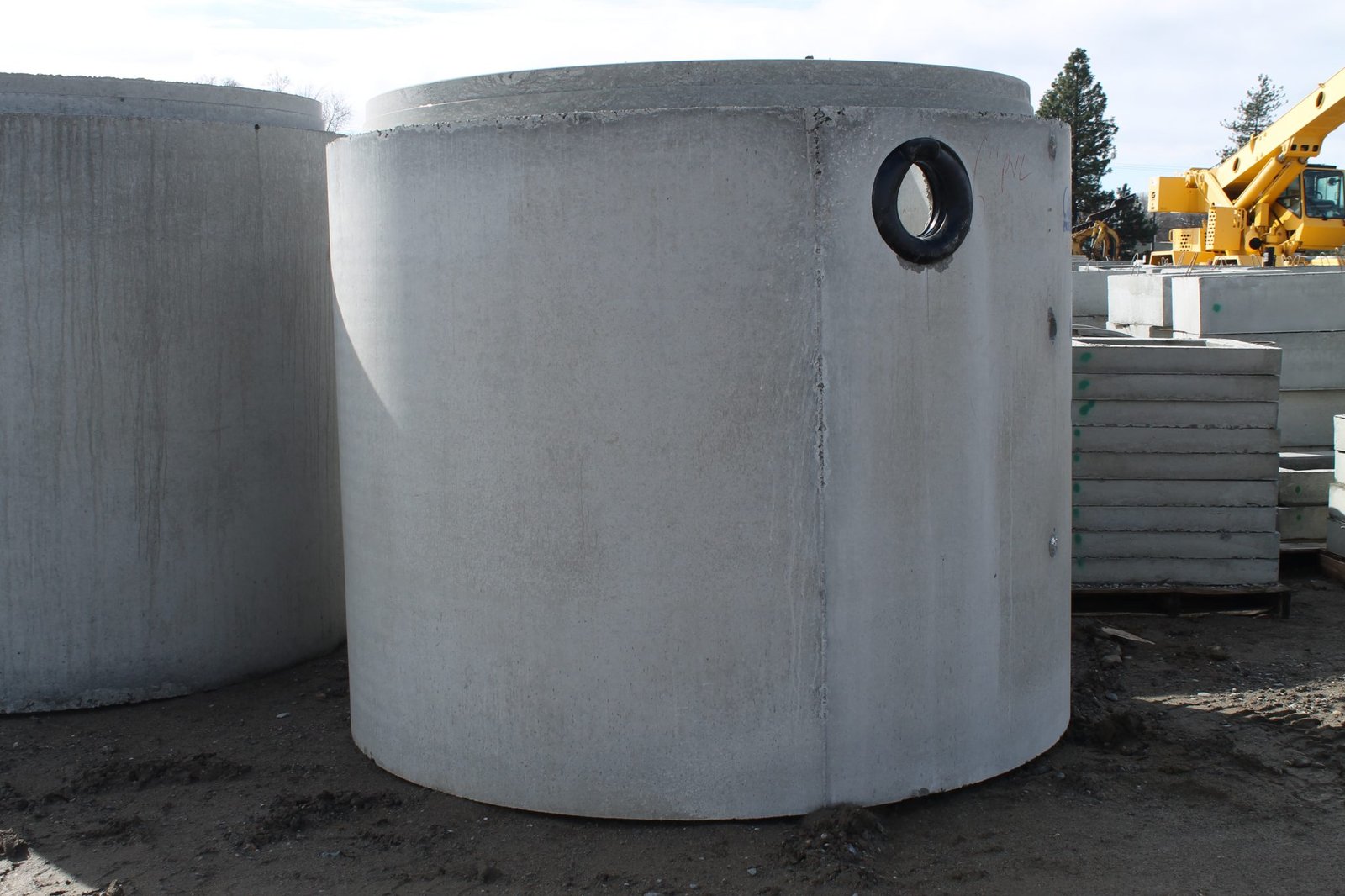
Manholes, Vaults and Underground Structures in Las Cruces
A manhole is a small building that happens to sit underground. It has walls, a floor, a roof and an opening, it takes load from traffic above and groundwater pressure from below, and it has to stay watertight for as long as the pipe it serves. We build underground structures with the same attention we give above-grade concrete, because the cost of fixing one after the paving is down is far higher than the cost of setting it right.
The valley sets its own tests for buried structures. Las Cruces sits at about 3,908 feet with the Rio Grande passing west of the city through the Mesilla Valley, and Vado lies on the river's east bank. Farm irrigation around Hatch draws on wells and on ditches that divert water from the Rio Grande and from upstream reservoirs. Where irrigation is heavy, the ground near a structure can be wet for part of the year, and a vault that was designed for dry soil can float or leak.
We set precast structures and build cast-in-place vaults for sewer, storm, water, electrical and communication systems.
The structures we set and build
The structures list starts with sanitary and storm manholes, then grows to valve vaults, meter vaults, backflow enclosures, pull boxes, junction boxes, lift station wet wells, detention outlet structures and inlet boxes. Most are precast reinforced concrete sections stacked on a prepared base with gasketed or sealed joints. Where a structure is too large or irregular for precast, we form and pour it in place. Most of the manholes we handle are set as part of sanitary sewer installation.
The base is the foundation of a buried structure. We excavate to the required depth, compact a stable base, add bedding stone and set the first section to line and grade. The sections are stacked, the joints are sealed, pipe connections are made with flexible boots or grout, and the cone or flat top is placed. We finish with adjustment rings or grade rings to bring the rim to the paving elevation.
Forming and pouring structures in place
Cast-in-place work is coordinated across formwork, reinforcing and concrete. We set the base slab, place wall forms with ties and waterstops where the specification requires, tie rebar to the plan and pour in lifts that the pump can reach. Our work in concrete formwork and rebar placement carries straight into these vaults.
Waterproofing is a detail we respect. Joints between base and walls, penetrations and cold joints are the places that leak. We place waterstops, use sealant systems that suit the exposure and test the structure before backfill when the owner requires a leakage test. Top slabs get hatches or frames set to the right elevation, and we set embedded steps and ladders as shown on the drawings.
Loads, joints and what inspectors check
Precast structures are manufactured to a standard that specifies strength, joint type and reinforcement. We verify the delivery tickets against the plans, inspect each section for chips and cracks and refuse damaged units. Traffic-rated frames and covers are chosen for the load class shown on the drawings. Utility owners have their own details for vaults, such as hatch sizes and ladder locations, so we obtain those before ordering.
Inspections cover the base, the joints, the pipe connections, the backfill and the final rim elevation. For sewer manholes, vacuum testing is common. For vaults, owners may require a visual check for leaks and dimensions. We hold the delivery tickets and test reports for the close-out set. The underground details follow the utility's specification and the approved plans.
Groundwater, flotation and rim grades
An empty buried structure is lighter than the soil it displaces, so if groundwater rises it can float. Large vaults, wet wells and deep manholes may need anti-flotation features, such as a heavy base slab or a ballast collar. Our approach is to read the geotechnical report for groundwater depth, ask the engineer about the design water level and, on wet days, dewater the excavation until the structure has enough weight to hold itself down. See also our work on dewatering methods.
Rim grades cause the most field trouble. If the final paving grade changes after the manhole is set, the rim is wrong, and a rim that is too high or low is hit by every truck. We set the rim to the current plan, keep a record of the elevation and re-check before the final paving lift. Rim accuracy matters most on heavy truck routes, such as the drives and yards around a manufacturing plant.
How structures tie to pipe and pavement
Structures sit where pipes meet, so their work is part of every utility package. The storm inlets we place work with the storm drain installation trade crews, and the electrical pull boxes work with duct bank construction. We also place vaults for fire line backflow assemblies and for meters, which is part of how we serve general contractors and CM firms on larger projects.
The hand-off between trades is where errors occur. A pipe stub set a few inches off line, a rim set before the final grade, a hatch pointed the wrong way: each is a small error with a big repair cost. We use a checklist for every structure to confirm line, grade, size and orientation before we backfill.
Confined spaces and heavy lifts
Setting precast sections means lifting several tons over an open hole. We inspect rigging before each lift, use rated lifting devices and keep people out from under the load. The crew stays clear of the excavation edge and uses ladders or ramps for access. Before anyone goes inside a deep structure, we treat it as a confined space, test the air and follow the entry procedures.
After the structure is set, we protect the opening with covers or barricades, so no one falls in. Open structures at the end of the day are a hazard to the public and to workers, so we close them. The same applies when a vault is left open for inspection; a person is stationed at the opening or a guard is placed around it.
Send the structure schedule
Questions Owners Ask
Should we choose precast or cast-in-place for a vault?
Precast is faster and usually cheaper for standard sizes. Cast-in-place makes sense for oversize vaults, odd shapes or heavy penetrations. We help you compare the two on cost, schedule and risk, and we build either one.
How do you stop a manhole from leaking?
Joints are the weak points, so we use the sealant or gasket the specification calls for, clean and align each joint and test when required. Pipe connections use flexible boots or grout. A vacuum test shows whether the work is tight.
What do you do when groundwater is high at the structure?
We dewater the excavation while the structure is set and backfilled, and we check the flotation design with the engineer. A structure that floats can break pipe connections, so we do not leave one unballasted in a wet hole.
Can you adjust a manhole rim after paving?
Yes, within limits, using adjustment rings or a frame replacement, but the work takes careful coordination with the paving crew. It is better to set the rim near final grade and adjust once before the last lift.