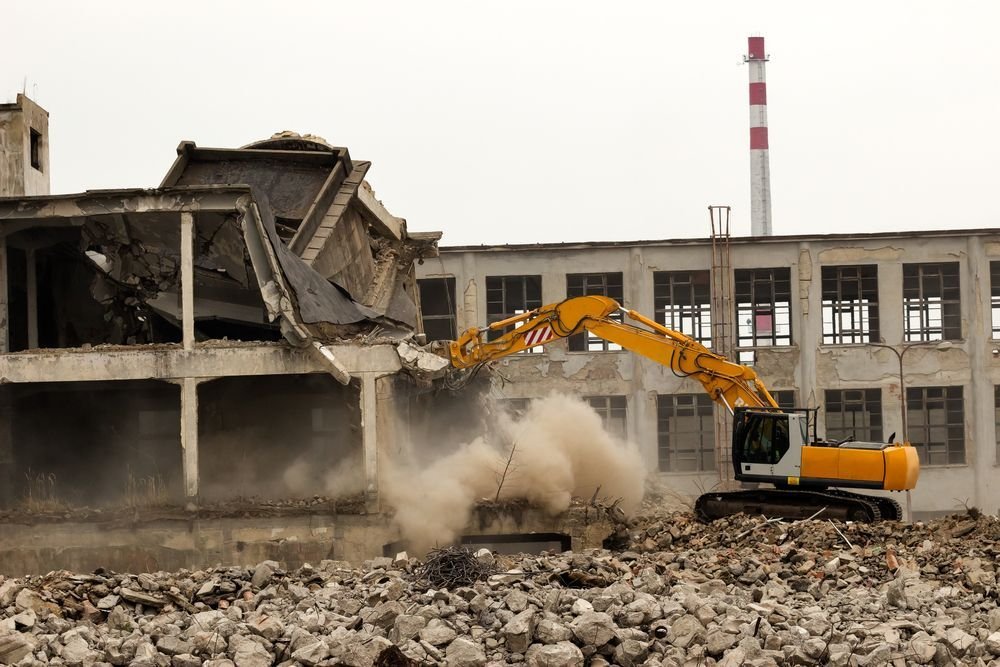
Demolition and Site Prep for Redevelopment in Las Cruces
Before anything new goes up, something old usually has to come down, and nobody knows what is behind the wall until it is open. Demolition and site prep is the work of clearing a site for construction: taking down structures, breaking out slabs and pavement, removing footings and buried debris, disconnecting and capping utilities, and leaving a clean, graded, erosion-protected parcel. On infill sites it is often the most uncertain part of the budget.
Las Cruces has older ground and older buildings. Historic downtown centers on Main Street, where a six-block stretch became a pedestrian mall in 1973, and the first train reached the city in 1881. Sites in older parts of town can hide old foundations, abandoned lines and buried debris, which is why we survey, probe and research before we bid.
We coordinate with the owner, the demolition permit and the utility companies, and the work often starts with site clearing and grubbing and ends with concrete demolition and removal of whatever is left in the ground.
What demolition and site prep includes
The scope begins with a site walk and a review of any hazardous materials survey. Then come utility disconnection and capping, tree and fence removal, structure demolition, slab and footing removal, pavement removal, backfill of voids and rough grading. Material is sorted on site: concrete and masonry to crushing or recycling, metal to scrap, and clean soil to reuse or haul-off.
The line between demolition and construction is a handoff. We backfill basements, tank pits and old footings with compacted fill and test it, so the new building does not sit on a hole. A written closeout lists what was removed, what was left and where utilities were capped, so the next contractor is not guessing. Photos and a sketch of capped lines go to the owner, because the best time to document a buried condition is the day it is open.
Who needs a site cleared
Commercial developers redeveloping aging retail and office sites and schools and healthcare owners replacing or expanding older buildings all depend on clean demolition. One of the hospitals in town operates from a building that dates to 1971, for example, and older campuses eventually need space cleared for new wings. Developers need speed, healthcare owners need operations to continue next door, and each wants a plan that reflects.
Municipal and public works departments clearing surplus property need documentation and procurement compliance. We provide load tickets, disposal receipts and recycling records on request. Sites next to occupied buildings require dust, noise and vibration limits, and we agree on those with the neighbor and the owner before the first swing.
Hazards that come with old buildings
Older structures can contain asbestos, lead paint and other regulated materials, and those have to be identified and handled by qualified specialists before demolition. We require the owner's hazardous materials survey before we start and stop work if something unexpected shows up. Structures are brought down in a planned sequence so no wall or floor falls unpredictably.
On site, water suppression controls dust, barriers protect the public and exclusion zones keep people clear of machines. Utilities are verified dead and capped before any wall comes down. In a place with windy spring afternoons and blowing dust, we watch the forecast and hold work that would lift dust toward neighbors or traffic.
Permits, utility shutoffs and sequencing
Demolition schedules usually start with paperwork: a demolition permit, utility disconnect confirmations, asbestos notices where applicable and any historic review for older properties. These can take weeks, so we start them early. Utility shutoffs are scheduled with the utility, and some take longer than the demolition itself.
Once permits and shutoffs are in, the physical work is fast. A typical building is down in days, with slab and footing removal taking longer than the superstructure. Near rail lines or busy streets, hours of work and haul routes are limited, and downtown, where freight rail service runs through the city, we plan around trains and street closures. We sequence debris haul-off to keep the site clear and give the next trade a clean start.
Where demolition hands off to the next trade
Partial demolition needs concrete sawing, cutting and coring to cut cleanly along the line that stays, and utilities uncovered during the work may need utility relocation before new construction can start.
When the site is clear, the next step is usually grading and pad work. We hand over a graded site with topsoil set aside and erosion controls in place, which makes the transition to the foundation crew smooth and keeps the stormwater inspector satisfied.
Clearing a site without surprises
We start by walking the site with the owner, noting what stays, what goes and what is unknown. Test pits and ground probes locate buried tanks, old foundations and abandoned lines where records are incomplete. A plan is drawn up with sequence, haul routes, dust control and sorting areas, and we review it with the owner and the general contractor so the demolition sequence fits the permit, the neighbors and the construction schedule that follows.
We take down structures from the top, separate materials as they come down and keep the site tidy. Slabs and footings are broken, loaded and hauled or crushed for reuse as base, and voids are filled in compacted lifts. At the end we grade the site, install erosion controls and walk it with the owner to confirm the handoff. If the new building needs a specific pad elevation, we leave the site low and let the pad crew bring it up to the right grade with tested fill, which is cleaner than trying to match grades with leftover debris and loose soil.
Have a site to clear?
Send the address, the site survey and any hazardous materials report. We will walk the property, list what is known and unknown and give you a price with the unknowns spelled out.
Questions Owners Ask
What can go wrong on an infill demolition?
Unmarked utilities, buried tanks, old foundations and hazardous materials are the usual surprises. We probe and research first, but we also write the contract so the owner knows how each surprise is priced.
Do you recycle demolition debris?
Yes, where a recycler accepts it. Clean concrete and masonry can be crushed and reused as base, metal goes to scrap, and clean soil may be reused. We keep records for owners who need recycling documentation.
How do you handle dust next to occupied buildings?
Water spray at the point of demolition, barriers, controlled haul routes and work holds in high wind. If the neighbors need advance notice or specific hours, we put those in the plan before starting.
Who coordinates the utility shutoffs?
We schedule them with the utility providers and confirm in writing before work near the line begins. Shutoffs can take longer than demolition, so we request them as early as the permit allows.
What condition is the site left in?
Cleared, backfilled in tested lifts, rough graded and protected with erosion controls, with utilities capped and marked on a closeout sketch. If the next phase needs a specific finish, we build the handoff.