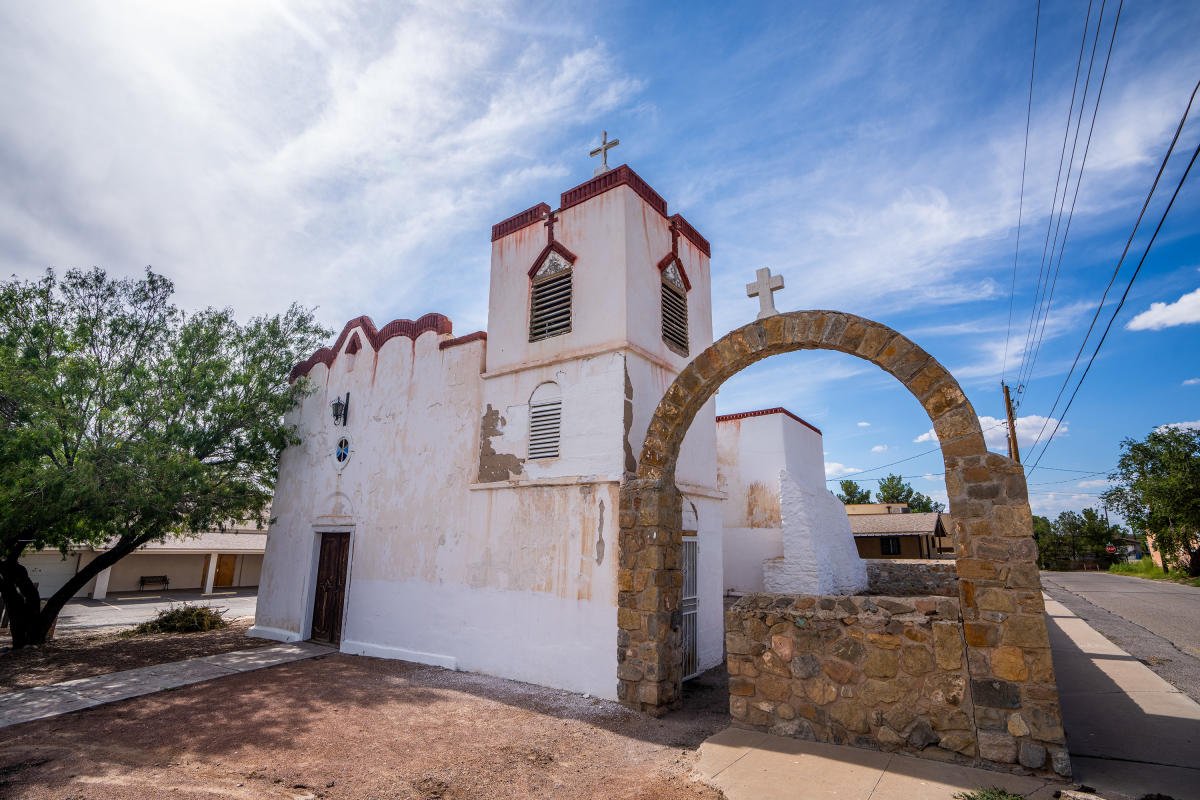
Small Commercial Site Work and Concrete in Dona Ana, New Mexico
Six miles north on Interstate 25 from Las Cruces, Dona Ana is close enough that a crew can be on site before the first mixer truck finishes loading, and that proximity shapes how we plan a job here. Exit 9 is NM 320 toward Dona Ana, and the interstate forms the eastern edge of the community, so deliveries, testing technicians and inspectors all reach the site on the same short route. We schedule around that reliability and tell owners honestly when a tight schedule is possible.
I-25 leads 6 miles to Las Cruces and 33 miles northwest to Hatch from the Dona Ana interchange. Dona Ana's listed elevation is 3,963 feet, its 2020 census population was 874, and it is described as near the center of Dona Ana County. It is also listed among New Mexico places on the Rio Grande. A site in a community like this is typically small to medium: a clinic, a county or utility facility, a church or school addition, a small commercial pad, or a contractor's yard.
Small projects deserve the same discipline as large ones. A parking lot that drains the wrong way or a slab that cracks at the first joint is expensive to repair and annoying to the owner. We keep a short, clear checklist for every Dona Ana job: survey the grades, locate the utilities, prepare the subgrade, test the concrete, and cure it correctly.
Planning around a short haul from the interstate
A short haul is an advantage, but it does not remove the need for a plan. Ready-mix has a limited time between batching and discharge, hot weather shortens it, and a pump arriving late can leave trucks idling at the site. We confirm batch times, truck spacing and the pump setup the day before, and we call the plant on the morning of the pour.
For small jobs, we often combine work in one trip: footing and flatwork on the same day, or a pad and sidewalk in a single mobilization. That can lower the cost per yard and shorten the overall schedule. We discuss which pours can be grouped and which need separate days because of curing or forming.
Who builds here and what they need
Dona Ana's position on I-25 makes it a convenient place for businesses that serve the Las Cruces area from a site just up the interstate. Some of our clients here are owners of small shops, services and storage, and others are developers who bring in a pad-ready lot to lease to a tenant. We prepare the lot to a standard that a building contractor can use without further earthwork.
Public and quasi-public owners also need site work. Fire stations, community buildings, small utility yards and similar facilities require accessible routes, parking, utility connections and good drainage. We price those with clear documentation of materials and tests, and we meet the owner's submittal process.
Site work from clearing to finish grade
We begin with site clearing and grubbing, removing vegetation and roots, stripping topsoil, and hauling or stockpiling it as directed. After that, we cut or fill to the design grades, compact in lifts, and verify elevation with a survey crew. Utility trenches go in next, and then the base is finished with fine grading to the tolerance the slab or pavement needs.
Then come the forms, steel and concrete. Footings and stem walls for small buildings, slabs for floors, curb and gutter for parking, and sidewalks for access all follow the drawings. We pay special attention to curb and drive aisle drainage, and we check slopes before the pour so the water flows where it should.
Codes, testing and the paperwork that goes with them
Commercial buildings follow the 2021 New Mexico Commercial Building Code (14.7.2 NMAC), which adopts the 2021 International Building Code as amended and took effect July 14, 2023. A small building still needs a permit, a plan review and inspections at footing, slab and framing stages. We know the sequence, and we do not pour until the required inspection is signed off.
Our concrete testing and quality control routine is simple: slump, air content and temperature on each load as required, cylinders cast for strength, and records saved by pour date. Compaction tests on base and fill are scheduled with the lab ahead of time. If anything fails, we correct it and retest before moving on.
Small commercial buildings and medical offices
Small medical offices need level floors, accessible entries and well-drained parking. They often have heavy equipment, such as imaging machines, that require thicker or isolated slabs. We coordinate with the equipment vendor's requirements and pour those areas with extra care.
Office buildings are more straightforward, but they still demand good drainage and tidy exterior concrete. Neighboring Radium Springs and Hatch offer similar project types, and when owners have sites in each place we can phase the project trade crews to follow the schedule.
What drives cost on a small commercial site
On a small job, fixed costs matter: mobilization, minimum truck loads, testing and permits. Raising the quantity of concrete a little, or combining pours, often reduces cost per yard. We list the fixed items separately, so you can see what you are paying for and what choices would change the number.
For commercial developers building to lease, the biggest savings usually come from simple geometry, a consistent slab thickness and a drainage layout that avoids extra structures. We offer a value review at the bid stage and suggest changes that save money without hurting the building.
Have a Dona Ana site in mind?
Share the plans, a sketch or just the address. We will visit, review the grades and utilities and send a priced scope with a pour calendar.
Questions Owners Ask
Is a small project worth bidding to a contractor like you?
Yes. We take jobs from a few cubic yards up to large yardage, and we price small jobs honestly, including the fixed costs. Give us the drawings or a sketch and the date you need it, and we will tell you whether our schedule fits.
How do you handle inspections for a small building?
We request inspections ahead of each pour and make sure forms, steel and embedded items are ready. The inspector checks the work, and we hold the pour until the approval is recorded. We keep the signed card on site.
Can you match an existing slab elevation?
Yes, by surveying both the existing slab and the planned slab and setting forms to the required relation. Matching elevations at doorways and thresholds is a common detail, and it needs to be done before the pour.
What if the weather turns during a pour?
We watch the forecast closely and carry plastic and covers for rain. If a storm is likely during placement, we move the pour. Protecting the surface is always cheaper than repairing it.
How much lead time do you need for a pour near the interstate?
For a small pour, a few days is often enough once the forms, steel and inspection are ready. Larger pours need more notice so the plant can reserve capacity and the pump can be scheduled. We confirm the date with you, the plant and the inspector, and we send a reminder the afternoon before.