Concrete and Site Work for Oil, Gas and Midstream Owners in Southern New Mexico
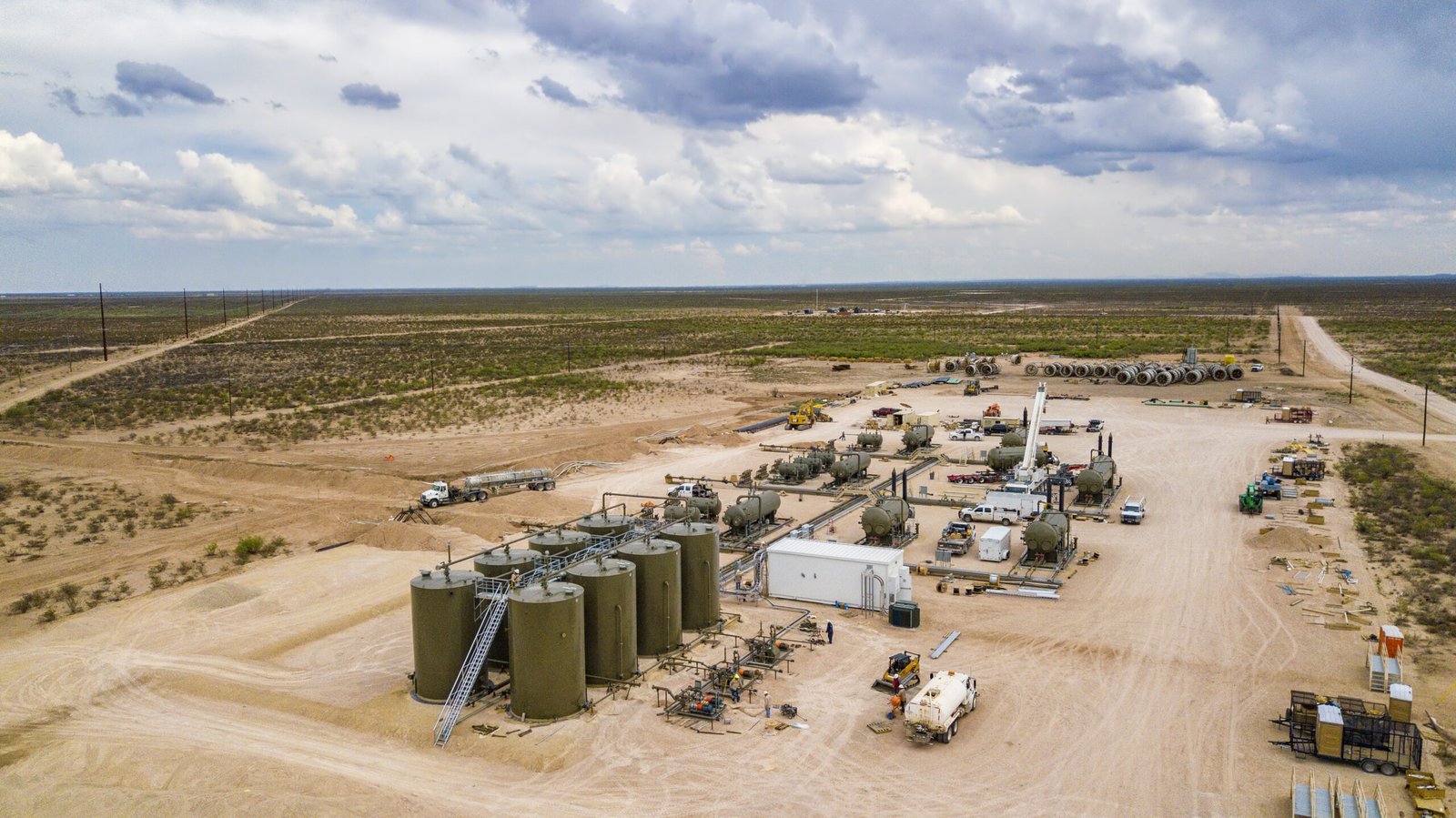
Pipeline corridors are mostly dirt work, and compressor, pump and metering sites are mostly foundations and containment. That is where a civil and concrete contractor earns a place on an oil, gas or midstream project: access roads that carry heavy loads in wet weather, pads that hold rotating equipment without settling, containment that holds what it is supposed to hold, and trenches that are backfilled and compacted so they do not become drainage channels. We build that ground-level work and leave the process equipment to the people who own it.
Southern New Mexico is not a single market, and we do not pretend otherwise. What the region offers a midstream owner is a set of corridors and logistics. Deming sits on Interstate 10 and astride one of the main railroad lines linking the East and West coasts, and its listed economic base includes energy alongside transportation, agriculture and tourism. Columbus is the junction where NM 9 runs 59 miles east to Santa Teresa and 44 miles west, and NM 11 leads 32 miles north to Deming.
This is how we would approach the civil and concrete part of a project in that country, from the first road to the last containment inspection.
Corridors and yards we work from
Our haul routes follow the interstates and the state roads between them. From Deming on I-10, crews can reach valve and meter sites along US 180 and NM 11, and from Columbus we can work along NM 9 along the state roads to the east and west. The Santa Teresa Gateway Rail Park, a 1,100 acre site served by the Santa Teresa Southern Railroad, gives material and equipment a rail connection at the border end of the region.
The distances matter. A site 59 miles from the nearest batch plant needs a plan for delivery times, slump loss and truck rotation, and a site with no power needs temporary generators for vibrators and lighting. We ask for the location early, tell you what the haul looks like, and price mobilization as its own line instead of burying it in the yardage.
Pads, roads and trenches for field facilities
Field facilities depend on a short list of civil elements. We clear and grade the site, build compacted access roads and laydown yards, and set the base for pads. Concrete work includes equipment pads and machine foundations with cast-in anchor bolts or sleeves, skid foundations, pipe supports, truck loading pads and slabs for control buildings. When the control building is a pre-engineered metal building, we pour its footings and floor to the manufacturer's reaction loads.
Pipe trenches are the second family. We open trench to the specified depth, set bedding, support the pipe the fabricator provides, and backfill in controlled lifts. Our trenching and backfill practice includes dewatering plans where needed, select backfill in the pipe zone, and compaction testing as the owner's specification calls for.
Specifications that come with energy owners
Energy owners usually write their own specifications for concrete, backfill and containment, and those specifications sit on top of any state or local code requirements. We read them closely before pricing because they often set tighter limits on mix design, curing temperature, testing frequency and documentation than a typical commercial job. Where a facility includes an occupied building, the state's adopted commercial building code also applies.
We keep records in the form the owner expects: batch tickets, slump and air, cylinder breaks, compaction reports, survey of pad elevations and as-built locations of anchor bolt groups. Permits for road crossings, access driveways and stormwater are coordinated with the owner or its engineer, and we schedule our work to match approvals.
Hazardous locations and hot-work rules
Many energy sites have hazardous area classifications, hot work permits and lockout rules. We attend the owner's orientation, follow permit-to-work procedures and keep construction equipment out of classified zones unless the permit allows it. Our concrete work rarely involves ignition sources, but pump engines, generators and vibrators are electrical and mechanical equipment, and we treat them that way.
Excavation near buried lines is the greater exposure. We pothole before opening ground near pressurized pipe, use hand digging within the clearance distance, and keep a spotter on the machine. If a line is not where the drawings say it is, we stop, document and call before we go further.
What moves the price of civil work in the field
Mobilization, haul distance and ground conditions dominate. A pad that would cost one number inside the city costs more where concrete must travel long distances or where the contractor has to carry water for dust control. Rock and cemented caliche slow trenching and push the line item up quickly, so we ask for geotechnical data and price hard ground as its own unit.
The other major line is containment. A simple curbed slab is different from a lined basin or a sealed concrete dike with waterstops and coated surfaces. We price secondary containment from the actual details, include joint sealants and testing, and note how many days of cure the coating or sealer needs before service.
Neighbors of midstream work
Midstream projects share corridors and vendors with other owners. Plants that handle process fluids borrow many of their details, as our page for industrial and manufacturing owners explains, and the electric service that feeds a station is usually installed by crews like those described for utilities and energy companies.
With rain averaging only 9.14 inches a year in Las Cruces and arroyos that carry water after heavy thunderstorms, we plan every pad and road so a flash flow goes around the equipment, not through it.
Tell us where the site is
Send the location, the pad or containment drawings and your specifications. We will return a price with mobilization and haul broken out, and the testing we would plan to document it.
Questions Owners Ask
Do you install foundations for rotating equipment such as compressors or pumps?
We build the concrete foundation to the vendor's drawing and the engineer's design, including embedded anchor bolts, sleeves, grout space and isolation where called for. We survey the bolt pattern before the pour and again after the forms come off. The vendor sets the equipment; we hand over a foundation that matches the drawing.
How do you handle long concrete hauls to remote sites?
We plan the batch plant, truck count and placement rate around the distance. Hot weather accelerates slump loss, so we may use retarders, tighter delivery windows or night placement, and we test at the point of placement. Where a site has no power, we bring generators and lighting.
What containment testing do you provide?
We build to the specified detail and can arrange hydrostatic or flood testing where the owner calls for it. Joint sealants, waterstops and coatings are installed to the manufacturer's instructions, with inspections before concealment.
Can you coordinate with a pipeline contractor on shared right-of-way?
Yes. We share access, mark our work limits and sequence trench opening and backfill with the pipe crew so open ditch is kept to a minimum. A joint look-ahead each week keeps both crews informed.