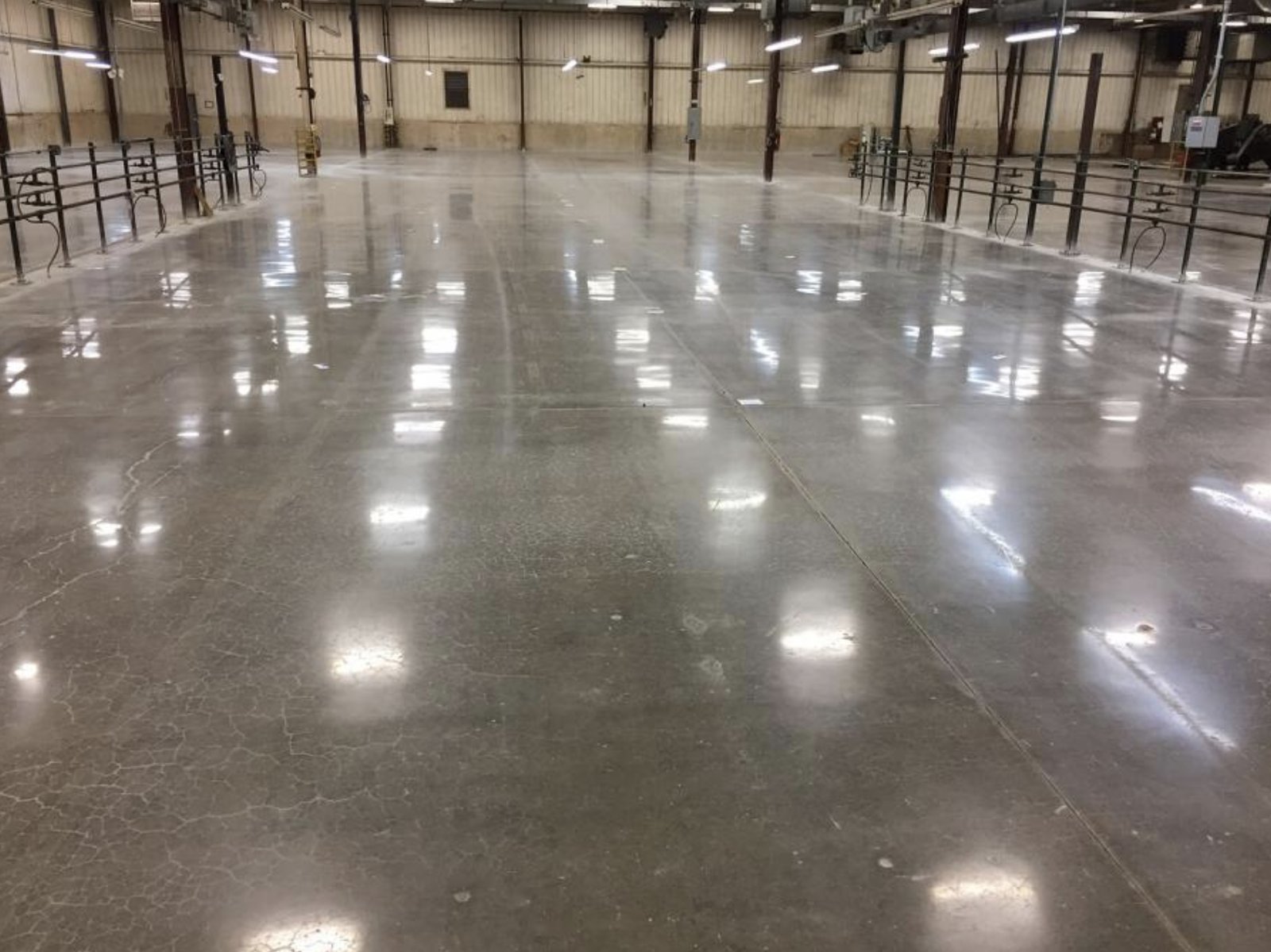
Polished Concrete Floors in Las Cruces
Grinding does most of the work on a polished floor, but the pour decides how much grinding it takes. A slab that is flat, evenly cured and free of finishing marks can be polished in a few passes, while a slab with trowel burns, patches and plastic cracks needs extra steps that show up on the invoice. That is why we like to be involved in polished concrete from the day the placement is planned, not only when the grinders arrive.
Commercial buildings in the Las Cruces area ask for polished concrete for the usual reasons: it is durable, easy to clean, and it takes light well in spaces like showrooms and offices. It also makes sense in settings like Mesilla Valley Mall, which opened in 1981 with 602,150 square feet of indoor space, where large tenant floors take heavy foot traffic, and in new education and media buildings such as those listed at NMSU's Arrowhead Park, where a visible concrete floor can double as the finish.
The sections below describe what the work includes, what to decide before the pour, where the money goes and how it fits the project schedule.
What polishing involves, from the pour to the final pass
The process has three phases. First, the slab is placed and finished with polishing in mind, which usually means a hard steel trowel finish to a consistent density and a prompt cure that does not stain or discolor the surface. Second, once the slab has gained strength, diamond grinders cut the surface to the exposure the owner wants, from a thin cream layer to light or full aggregate. Third, a chemical densifier hardens the surface, and progressively finer diamond tooling brings up the sheen.
Between those steps, joints are cleaned and filled, cracks are repaired and edges are detailed. The final result depends on the concrete itself: aggregate color, cement color and the mix design all show through. We recommend a mockup panel for large areas so the owner can approve the look before the whole floor is committed. Sealer or guard products are applied last. For a decorative alternative, see decorative and stamped concrete.
Decisions that affect the final look
Joint layout is the most visible. Saw cuts become part of the floor pattern, so we coordinate the joint plan with the architect rather than leaving it to the saw crew. Control joints can follow column lines or be set in a grid that suits the design. Filling them with a semi-rigid filler at the end avoids edge damage.
Protection during construction is the other major factor. Once a floor is designated for polishing, other trades should not leave rust marks, spilled paint, oil or mortar on the slab. Wet-cured, fresh-looking concrete will pick up stains that grinding cannot always remove. We provide guidance for the general contractor on protection, from covering the slab to prohibiting steel stockpiles on it. If a floor already in place needs repair first, concrete repair and restoration can be scheduled before grinding.
Why polished floors cost what they cost
The main cost drivers are the starting condition of the slab, the exposure level, the sheen, the number of grinding steps and the area. A 20,000 square foot retail floor that starts flat and clean costs far less per square foot than a 2,000 square foot floor with extensive patching. Mobilization of grinding equipment makes small jobs more expensive per foot, and a slab that needs patching, crack routing or leveling before grinding adds both labor and a day or two to the schedule.
Densifiers, joint fillers and guards are modest line items, but they affect how the floor ages. The long-term cost is the floor care: dust mopping, damp mopping with neutral cleaners and periodic reburnishing in busy areas. We give owners a maintenance sheet at turnover and say plainly that a polished floor will show wear in a doorway where grit is tracked in. Commercial developers who build for tenants often choose polished concrete because it eliminates a separate flooring package.
Where polishing sits in the construction schedule
Polishing happens late, after the building is enclosed and the wet trades are done, but the decisions are early. The mix and finishing method are set at the placement, and the slab needs time to cure and gain strength before the first grind. In the hot months, we protect the slab from rapid drying to prevent surface cracking and color variation.
Once grinding starts, the crew works in zones, with dust control and clear access. The tenant or owner should expect noise, vacuum equipment and a few days of closed access to the space. After the final polish and guard, the floor is ready for light use quickly, which is one reason it appeals to office building owners with a firm move-in date. We coordinate so painting, casework and polishing do not overlap.
Where we polish and where we advise
We work throughout Las Cruces, Mesilla and the surrounding communities, from the Mesilla Valley Mall area to campus-edge projects near Arrowhead Park. For large flex buildings near the interstates, polished slabs are possible but need a well-planned placement and a plan for forklift traffic.
We are also frank about when polishing is the wrong choice. A slab that will be exposed to oils, harsh chemicals or hard-wheeled traffic may be better served by a sealer or a coating. A floor that is already finished with a heavy trowel burn or poor curing may not polish evenly. In those cases we propose a different finish and explain why, rather than selling polishing for every slab. A short test panel on the actual slab, ground to the proposed level, usually answers the question in an afternoon and costs far less than finding out across the whole floor.
Considering a polished floor?
Send the floor plan and the finish schedule. We will review the slab plan, recommend a placement and finishing method and give you a price per grinding level.
Questions Owners Ask
Can any slab be polished?
Most can, but the result depends on the slab. Flatness, finish quality, curing and surface condition all matter. We inspect the slab, test a small area and tell you what level of polish is realistic.
How long does polishing take?
A typical commercial floor takes a few days to a couple of weeks depending on the area and the exposure level. Mobilization, dust control and zone sequencing shape the timeline.
Will the floor be slippery?
Polished concrete can be slippery when wet. We can add a slip-resistant guard or choose a lower sheen in entries and wet areas. Mats at doorways reduce the problem as well.
Do cracks and joints show?
Yes, to some degree. Joints are part of the look, and fine cracks may remain visible. We fill joints, repair active cracks and set expectations in advance.
How do you maintain a polished floor?
Dust mop regularly, damp mop with a neutral cleaner and avoid acidic products. In busy areas, periodic buffing restores the sheen. We provide a maintenance sheet for your staff.