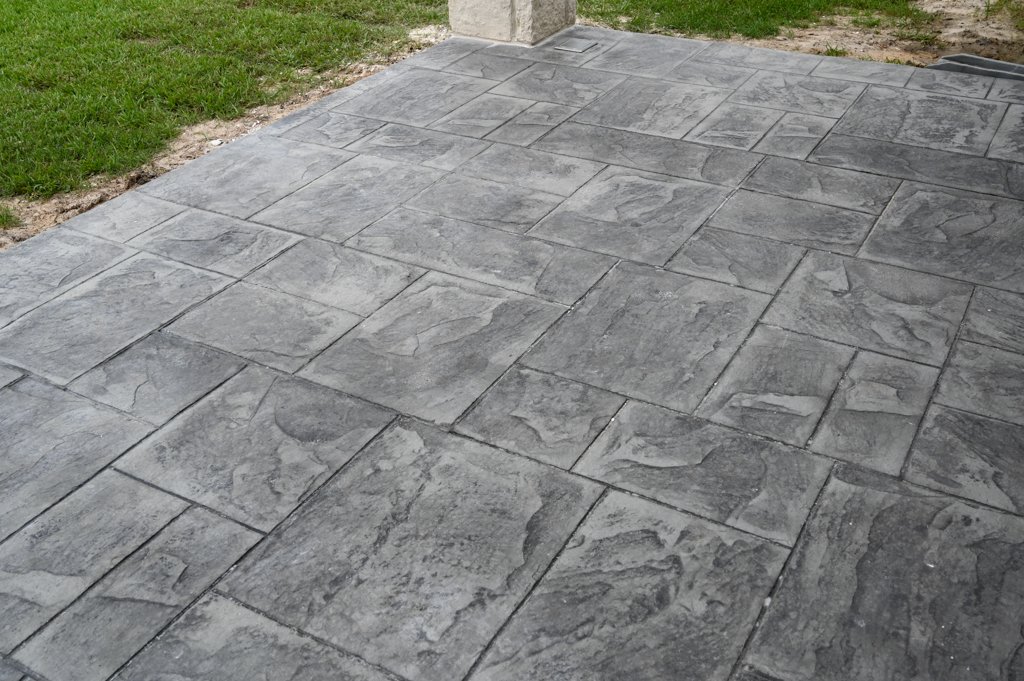
Decorative and Stamped Concrete for Commercial Sites in Las Cruces
Pattern has to reach the concrete while it is still soft enough to take it and firm enough to hold it, and that window is short. In the dry heat of the Mesilla Valley, where June highs average about 96 degrees and spring afternoons bring wind and blowing dust, it can be shorter than the textbooks say. We plan stamped and colored concrete around that window: batch temperature, retarder dosage, crew size, tool staging and the shade we throw over the work.
Decorative concrete suits the character of the area. The La Mesilla Historic District, which includes Mesilla Plaza, was declared a National Historic Landmark in 1961, and historic downtown Las Cruces centers on Main Street, where a six-block stretch became a pedestrian mall in 1973 and still hosts a farmers' market on Wednesday and Saturday mornings. Plazas, courtyards, patios, entries and walkways in settings like these benefit from color and texture that look good against adobe tones and desert planting.
What follows covers how we execute decorative work, which commercial buildings use it, what it costs to do well and what to settle before the first truck arrives.
Color, pattern and finishing, in the order they happen
Integral color is mixed in at the plant or the truck so the whole slab carries the tint, while color hardener is broadcast onto the surface and floated in. Antiquing release gives the stamped slab its depth. We usually place a test panel when the color matters, because the finished shade depends on the cement, the sand, the placement temperature and the cure.
The sequence on pour day is tight: place, screed, float, apply color, apply release, stamp, trim edges and cut joints. A second tool crew follows the stamping team to handle edges and corners, working with hand tools wherever the mats cannot reach. Wind-blown dust on a wet surface is a real problem here, so we hose down adjacent dirt and keep traffic off the slab edge until the release is washed away. When the surface has set, the release is washed off, a sealer goes down and the floor is protected. In hot weather, we use evaporation retarders, shade and cool mix water so the surface does not skin before the stamp mats are set. Where a plaza meets standard walks, we blend the details with sidewalks and flatwork so the transitions are clean.
The decorative finishes we place
The main options are stamped patterns that mimic stone, brick or tile, exposed aggregate that washes away the cream to show the stone, colored and broom-finished walks, saw-cut patterns, and scoring with contrasting borders. Each takes a different method. Exposed aggregate depends on a surface retarder and the timing of the wash, while stamped work depends on the release and the stamp tools.
Edge conditions matter. Decorative concrete next to curbs, building walls and drains needs forms that are straight and joints that line up with the pattern. If the site includes ramps or routes that must meet accessibility rules, our approach to ADA ramps and accessible routes governs slope and surface so a pattern never makes a route unusable.
Where decorative concrete gets specified
Hotels, restaurants and entries benefit most. A hospitality hotel uses patterned pool decks, drop-off courts and courtyards. Civic buildings, libraries and community centers use stamped plazas and colored walks. Our work for government and municipal buildings often includes bollards, planters and seat walls cast to match the paving.
Retail owners use decorative concrete to guide shoppers. Colored banding at crosswalks, a textured entry apron and a patterned patio for outdoor seating are common requests. Each of those is a small area but a high-visibility one, so we budget extra time for finishing and protection from foot traffic during cure. Barricades and a posted cure period do more for the final appearance than any additive, and we make sure the tenant understands them before opening day.
What decorative concrete costs and what drives it
Stamping adds labor, tooling and materials above plain concrete. Color adds material cost and the need for testing a panel. Patterns that require two or three tones add steps. The number of edges and details matters more than the square footage because the crew spends time on corners, borders and transitions.
Long-term costs depend on the sealer. Sun and foot traffic wear the sealer down, and re-sealing every few years keeps the color rich and the surface protected. We provide a maintenance schedule at turnover. Where a public owner such as a city, county or school district is the client, we align with municipal and public works procurement so the bid form lists the base walk and the decorative upgrade as separate items.
Items to settle before bidding
Pick a pattern and a color that will look right in full sun. A sample viewed indoors can look very different on a site that gets bright afternoon light for most of the year. Decide which areas need a slip-resistant finish, since stamped and sealed surfaces can be slick when wet. Confirm the joint plan so cracks happen in joints rather than across a pattern.
Think about the base, too. Decorative slabs need a uniform, well-compacted subgrade, and the thickness and reinforcement should match the expected loads. If delivery vehicles or fire trucks will cross the plaza, say so early. In downtown Las Cruces and in Mesilla, sites often have tight access, so planning truck access, pump placement and neighbor notices is part of the job.
Planning a plaza, entry or patio?
Send a sketch or drawings, the location and the date you need it. We will advise on pattern, color and sequence and provide a price with the base and decorative items separated.
Questions Owners Ask
How long does stamped concrete last?
With a sound base, good joints and periodic re-sealing, it lasts as long as ordinary concrete. The color and pattern depend on the sealer, which needs to be renewed every few years.
Will stamped concrete crack?
All concrete can crack. We reduce the risk with proper subgrade, reinforcement, saw cuts or tooled joints and good curing. Joints are placed to follow the pattern so they look intentional.
Can you match an existing color?
We can come close, but exact matches are difficult because existing concrete changes with age. We make test panels and show them next to the old surface before committing to the pour.
Is stamped concrete safe for walkways?
It can be, if we choose the pattern and sealer accordingly. Deep textures and slick sealers can be hazardous when wet, so we add a slip-resistant additive where it counts.
Can decorative work be done in July?
Yes, with changes. We pour at first light, chill the mix water, add retarder and keep a shade structure and misting ready. If the forecast shows wind on top of heat, we move the stamping day, because forcing a pattern into a skinned surface leaves tears and shallow impressions.