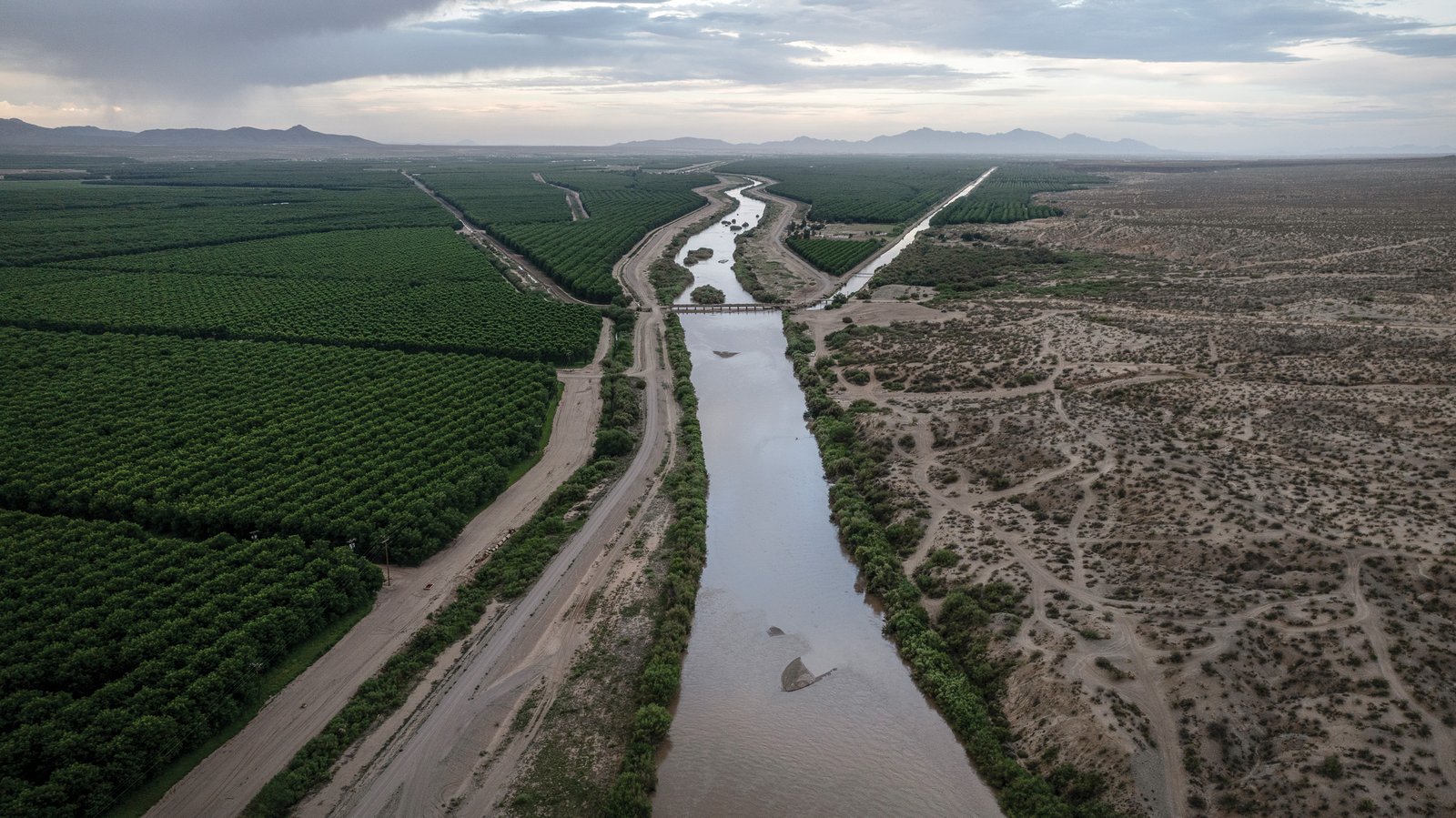
Land Development, Utilities and Concrete in Berino, New Mexico
Twenty-three miles south of Las Cruces on Interstate 10, Berino is the sort of place where land gets graded first and built on second, and that sequence is where we do our best work. Exit 155 leads west on NM 227 to Vado and Berino, so a development here has an interstate connection and a short local road before it needs any internal streets. For an owner holding acreage along that corridor, the first spend is rarely a building. It is pads, grading, drainage and the water and sewer lines that make a lot buildable.
With a 2020 census population of 1,651, Berino is big enough to support steady small commercial and residential growth but too small for a deep bench of local contractors. We bring the dirt equipment, the pipe crew and the concrete crew in one package, and we phase the work so each trade has clean ground when it arrives. Mass grading and utility installation go in first, then curb, gutter and flatwork, and then the foundations for whatever is going up on the pads.
The listed elevation of 3,832 feet puts Berino on the valley floor, where summers run hot and the ground can be flat enough that drainage design drives the whole layout. We think about where water leaves a site before we cut the first inch of subgrade.
Land first, then structures
A typical Berino scope starts with land development infrastructure: clearing, rough grading to the lot pattern, storm drainage, and the underground lines. We stake the work from the civil plans, balance cut and fill where the numbers allow, and call out any import or export early so haul trucks do not become a hidden line item.
Next come the pipe and the pavement. We coordinate the installation of water mains and services, sewer mains with manholes and laterals, and conduit for power and communications, each with bedding, tracer wire, compaction in lifts and a test before cover. Streets get a prepared subgrade, base course, and either concrete or asphalt per the plans, with water main installation and sewer pressure tests scheduled so inspectors see each stage before it disappears below grade.
What gets built on the pads
Once lots are finished, light industrial and flex space is a natural fit for a site beside the interstate and a short state road. A flex or light industrial building needs a flat, durable slab, truck-height aprons at the dock doors where the use calls for them, and a paved yard that handles delivery trucks and box vans. We pour those slabs with a joint layout the tenant can live with and a surface that does not dust.
Smaller commercial users, such as service shops and neighborhood retail, need entry drives, sidewalks that meet accessibility rules, and parking pavement with striping layout that works. We coordinate the sleeves, drains and light-pole bases with the electrical contractor so the pavement does not get cut again after it cures.
Who hires us on this corridor
Developers are the most common buyers, and the most predictable. Homebuilders and multifamily developers need clean lot pads, street sections, and utilities stubbed to each lot on a schedule that matches their start dates. If a phase slips, we stage the next one so the equipment keeps working and the lot inventory keeps coming. We communicate with the developer's engineer and the inspector, so approvals do not hold up lot releases.
Public-sector work is also in the mix when a district or municipality extends service. Municipal and public works projects have their own bidding, bonding and reporting rules, and we follow them to the letter, from daily reports to the certified payroll format the owner requires.
Sequencing the dirt, pipe and concrete
On a land development job the critical path runs through underground work. Storm drain goes first because it sets the grades, then sewer, then water, then dry utilities, and we try not to open more trench than we can close in a day. Pavement and flatwork follow once the utility trenches have passed their compaction tests, because settlement under a new curb is the most common warranty complaint on a subdivision.
Concrete placement in the Mesilla Valley summers is best done early, so we start flatwork crews before sunrise, use retarded mixes and wet burlap or curing compound right after finishing. In the cooler months we watch for a night forecast below freezing and blanket the day's pours.
Permits and inspections in an unincorporated area
Berino is a census-designated place rather than an incorporated town, which usually means county-level review for subdivisions and state rules for commercial buildings. The 2021 New Mexico Commercial Building Code (14.7.2 NMAC), issued under the Construction Industries Division, adopts the 2021 International Building Code as amended and took effect July 14, 2023. We confirm with the owner's design team which reviews and which inspections apply before we price.
For utility work, we check where the water and sewer service will come from, whether a connection fee or extension agreement is required, and whether the owner or the contractor pulls the permit. These items sound administrative, but they are the usual reason a site waits a month for a start.
Working with neighboring places
Berino sits close enough to Vado and Anthony that one mobilization can serve all three, which keeps unit costs down for owners with several parcels. We also run crews up and down the corridor to Las Cruces and the surrounding communities, and we plan the equipment moves so that a grader or compactor is where the schedule needs it.
Walk the Berino site with us
Send the plat or site plan and we will return a phased price for grading, underground lines, paving and concrete, with the sequence laid out in plain terms.
Questions Owners Ask
Can you handle the grading, utilities and concrete on one contract?
Yes. We coordinate clearing, mass grading, trenching, pipe, concrete flatwork and foundations, so one schedule runs the whole job. That cuts out the gaps between trades, and you deal with one point of contact instead of five. If the engineer wants a separate utility contractor for a specific system, we coordinate our work with theirs.
What lot sizes make financial sense for phased development?
Smaller phases keep carrying costs lower, but each phase needs mobilization for earthwork, pipe and paving. As a rule of thumb we look at the number of lots, the length of street and the underground footage to find a phase size where the equipment stays busy for several weeks. We will price a couple of phase options so you can compare.
Who pulls the permit for utilities in an unincorporated area?
It depends on the agreement. In many cases the owner or engineer pulls the main permit and the contractor handles inspections, but some utility providers require their own application. We ask early and put the responsible party in the schedule, so no one learns about a missing permit on the day of the pour.
How do you control dust and runoff while the ground is open?
We schedule water trucks for haul roads and active cuts, stabilize the entry with rock, and install silt fence or wattles around the perimeter. A stormwater plan sets the details, and we maintain it after each rain. Wind in the spring can lift dust quickly, so we hold off the dry grading when gusts are strong.