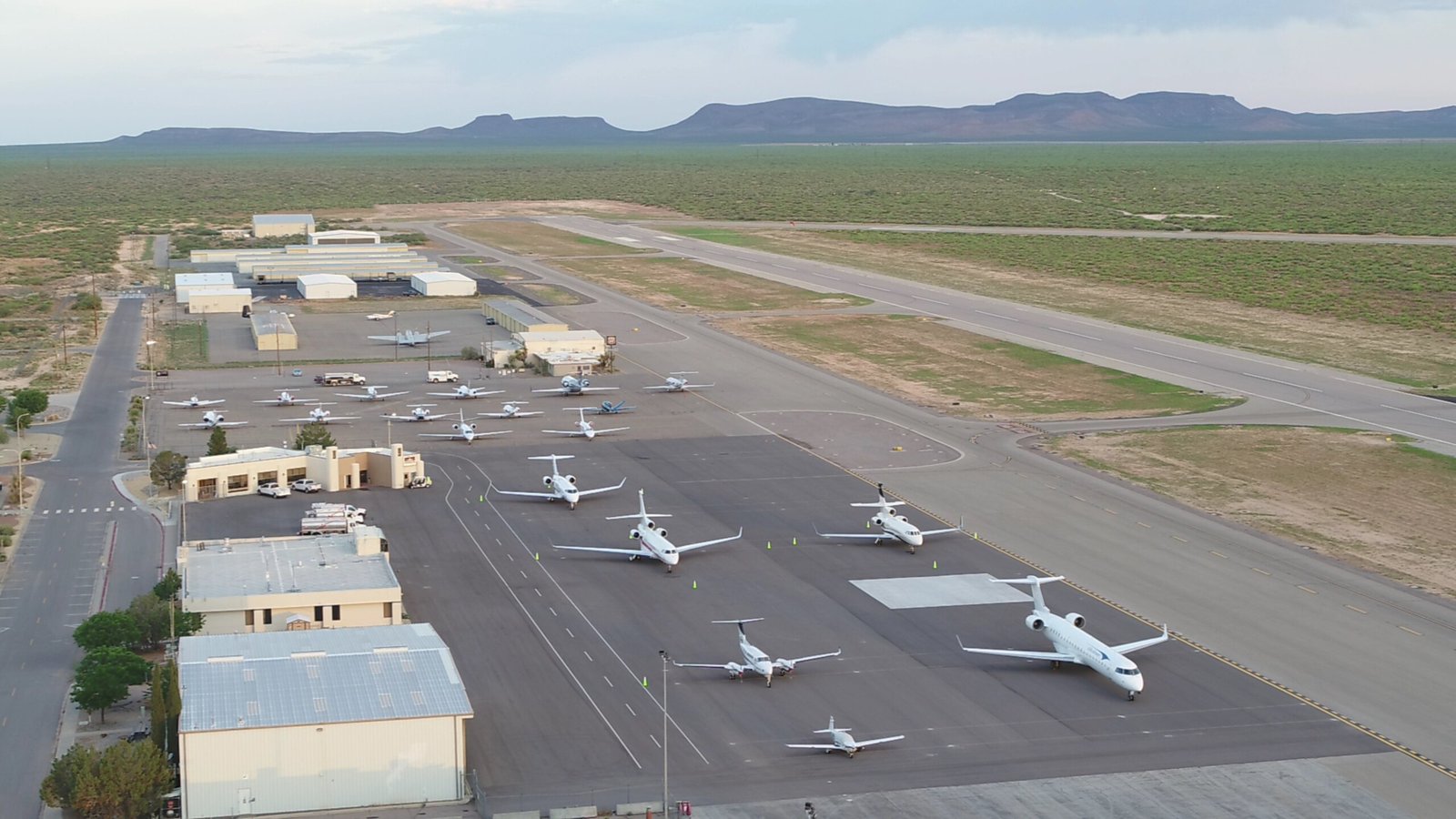
Hangar Slabs, Aprons and Airfield Utilities at Las Cruces International Airport
Hangar floors, taxilane aprons and the utility lines that feed them are the core of what we build at Las Cruces International Airport, and the work follows a pattern that is different from ordinary site construction. The airport is city-owned, sits nine miles west of the central business district, and has three runways, the longest at 7,506 feet. Everything we do on the airside has to fit inside an operating airfield, which means controlled access, equipment height limits, strict housekeeping and a schedule agreed with the airport manager.
The airport is also the front door to a development area. The City of Las Cruces Innovation and Industrial Park sits at the junction of I-10 and I-25 next to the airport, with more than 400 acres shovel ready and the park covered by Foreign Trade Zone 197. For a buyer thinking about hangar space, an aerospace tenant or a light industrial building with airfield access, that adjacency is the draw, and the concrete and earthwork are the first costs on the path to opening.
We coordinate the grading, utility trenching, concrete placement and finish work on these jobs. That means a single team is accountable from the first cut to the last saw joint, and the airport operator has one point of contact for access, escorts and inspections.
Hangars, aprons and aviation-adjacent buildings
An aircraft hangar is mostly a floor. The slab has to carry aircraft wheel loads, tug traffic and jacks, stay flat enough for doors to run, and slope gently to floor drains so fluid spills and wash water leave the building. We set the slab thickness, reinforcement and joint layout from the engineer's drawings, place a vapor barrier, and finish the surface to the flatness the drawings require. Door tracks and hangar door bases are set before the pour so the opening lines up.
Outside the hangar, taxilane and apron pavement is a different structure. Concrete aprons are thick, doweled and jointed to handle repeated aircraft loads, and they need a surface that sheds water without leaving ponds that freeze or leave standing fluid. We also build service roads, vehicle parking and the fencing foundations that keep the secure area secure.
Airside rules, inspections and records
Airport work is governed by the owner's requirements on top of normal building rules. Commercial buildings follow the 2021 New Mexico Commercial Building Code (14.7.2 NMAC), issued under the Construction Industries Division, which adopts the 2021 International Building Code as amended and took effect July 14, 2023. Paving and grading in the airport environment also follow the owner's specifications and any federal standards tied to funding. We read both sets before we price.
Records matter. We keep batch tickets, cylinder breaks, density test results and rebar inspection logs organized by pour, and we hand them over in the format the airport manager requests. If a project is funded with outside grants, the paperwork can be as important as the concrete, and we treat it that way.
Utilities, pavement and the east side
Airport reporting from 2021 describes utilities, lighting and taxiways being extended on the east side to support hangar development, along with a perimeter fence and a count of box hangars and T-hangars already in place. That tells us where the next phases are going: more underground work, more pavement and more pad sites. Site utilities such as water, sewer, power and communications conduits are installed in trenches that cross taxilane alignments, so we coordinate pipe depth and backfill with the pavement design.
Where pavement will cross a utility trench, we compact the backfill in thin lifts and test it, so the slab above does not settle. We pour the concrete in a sequence that lets the airport keep a taxi route open as long as possible, and we use temporary markings and barricades where an access route is closed.
What we coordinate on an airfield
We coordinate forming, reinforcing steel, placing, finishing and curing, as well as the excavation, subgrade work and compaction. On an airfield that is valuable because one team can be briefed on access rules and safety procedures once, and we keep the number of separate subcontractors who each have to be badged and escorted small.
For flatness-sensitive floors such as hangars with tight door tolerances, our super flat floor slab methods rely on a stiff mix, a laser screed or a carefully guided straightedge, and finishing at the right time to avoid dips and humps. We measure the slab after the pour and report the numbers so there are no surprises at turnover.
Planning around an operating airfield
Runway and taxiway closures are expensive for the airport, so we plan our access windows early and stick to them. Concrete trucks, pumps and cranes are scheduled, tracked and escorted, and nothing crosses an active surface without clearance. Early morning starts are common, and we use the cooler hours for placing and finishing slabs in summer.
Master planning also affects timing. A report on the airport's master plan update mentions an added aerospace focus and hopes to extend two runways, which means that pavement and utility work may come in phases over several years. We design our staging and access routes so we can return for later phases without re-learning the site, and we keep as-built records useful for the next contractor.
Foreign object debris and airside discipline
On an airfield, a loose bolt or a piece of wire can damage an aircraft. We run a daily sweep of the work area, cover loads, maintain a clean haul route and keep trucks from tracking mud onto taxi surfaces. The assigned trade crew leads are briefed on radio procedures, escort rules and where equipment can and cannot go.
Neighbors on the field include flight training and a National Guard aviation unit, so activity can start early and continue late. We work with the airport manager to adjust noise, dust and traffic, and we coordinate with the nearby Dona Ana County Jetport and the Arrowhead Park area when haul routes touch them. Utility owners and industrial and manufacturing owners with parcels nearby are welcome to ask about sequence and timing.
Bring us your airport project
Send us the hangar plan, the apron layout or the utility route. We will review airside access, set the sequence and give you a price you can plan on.
Questions Owners Ask
Can you work on an active airfield without shutting it down?
Usually yes, if the work is phased. We agree on closure windows with the airport manager, barricade and mark closed surfaces, and use escorts for trucks and equipment. Shorter, planned closures cost less than long ones, so we sequence the pours and utility crossings to keep the closure time down.
How do you handle foreign object debris?
We assign someone on every shift to sweep and inspect the work area, wash down trucks before they leave the site and cover loads. Rebar tie wire, bolts and form hardware are counted, and anything loose is picked up at the end of the shift.
What floor flatness can a hangar slab hit?
The achievable flatness depends on the mix, the base, the placing method and the weather. With a stiff mix, good subgrade and careful finishing, we can meet the numbers the engineer specifies. We test the floor after the pour and report the results, and we tell you early if the specification looks tighter than the use requires.
Does Foreign Trade Zone status affect how you build?
The zone designation does not change how concrete is placed, but it can influence the type of tenants and the buildings they want, such as warehouses and light industrial space. We build to the tenant's loads and layout, and we coordinate with the owner on any security or access features the use needs.
What kind of notice do you need to start a job at the airport?
Plan on a few weeks for coordination, badging and an approved safety plan. For larger projects with runway or taxiway work, give us more time so the airport can issue notices and approve the closure schedule. We start submittals as soon as we have the scope.